

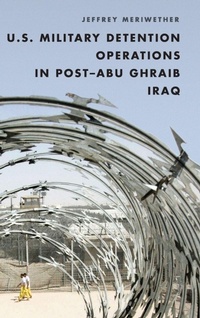
U.S. Military Detention Operations in Post-Abu Ghraib Iraq
Published on 22. February 2018
Book
Hardback
178 pages
978-1-4422-7233-0 (ISBN)
Description
Detention operations are vital to U.S. military doctrine and crucial to the success of combat and recovery missions. This book shows that the image of abuse from Abu-Ghraib were but one small, harmful element in an overwhelmingly successful detention mission in Iraq. It focuses on the subsequent developments and successes, explaining the standard rule-of-law approach taken by the U.S. military and examining the work in Iraq of such leaders as Major General John D. Gardner and Major General Douglas M. Stone. Overall, the text moves away from the Abu-Ghraib scandal to illuminate a largely unknown successful development in the U.S. detention operations.
Following the Abu Ghraib scandal of 2003-2004, the U.S. Department of Defense scrambled to recover its reputation and that of its troops. As the Bush Administration sought to redefine torture, military judge advocates consistently challenged such moves, arguing in favor of the Geneva Conventions' humanitarian practices. By 2006, Department of Defense policy stipulated full respect for and use of the Geneva Conventions. This development was indeed a victory for American support for rule of law in Iraq, as well as an affirmation of standard practices in the detention command, Task Force 134. Pressures of war, however, continued to present their own challenges.
Following the Abu Ghraib scandal of 2003-2004, the U.S. Department of Defense scrambled to recover its reputation and that of its troops. As the Bush Administration sought to redefine torture, military judge advocates consistently challenged such moves, arguing in favor of the Geneva Conventions' humanitarian practices. By 2006, Department of Defense policy stipulated full respect for and use of the Geneva Conventions. This development was indeed a victory for American support for rule of law in Iraq, as well as an affirmation of standard practices in the detention command, Task Force 134. Pressures of war, however, continued to present their own challenges.
Reviews / Votes
An important study of military legality and the many internal and external contexts within which it has to operate. -- Jeremy Black, University of Exeter, author of The World of James Bond: The Lives and Times of 007More details
Language
English
Place of publication
United States
Publishing group
Bloomsbury Publishing Plc
Target group
Professional and scholarly
Illustrations
1 Chart
Dimensions
Height: 235 mm
Width: 157 mm
Thickness: 14 mm
Weight
420 gr
ISBN-13
978-1-4422-7233-0 (9781442272330)
Copyright in bibliographic data and cover images is held by Nielsen Book Services Limited or by the publishers or by their respective licensors: all rights reserved.
Schweitzer Classification
Other editions
Additional editions
Jeffrey Meriwether
U.S. Military Detention Operations in Post-Abu Ghraib Iraq
E-Book
02/2018
1st Edition
Rowman & Littlefield Publishers
€82.49
Available for download
Jeffrey Meriwether
U.S. Military Detention Operations in Post-Abu Ghraib Iraq
E-Book
02/2018
1st Edition
Rowman & Littlefield Publishers
€82.49
Available for download
Person
Jeffrey Meriwether is Professor of European, African, and Military History, and Associate Dean of the School of Humanities, Arts, and Education at Roger Williams University, RI.
Content
Chapter 1. The Way Backward
Torture Becoming Acceptable
Torture Was Never Acceptable
Opportunities for Innovation
Torture by Another Name?
Gitmoization
Chapter 2. Abu Ghraib: Here Begins the Lesson
Framing the American Understanding
Reprimands and Legal Action
Soul Searching
Recommitment to Human Rights
Chapter 3. Major General John D. Gardner and the Shift at TF-134
Design for Success
A Rule of Law Structure
Success from Above: The DoD Affirms the ROL Effort
More Work to be Done
Chapter 4. One Determined Man: Major General Douglas M. Stone
FM 3-24
"COIN Inside the Wire"
The ROL Complexes and the Iraqi Detention System
How to Leave Iraq?
Chapter 5. Afghanistan: The Rule of Law Taskforce
"Five Years Behind"
Culture and Conditions
Martins' Success Breeds Success
Commitment to the Long Term
Chapter 6. The RAND Assessment and a New Doctrine
Progress is Standard; so is Neglect
All the Needed Tools
If it's Not Torture, is it Effective?
A New Doctrine
Torture Becoming Acceptable
Torture Was Never Acceptable
Opportunities for Innovation
Torture by Another Name?
Gitmoization
Chapter 2. Abu Ghraib: Here Begins the Lesson
Framing the American Understanding
Reprimands and Legal Action
Soul Searching
Recommitment to Human Rights
Chapter 3. Major General John D. Gardner and the Shift at TF-134
Design for Success
A Rule of Law Structure
Success from Above: The DoD Affirms the ROL Effort
More Work to be Done
Chapter 4. One Determined Man: Major General Douglas M. Stone
FM 3-24
"COIN Inside the Wire"
The ROL Complexes and the Iraqi Detention System
How to Leave Iraq?
Chapter 5. Afghanistan: The Rule of Law Taskforce
"Five Years Behind"
Culture and Conditions
Martins' Success Breeds Success
Commitment to the Long Term
Chapter 6. The RAND Assessment and a New Doctrine
Progress is Standard; so is Neglect
All the Needed Tools
If it's Not Torture, is it Effective?
A New Doctrine