

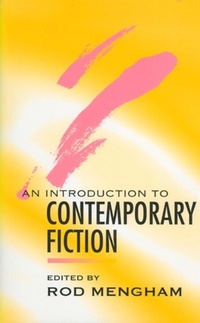
An Introduction to Contemporary Fiction
International Writing in English since 1970
1st Edition
Will be published approx. on 13. May 1999
Book
Paperback/Softback
256 pages
978-0-7456-1957-6 (ISBN)
Description
This volume provides a comprehensive introduction to fiction in the English-speaking world during the period from 1970 to the present day. During this period, a sea change has transformed fiction in English, and this collection introduces the key developments as well as the works of some of the most important writers today.
More details
Language
English
Place of publication
Oxford
United Kingdom
Publishing group
John Wiley and Sons Ltd
Target group
College/higher education
Professional and scholarly
Product notice
Paperback (trade)
Dimensions
Height: 232 mm
Width: 151 mm
Thickness: 19 mm
Weight
423 gr
ISBN-13
978-0-7456-1957-6 (9780745619576)
Copyright in bibliographic data and cover images is held by Nielsen Book Services Limited or by the publishers or by their respective licensors: all rights reserved.
Schweitzer Classification
Other editions
Additional editions

Book
05/1999
Polity Press
€81.90
Article exhausted; check different version
Person
Rod Mengham is Lecturer in Faculty of English, University of Cambridge and Director of Studies in English, Jesus College, Cambridge
Content
Notes on Contributors. Introduction: Rod Mengham.
Part I: Issues:.
1. Constructions of Identity in Post-1970 Experimental Fiction: Kathleen M. Wheeler.
2. The Power to Tell: Rape, Race and Writing in Afro-American Women's Fiction: Maud Ellmann.
3. Looking Awry: Tropes of Disability in Post-colonial Writing: Ato Quayson.
4. Movement in Fiction: John Harvey.
Part II: Key Texts and Authors: .
5. The Dissident Imagination: Beckett's Late Prose Fiction: Drew Milne.
6. The Mutations of William Burroughs: Geoff Ward.
7. 1973 The End of History: Cultural Change According to Muriel Spark: Rod Mengham.
8. Oswald our Contemporary: Don DeLillo's Libra: N. H. Reeve.
9. Graham Swift and the Mourning After: Adrian Poole.
10. Mapping the Margins: Translation, Invasion and Celtic Islands in Brian Moore and John Fuller: Sophie Gilmartin.
11. The Uses of Impurity: Fiction and Fundamentalism in Salman Rushdie and Jeanette Winterson: Mark Wormald.
12. Sex, Violence and Complicity: Martin Amis and Ian McEwan: Kiernan Ryan.
13. Can Fiction Swear? James Kelman and the Booker Prize: Geoff Gilbert.
Bibliography.
Index.
Part I: Issues:.
1. Constructions of Identity in Post-1970 Experimental Fiction: Kathleen M. Wheeler.
2. The Power to Tell: Rape, Race and Writing in Afro-American Women's Fiction: Maud Ellmann.
3. Looking Awry: Tropes of Disability in Post-colonial Writing: Ato Quayson.
4. Movement in Fiction: John Harvey.
Part II: Key Texts and Authors: .
5. The Dissident Imagination: Beckett's Late Prose Fiction: Drew Milne.
6. The Mutations of William Burroughs: Geoff Ward.
7. 1973 The End of History: Cultural Change According to Muriel Spark: Rod Mengham.
8. Oswald our Contemporary: Don DeLillo's Libra: N. H. Reeve.
9. Graham Swift and the Mourning After: Adrian Poole.
10. Mapping the Margins: Translation, Invasion and Celtic Islands in Brian Moore and John Fuller: Sophie Gilmartin.
11. The Uses of Impurity: Fiction and Fundamentalism in Salman Rushdie and Jeanette Winterson: Mark Wormald.
12. Sex, Violence and Complicity: Martin Amis and Ian McEwan: Kiernan Ryan.
13. Can Fiction Swear? James Kelman and the Booker Prize: Geoff Gilbert.
Bibliography.
Index.