

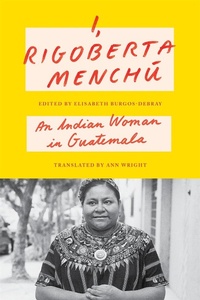
I, Rigoberta Menchu
An Indian Woman in Guatemala
Published on 12. November 2024
Book
Paperback/Softback
320 pages
978-1-80429-600-4 (ISBN)
Description
Now a global bestseller, the remarkable life of Rigoberta Menchu, a Guatemalan peasant woman, reflects on the experiences common to many Indian communities in Latin America. Menchu suffered gross injustice and hardship in her early life: her brother, father and mother were murdered by the Guatemalan military. She learned Spanish and turned to catechistic work as an expression of political revolt as well as religious commitment. Menchu vividly conveys the traditional beliefs of her community and her personal response to feminist and socialist ideas. Above all, these pages are illuminated by the enduring courage and passionate sense of justice of an extraordinary woman.
Reviews / Votes
A moving account of gruesome repression, gut-wrenching poverty and vicious racism ... A call to conscience. * Nation * A fascinating and moving description of the culture of an entire people. * Times (London) * A cornerstone of the multicultural canon. * Chronicle of Higher Education * An extraordinary document. -- Francis Sejersted * Chairman of the Norwegian Nobel Committee *More details
Language
English
Place of publication
London
United Kingdom
Target group
College/higher education
Professional and scholarly
Dimensions
Height: 208 mm
Width: 138 mm
Thickness: 22 mm
Weight
292 gr
ISBN-13
978-1-80429-600-4 (9781804296004)
Copyright in bibliographic data and cover images is held by Nielsen Book Services Limited or by the publishers or by their respective licensors: all rights reserved.
Schweitzer Classification
Other editions
Additional editions
E-Book
01/2010
2nd Edition
Verso Books
from
€40.59
Available for download
Persons
Rigoberta Menchu received the Nobel Peace Prize in 1992 for her efforts to end the oppression of indigenous peoples in Guatemala.
Content
Translator's note
Introduction
I The family
II Birth ceremonies
III The nahual
IV First visit to the finca. Life in the finca
V First visit to Guatemala City
VI An eight-year-old agricultural worker
VII Death of her little brother in the finca. Difficulty of communicating with other Indians
VIII Life in the Altiplano. Rigoberta's tenth birthday
IX Ceremonies for sowing time and harvest. Relationships with the earth
X The natural world. The earth, mother of man
XI Marriage ceremonies
XII Life in the community
XIII Death of her friend by poisoning
XIV A maid in the capital
XV Conflict with the landowners and the creation of the CUC
XVI Period of reflection on the road to follow
XVII Self-defence in the village
XVIII The Bible and self-defence: the examples of Judith, Moses and David
XIX Attack on the village by the army
XX The death of Dona Petrona Chona
XXI Farewell to the community: Rigoberta decides to learn Spanish
XXII The CUC comes out into the open
XXIII Political activity in other communities.
Contacts with ladinos
XXIV The torture and death of her little brother, burnt alive in front of members of his family and the
community
XXV Rigoberta's father dies in the occupation of the Spanish embassy. Peasants march to the capital
XXVI Rigoberta talks about her father
XXVII Kidnapping and death of Rigoberta's mother
XXVIII Death
XXIX Fiestas and Indian queens
XXX Lessons taught her by her mother: Indian women and ladino women
XXXI Women and political commitment. Rigoberta renounces marriage and motherhood
XXXII Strike of agricultural workers and the First of May in the capital
XXXIII In hiding in the capital. Hunted by the army
XXXIV Exile
Acknowledgements
Glossary
Bibliography
Further Reading
Introduction
I The family
II Birth ceremonies
III The nahual
IV First visit to the finca. Life in the finca
V First visit to Guatemala City
VI An eight-year-old agricultural worker
VII Death of her little brother in the finca. Difficulty of communicating with other Indians
VIII Life in the Altiplano. Rigoberta's tenth birthday
IX Ceremonies for sowing time and harvest. Relationships with the earth
X The natural world. The earth, mother of man
XI Marriage ceremonies
XII Life in the community
XIII Death of her friend by poisoning
XIV A maid in the capital
XV Conflict with the landowners and the creation of the CUC
XVI Period of reflection on the road to follow
XVII Self-defence in the village
XVIII The Bible and self-defence: the examples of Judith, Moses and David
XIX Attack on the village by the army
XX The death of Dona Petrona Chona
XXI Farewell to the community: Rigoberta decides to learn Spanish
XXII The CUC comes out into the open
XXIII Political activity in other communities.
Contacts with ladinos
XXIV The torture and death of her little brother, burnt alive in front of members of his family and the
community
XXV Rigoberta's father dies in the occupation of the Spanish embassy. Peasants march to the capital
XXVI Rigoberta talks about her father
XXVII Kidnapping and death of Rigoberta's mother
XXVIII Death
XXIX Fiestas and Indian queens
XXX Lessons taught her by her mother: Indian women and ladino women
XXXI Women and political commitment. Rigoberta renounces marriage and motherhood
XXXII Strike of agricultural workers and the First of May in the capital
XXXIII In hiding in the capital. Hunted by the army
XXXIV Exile
Acknowledgements
Glossary
Bibliography
Further Reading