

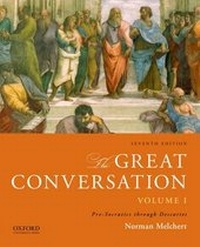
The Great Conversation
Volume 1: Pre-Socratics through Descartes
7th Edition
Published on 15. January 2014
Book
Paperback/Softback
416 pages
978-0-19-999967-5 (ISBN)
Description
Ideal for courses in ancient philosophy or ancient and medieval philosophy, The Great Conversation: A Historical Introduction to Philosophy, Volume I: Pre-Socratics through Descartes, Seventh Edition, covers the same material as the first half (chapters 1-13) of author Norman Melchert's longer volume, The Great Conversation. Tracing the exchange of ideas between history's key philosophers, it demonstrates that while constructing an argument or
making a claim, one philosopher almost always has others in mind. It addresses the fundamental questions of human life: Who are we? What can we know? How should we live? and What sort of reality do we
inhabit?Author Norman Melchert provides a generous selection of excerpts from major philosophical works and makes them more easily understandable to students with his lucid and engaging explanations. Extensive cross-referencing shows students how philosophers respond appreciatively or critically to the thoughts of other philosophers. The text is enhanced by two types of exercises--"Basic Questions" and "For Further Thought"--and numerous
illustrations.Also available to suit your course needs: The seventh editions of The Great Conversation: Volume II: Descartes through Derrida and Quine and the entire book, The Great Conversation: A
Historical Introduction to Philosophy, which begins with the Pre-Socratics and ends with David Chalmers
making a claim, one philosopher almost always has others in mind. It addresses the fundamental questions of human life: Who are we? What can we know? How should we live? and What sort of reality do we
inhabit?Author Norman Melchert provides a generous selection of excerpts from major philosophical works and makes them more easily understandable to students with his lucid and engaging explanations. Extensive cross-referencing shows students how philosophers respond appreciatively or critically to the thoughts of other philosophers. The text is enhanced by two types of exercises--"Basic Questions" and "For Further Thought"--and numerous
illustrations.Also available to suit your course needs: The seventh editions of The Great Conversation: Volume II: Descartes through Derrida and Quine and the entire book, The Great Conversation: A
Historical Introduction to Philosophy, which begins with the Pre-Socratics and ends with David Chalmers
Reviews / Votes
"This is certainly one of the best introductory texts on the market, possibly the best. For students who will take only one course in philosophy, this is the book that I would recommend; it will give them an excellent overview of more than two thousand years of philosophical debate."--Michael Henry, St. John's UniversityMore details
Edition
7th edition
Language
English
Place of publication
New York
United States
Target group
College/higher education
Illustrations
Halftones, black and white; Illustrations, black and white
ISBN-13
978-0-19-999967-5 (9780199999675)
Copyright in bibliographic data and cover images is held by Nielsen Book Services Limited or by the publishers or by their respective licensors: all rights reserved.
Schweitzer Classification
Person
Norman Melchert is Selfridge Professor of Philosophy Emeritus and a former Acting Dean of the College of Arts and Sciences at Lehigh University.
Content
*=New to this Edition
A Word to Instructors:
A Word to Students:
Acknowledgments:
Timeline:
1. Before Philosophy: Myth in Hesiod and Homer
Hesiod: War among the Gods
Homer: Heroes, Gods, and Excellence
2. Philosophy before Socrates
Thales: The One as Water
Anaximander: The One as the Boundless
Xenophanes: The Gods as Fictions
Sketch: Pythagoras:
Heraclitus: Oneness in the Logos
Profile: The Tao:
Parmenides: Only the One
Zeno: The Paradoxes of Common Sense
Atomism: The One and the Many Reconciled
The Key: An Ambiguity:
The World:
The Soul:
How to Live:
3. The Sophists: Rhetoric and Relativism in Athens
Democracy
The Persian Wars
The Sophists
Rhetoric:
Relativism:
Physis and Nomos:
Athens and Sparta at War
Aristophanes and Reaction
4. Socrates: To Know Oneself
Character
Is Socrates a Sophist?
What Socrates "Knows"
We Ought to Search for Truth:
Human Excellence Is Knowledge:
All Wrongdoing Is Due to Ignorance:
The Most Important Thing of All is to Care for Your Soul:
5. The Trial and Death of Socrates
Euthyphro:
Translator's Introduction
The Dialogue
Commentary and Questions
Apology:
Translator's Introduction
The Dialogue
Commentary and Questions
Crito:
Translator's Introduction
The Dialogue
Commentary and Questions
Phaedo (Death Scene)
Translator's Introduction
The Dialogue
Commentary and Questions
6. Plato: Knowing the Real and the Good
Knowledge and Opinion
Making the Distinction:
We Do Know Certain Truths:
The Objects of Knowledge:
The Reality of the Forms:
The World and the Forms
How Forms Are Related to the World:
Lower and Higher Forms:
The Form of the Good:
The Love of Wisdom
What Wisdom Is:
Love and Wisdom:
The Soul
The Immortality of the Soul:
The Structure of the Soul:
Morality
The State
Problems with the Forms
7. Aristotle: The Reality of the World
Aristotle and Plato
Otherworldliness:
The Objects of Knowledge:
Human Nature:
Relativism and Skepticism:
Ethics:
Logic and Knowledge
Terms and Statements:
Truth:
Reasons Why: The Syllogism:
Knowing First Principles:
The World
Nature:
The Four "Becauses":
Is There Purpose in Nature?:
Teleology:
First Philosophy
Not Plato's Forms:
What of Mathematics?:
Substance and Form:
Pure Actualities:
God:
The Soul
Levels of Soul:
Soul and Body:
Nous:
The Good Life
Happiness:
Virtue or Excellence (Arete):
The Role of Reason:
Responsibility:
The Highest Good:
8. Epicureans, Stoics, and Skeptics: Happiness for the Many
The Epicureans
The Stoics
*Profile: Marcus Aurelius:
The Skeptics
9. Jews and Christians: Sin, Salvation, and Love
Background
Jesus
The Meaning of Jesus
10. Augustine: God and the Soul
Wisdom, Happiness, and God
God and the World
The Great Chain of Being:
Evil:
Time:
Human Nature and Its Corruption
Human Nature and Its Restoration
Augustine on Relativism
The Two Cities
Augustine and the Philosophers
Reason and Authority:
Intellect and Will:
Epicureans and Stoices:
11. Anselm and Aquinas: Existence and Essence in God and the World
Anselm: On That, Than Which No Greater Can Be Conceived
Thomas Aquinas: Rethinking Aristotle
Sketch: Avicenna (Ibn Sina):
Philosophy and Theology:
Existence and Essence:
Sketch: Averro:es (Ibn Rushd):
From Creation to God:
The Nature of God:
Sketch: Maimonides (Moses Ben Maimon):
Humans: Their Souls:
Humans; Their Knowledge:
Humans: Their Good:
Ockham and Skeptical Doubts--Again
12. Moving from Medieval to Modern
The World God Made for Us
The Humanists
Reforming the Church
Skeptical Thoughts Revived
Copernicus to Kepler to Galileo: The Great Triple Play
13. Rene Descartes: Doubting Our Way to Certainty
The Method
Meditations on First Philosophy:
Meditation I
Meditation II
Meditation III
Meditation IV
Meditation V
Meditation VI
What Has Descartes Done?
A New Ideal for Knowledge:
A New Vision of Reality:
Problems:
The Preeminence of Epistemology:
Afterword:
Appendix: Writing a Philosophy Paper:
Credits:
Glossary:
Index:
A Word to Instructors:
A Word to Students:
Acknowledgments:
Timeline:
1. Before Philosophy: Myth in Hesiod and Homer
Hesiod: War among the Gods
Homer: Heroes, Gods, and Excellence
2. Philosophy before Socrates
Thales: The One as Water
Anaximander: The One as the Boundless
Xenophanes: The Gods as Fictions
Sketch: Pythagoras:
Heraclitus: Oneness in the Logos
Profile: The Tao:
Parmenides: Only the One
Zeno: The Paradoxes of Common Sense
Atomism: The One and the Many Reconciled
The Key: An Ambiguity:
The World:
The Soul:
How to Live:
3. The Sophists: Rhetoric and Relativism in Athens
Democracy
The Persian Wars
The Sophists
Rhetoric:
Relativism:
Physis and Nomos:
Athens and Sparta at War
Aristophanes and Reaction
4. Socrates: To Know Oneself
Character
Is Socrates a Sophist?
What Socrates "Knows"
We Ought to Search for Truth:
Human Excellence Is Knowledge:
All Wrongdoing Is Due to Ignorance:
The Most Important Thing of All is to Care for Your Soul:
5. The Trial and Death of Socrates
Euthyphro:
Translator's Introduction
The Dialogue
Commentary and Questions
Apology:
Translator's Introduction
The Dialogue
Commentary and Questions
Crito:
Translator's Introduction
The Dialogue
Commentary and Questions
Phaedo (Death Scene)
Translator's Introduction
The Dialogue
Commentary and Questions
6. Plato: Knowing the Real and the Good
Knowledge and Opinion
Making the Distinction:
We Do Know Certain Truths:
The Objects of Knowledge:
The Reality of the Forms:
The World and the Forms
How Forms Are Related to the World:
Lower and Higher Forms:
The Form of the Good:
The Love of Wisdom
What Wisdom Is:
Love and Wisdom:
The Soul
The Immortality of the Soul:
The Structure of the Soul:
Morality
The State
Problems with the Forms
7. Aristotle: The Reality of the World
Aristotle and Plato
Otherworldliness:
The Objects of Knowledge:
Human Nature:
Relativism and Skepticism:
Ethics:
Logic and Knowledge
Terms and Statements:
Truth:
Reasons Why: The Syllogism:
Knowing First Principles:
The World
Nature:
The Four "Becauses":
Is There Purpose in Nature?:
Teleology:
First Philosophy
Not Plato's Forms:
What of Mathematics?:
Substance and Form:
Pure Actualities:
God:
The Soul
Levels of Soul:
Soul and Body:
Nous:
The Good Life
Happiness:
Virtue or Excellence (Arete):
The Role of Reason:
Responsibility:
The Highest Good:
8. Epicureans, Stoics, and Skeptics: Happiness for the Many
The Epicureans
The Stoics
*Profile: Marcus Aurelius:
The Skeptics
9. Jews and Christians: Sin, Salvation, and Love
Background
Jesus
The Meaning of Jesus
10. Augustine: God and the Soul
Wisdom, Happiness, and God
God and the World
The Great Chain of Being:
Evil:
Time:
Human Nature and Its Corruption
Human Nature and Its Restoration
Augustine on Relativism
The Two Cities
Augustine and the Philosophers
Reason and Authority:
Intellect and Will:
Epicureans and Stoices:
11. Anselm and Aquinas: Existence and Essence in God and the World
Anselm: On That, Than Which No Greater Can Be Conceived
Thomas Aquinas: Rethinking Aristotle
Sketch: Avicenna (Ibn Sina):
Philosophy and Theology:
Existence and Essence:
Sketch: Averro:es (Ibn Rushd):
From Creation to God:
The Nature of God:
Sketch: Maimonides (Moses Ben Maimon):
Humans: Their Souls:
Humans; Their Knowledge:
Humans: Their Good:
Ockham and Skeptical Doubts--Again
12. Moving from Medieval to Modern
The World God Made for Us
The Humanists
Reforming the Church
Skeptical Thoughts Revived
Copernicus to Kepler to Galileo: The Great Triple Play
13. Rene Descartes: Doubting Our Way to Certainty
The Method
Meditations on First Philosophy:
Meditation I
Meditation II
Meditation III
Meditation IV
Meditation V
Meditation VI
What Has Descartes Done?
A New Ideal for Knowledge:
A New Vision of Reality:
Problems:
The Preeminence of Epistemology:
Afterword:
Appendix: Writing a Philosophy Paper:
Credits:
Glossary:
Index: