

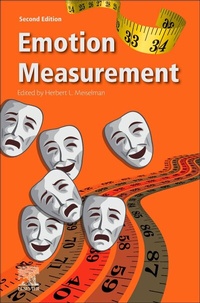
Emotion Measurement
2nd Edition
Published on 9. April 2021
Book
Paperback/Softback
1046 pages
978-0-12-821125-0 (ISBN)
Description
Emotion Measurement, Second Edition highlights key elements of emotions that should be considered in the measurement of emotions in both academic and commercial environments. This edition begins with an updated review of basic studies of emotion, including the theory, physiology, and psychology of emotions, as these are the foundational studies which food scientists as well as product developers and marketing professionals need to be aware of.
The second section highlights methods for studying emotions, and reviews the different approaches to emotion measurement: questionnaire self-report, behavioral, and physiological. This section explores the merits of intrinsic versus extrinsic measures of emotion. Some new measurement approaches have emerged since the first edition of this book. The book then presents practical applications, with chapters on emotion research in food and beverage, as well as in a range of products and clinical settings. The experience in testing product emotions has increased since the first edition when product emotion research was newer. Finally, Emotion Measurement, Second Edition provides coverage of cross-cultural research on emotions. This is critical because much of the newer commercial research is aimed at markets around the world, requiring methods that work in many cultures. And the universality of emotions has been a topic of research for decades.
Taking both an academic and applied approach, Emotion Measurement, Second Edition will be an invaluable reference for those conducting basic academic research on emotions and for sensory and consumer scientists, and the product developers and marketing professionals they work alongside.
The second section highlights methods for studying emotions, and reviews the different approaches to emotion measurement: questionnaire self-report, behavioral, and physiological. This section explores the merits of intrinsic versus extrinsic measures of emotion. Some new measurement approaches have emerged since the first edition of this book. The book then presents practical applications, with chapters on emotion research in food and beverage, as well as in a range of products and clinical settings. The experience in testing product emotions has increased since the first edition when product emotion research was newer. Finally, Emotion Measurement, Second Edition provides coverage of cross-cultural research on emotions. This is critical because much of the newer commercial research is aimed at markets around the world, requiring methods that work in many cultures. And the universality of emotions has been a topic of research for decades.
Taking both an academic and applied approach, Emotion Measurement, Second Edition will be an invaluable reference for those conducting basic academic research on emotions and for sensory and consumer scientists, and the product developers and marketing professionals they work alongside.
Reviews / Votes
*5 stars* "...describes the various aspects of emotion, especially in terms of being able to measure them. It looks at theory, typology, specific measurement methods, assessment in clinical practice, and cross-cultural issues.... [with] the goal to combine the academic study of emotions with the applied and commercial study of emotions.... [V]ery readable and contains numerous tables/figures, which help to clarify the text,...[with] no obvious shortcomings. This book is excellent,...[and] contains so much valuable information in 30 chapters and 1,021 pages. The authors are credible authorities from many countries of the world. The second edition is justified in replacing the first because there are new measurement approaches, along with cross-cultural research findings." -- (c)Doody's Review Service, 2023, Gary B Kaniuk, PsyD (Cermak Health Services)More details
Edition
2nd edition
Language
English
Place of publication
United States
Publishing group
Elsevier Science Publishing Co Inc
Target group
College/higher education
Illustrations
Approx. 222 illustrations (22 in full color)
Dimensions
Height: 229 mm
Width: 152 mm
Weight
1660 gr
ISBN-13
978-0-12-821125-0 (9780128211250)
Copyright in bibliographic data and cover images is held by Nielsen Book Services Limited or by the publishers or by their respective licensors: all rights reserved.
Schweitzer Classification
Other editions
Additional editions
Herbert L. Meiselman
Emotion Measurement
E-Book
04/2021
2nd Edition
Woodhead Publishing
€305.00
Available for download
Previous edition
Herbert L. Meiselman
Emotion Measurement
Book
04/2016
Woodhead Publishing Ltd
€269.88
Article exhausted; check for reprint
Person
Dr. Herbert L. Meiselman is an internationally known expert in sensory and consumer research, product development, and food service. He received his training in Psychology and Biology at the University of Chicago, University of Massachusetts, and Cornell University. He retired as Senior Research Scientist at Natick Laboratories where he was the highest-ranking Research Psychologist in the U.S. government. His accomplishments were recognized with a 2005 Award from the President of the United States. He has served in Editorial roles for Food Quality and Preference, Journal of Foodservice, and Appetite. Dr. Meiselman was Co-Chairman of the 2003 Pangborn Sensory Science Symposium; he serves on the Executive Committee of the Pangborn Symposia. His current research interests include context/environment, emotion, wellness, and psychographics.
Content
Part I Basic Studies of Emotion
1. Theoretical Approaches to Emotion and its Measurement
2. Navigating the Science of Emotion
3. Senses and emotion: a complex relationship
4. The Psychophysiology of Emotions
5. Emotion Learning: Measuring how affective values are acquired and updated
Part II Methods for Studying Emotions
6. Implicit and Explicit Measures of Food Emotions
7. Behavioral Measures of Emotion
8. Measuring Emotions in the Face
9. Lists of Emotional Stimuli
10. Measurement of Consumer Product Emotions Using Questionnaires
11. Sentiment Analysis: Detecting Valence, Emotions, and Other Affectual States from Text
12. Conceptual Profiling
13. Short-term Time Structure of Food-related Emotions: Measuring Dynamics of Responses
14. The EmoSensory (R) Wheel
15. Methodological Issues in Consumer Product Emotion Research Using Emotion Word Questionnaires
16. Emoji chapter
17. Applied consumer neuroscience and behavioral approaches for innovation, product development, and communications
Part III Studying Emotions in Practice
18. Emotions in Clinical Practice
19. Emotions Studied in Context: The Role of the Eating Environment
20. Emotion-Driven Product Design
21. Emotions of Odors and Personal and Home Care Products
22. Emotions Elicited by Foods
23. Emotion in Beverages
24. The Emotion of Happiness
25. Measurement of Disgust Proneness
26. Studying Emotions in the Elderly
27. Measures of emotional influences on eating and weight control
Part IV Cross-Cultural Studies of Emotions
28. Translatability of Emotions
29. Different Ways of Measuring Emotions Cross-Culturally
30. Measuring and Understanding Emotions in East Asia
1. Theoretical Approaches to Emotion and its Measurement
2. Navigating the Science of Emotion
3. Senses and emotion: a complex relationship
4. The Psychophysiology of Emotions
5. Emotion Learning: Measuring how affective values are acquired and updated
Part II Methods for Studying Emotions
6. Implicit and Explicit Measures of Food Emotions
7. Behavioral Measures of Emotion
8. Measuring Emotions in the Face
9. Lists of Emotional Stimuli
10. Measurement of Consumer Product Emotions Using Questionnaires
11. Sentiment Analysis: Detecting Valence, Emotions, and Other Affectual States from Text
12. Conceptual Profiling
13. Short-term Time Structure of Food-related Emotions: Measuring Dynamics of Responses
14. The EmoSensory (R) Wheel
15. Methodological Issues in Consumer Product Emotion Research Using Emotion Word Questionnaires
16. Emoji chapter
17. Applied consumer neuroscience and behavioral approaches for innovation, product development, and communications
Part III Studying Emotions in Practice
18. Emotions in Clinical Practice
19. Emotions Studied in Context: The Role of the Eating Environment
20. Emotion-Driven Product Design
21. Emotions of Odors and Personal and Home Care Products
22. Emotions Elicited by Foods
23. Emotion in Beverages
24. The Emotion of Happiness
25. Measurement of Disgust Proneness
26. Studying Emotions in the Elderly
27. Measures of emotional influences on eating and weight control
Part IV Cross-Cultural Studies of Emotions
28. Translatability of Emotions
29. Different Ways of Measuring Emotions Cross-Culturally
30. Measuring and Understanding Emotions in East Asia