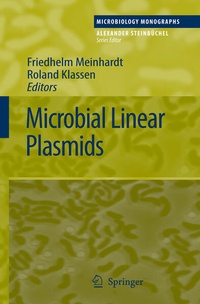
Linear plasmids of microbes represent a heterogenous group of extrachromosomal genetic elements initially assumed to be rare and peculiar. However, we now know that they are fairly frequently occurring plasmids in bacterial and eukaryotic species. Viral strategies to avoid shortening of the linear molecules during replication imply a common ancestry. Linear plasmids may be beneficial, neutral or detrimental for the respective host; functions include production of protein toxins, specific catabolic capabilities, antibiotic resistance, pathogenicity factors, and senescence induction.
Microbial Linear Plasmids
constitutes the first attempt to comprehensively assemble current knowledge of different types of such elements, highlight recent developments in the field, and challenge the distinction between viruses and linear plasmids.
Series
Edition
1st ed. Softcover of orig. ed. 2007
Language
Place of publication
Publishing group
Target group
Professional and scholarly
Research
Illustrations
51 s/w Abbildungen, 6 farbige Abbildungen
VIII, 252 p. 57 illus., 6 illus. in color.
Dimensions
Height: 235 mm
Width: 155 mm
Thickness: 15 mm
Weight
ISBN-13
978-3-642-09120-9 (9783642091209)
DOI
10.1007/978-3-540-72025-6
Schweitzer Classification
Streptomyces Linear Plasmids: Their Discovery, Functions, Interactions with Other Replicons, and Evolutionary Significance.- Streptomyces Linear Plasmids: Replication and Telomeres.- Catabolic Linear Plasmids.- Linear Plasmids and Phytopathogenicity.- The Linear Hairpin Replicons of Borrelia burgdorferi.- Linear Plasmids and Prophages in Gram-Negative Bacteria.- Retroplasmids: Linear and Circular Plasmids that Replicate via Reverse Transcription.- Linear Protein-Primed Replicating Plasmids in Eukaryotic Microbes.- Hairpin Plasmids from the Plant Pathogenic Fungi Rhizoctonia solani and Fusarium oxysporum.