

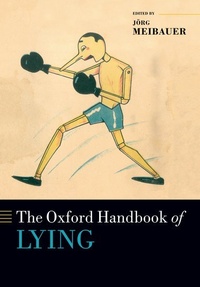
The Oxford Handbook of Lying
Published on 27. January 2022
Book
Paperback/Softback
688 pages
978-0-19-286337-9 (ISBN)
Description
This handbook brings together past and current research on all aspects of lying and deception, with chapters
contributed by leading international experts in the field. We are confronted daily with cases of lying, deception, bullshitting, and 'fake news', making it imperative to understand how lying works, how it can be defined, and whether it can be detected. A further important issue is whether lying should always be considered a bad thing or if, in some cases, it is simply a useful instrument of human cognition. This volume is the first to offer a comprehensive and up-to-date exploration of these and other issues from the combined perspectives of linguistics, philosophy, and psychology. Chapters offer precise definitions of lying and its subtypes, and outline the range of fields in which lying and deception play a role, from empirical lie detection and the acquisition of lying to its role in fiction, metaphor, and humour. They also describe the tools and approaches that are used by scholars researching lying and deception, such as questionnaire studies, EEG, neuroimaging, and the polygraph.
The volume will be an essential reference for students and researchers in a range of fields who are looking to deepen their understanding of all aspects of lying and deception, and will contribute to establishing the vibrant new field of interdisciplinary lying research.
contributed by leading international experts in the field. We are confronted daily with cases of lying, deception, bullshitting, and 'fake news', making it imperative to understand how lying works, how it can be defined, and whether it can be detected. A further important issue is whether lying should always be considered a bad thing or if, in some cases, it is simply a useful instrument of human cognition. This volume is the first to offer a comprehensive and up-to-date exploration of these and other issues from the combined perspectives of linguistics, philosophy, and psychology. Chapters offer precise definitions of lying and its subtypes, and outline the range of fields in which lying and deception play a role, from empirical lie detection and the acquisition of lying to its role in fiction, metaphor, and humour. They also describe the tools and approaches that are used by scholars researching lying and deception, such as questionnaire studies, EEG, neuroimaging, and the polygraph.
The volume will be an essential reference for students and researchers in a range of fields who are looking to deepen their understanding of all aspects of lying and deception, and will contribute to establishing the vibrant new field of interdisciplinary lying research.
Reviews / Votes
All in all, this book includes passionate analyses for students and professors of linguistics, philosophy, psychology, media studies, cultural studies, etc., and presents a critical approach of the literature on lying... More importantly, seeing all these examples from different fields, we realize how ubiquitous lying and deceiving really are. * Sabina Tabacaru, Universite Paris 8, The Linguist List *More details
Language
English
Place of publication
Oxford
United Kingdom
Target group
Professional and scholarly
Dimensions
Height: 245 mm
Width: 170 mm
Thickness: 34 mm
Weight
1304 gr
ISBN-13
978-0-19-286337-9 (9780192863379)
Copyright in bibliographic data and cover images is held by Nielsen Book Services Limited or by the publishers or by their respective licensors: all rights reserved.
Schweitzer Classification
Person
Joerg Meibauer is Professor of German Language and Linguistics at Johannes Gutenberg University Mainz. His research focuses on cognitive pragmatics, with an emphasis on the grammar-pragmatics interface. His many publications include Lying at the Semantics-Pragmatics Interface (De Gruyter Mouton 2014) and he is the editor of multiple volumes such as What is a Context? Linguistic Approaches and Challenges (with R. Finkbeiner and P. B. Schumacher; Benjamins 2012) and Pejoration (with R. Finkbeiner; Benjamins 2016).
Content
- Preface
- List of figures and tables
- List of contributors
- 1: Jörg Meibauer: Introduction: What is lying? Towards an integrative approach
- I Traditions
- 2: James Edwin Mahon: Classic philosophical approaches to lying and deception
- 3: James Edwin Mahon: Contemporary approaches to the philosophy of lying
- 4: Karol J. Hardin: Linguistic approaches to lying and deception
- 5: Lewis Bott and Emma Williams: Psycholinguistic approaches to lying and deception
- 6: Alexa Decker, Amanda Disney, Brianna D'Elia, and Julian Paul Keenan: Lying, deception, and the brain
- II Concepts
- 7: Stephen Wright: Lying and truth
- 8: Mark Jay: Lying and assertion
- 9: Matthew A. Benton: Lying, belief, and knowledge
- 10: Andreas Stokke: Lying, sincerity, and quality
- 11: Andrew Ortony and Swati Gupta: Lying and deception
- 12: Neri Marsili: Lying and certainty
- 13: Don Fallis: Lying and omissions
- 14: Jörg Meibauer: Lying, implicating, and presupposing
- 15: Kathi Beier: Lying and self-deception
- 16: Eliot Michaelson: Lying, testimony, and epistemic vigilance
- III Types of Lies and Deception
- 17: Julia Staffel: Knowledge lies and group lies
- 18: Jennifer Lackey: Selfless assertions
- 19: Jörg Meibauer: Bald-faced lies
- 20: Andreas Stokke: Bullshitting
- 21: Jennifer Perillo: Bluffing
- 22: Simone Dietz: White and prosocial lies
- IV Distinctions
- 23: Emar Maier: Lying and fiction
- 24: Matthew S. McGlone and Maxim Baryshevtsev: Lying and quotation
- 25: Marta Dynel: Lying and humour
- 26: Rachel Giora: Lying, irony, and default interpretation
- 27: Paul Egré: Lying and vagueness
- 28: Claudia Claridge: Lying, metaphor, and hyperbole
- 29: Marina Terkourafi: Lying and politeness
- V Domains
- 30: Victoria Talwar: Development of lying and cognitive abilities
- 31: Samantha Mann: Lyine and lie detection
- 32: Kees van Deemter and Ehud Reiter: Lying and computational linguistics
- 33: Bella M. DePaulo: Lying in social psychology
- 34: Kristina Suchotzki and Matthias Gamer: Lying and psychology
- 35: Giorgio Ganis: Lying and neuroscience
- 36: Thomas L. Carson: Lying and ethics
- 37: Stuart P. Green: Lying and the law
- 38: Marta Serra-Garcia: Lying in economics
- 39: Anita E. Kelly: Lying and education
- 40: Dariusz Galasinski: Lying and discourse analysis
- 41: Vian Bakir, Eric Herring, David Miller, and Piers Robinson: Lying and deception in politics
- 42: Thomas L. Carson: Lyng and history
- 43: Bettina Kümmerling-Meibauer: Lying and the arts
- 44: Fumiko Nishimura: Lying in different cultures
- References
- Index
- List of figures and tables
- List of contributors
- 1: Jörg Meibauer: Introduction: What is lying? Towards an integrative approach
- I Traditions
- 2: James Edwin Mahon: Classic philosophical approaches to lying and deception
- 3: James Edwin Mahon: Contemporary approaches to the philosophy of lying
- 4: Karol J. Hardin: Linguistic approaches to lying and deception
- 5: Lewis Bott and Emma Williams: Psycholinguistic approaches to lying and deception
- 6: Alexa Decker, Amanda Disney, Brianna D'Elia, and Julian Paul Keenan: Lying, deception, and the brain
- II Concepts
- 7: Stephen Wright: Lying and truth
- 8: Mark Jay: Lying and assertion
- 9: Matthew A. Benton: Lying, belief, and knowledge
- 10: Andreas Stokke: Lying, sincerity, and quality
- 11: Andrew Ortony and Swati Gupta: Lying and deception
- 12: Neri Marsili: Lying and certainty
- 13: Don Fallis: Lying and omissions
- 14: Jörg Meibauer: Lying, implicating, and presupposing
- 15: Kathi Beier: Lying and self-deception
- 16: Eliot Michaelson: Lying, testimony, and epistemic vigilance
- III Types of Lies and Deception
- 17: Julia Staffel: Knowledge lies and group lies
- 18: Jennifer Lackey: Selfless assertions
- 19: Jörg Meibauer: Bald-faced lies
- 20: Andreas Stokke: Bullshitting
- 21: Jennifer Perillo: Bluffing
- 22: Simone Dietz: White and prosocial lies
- IV Distinctions
- 23: Emar Maier: Lying and fiction
- 24: Matthew S. McGlone and Maxim Baryshevtsev: Lying and quotation
- 25: Marta Dynel: Lying and humour
- 26: Rachel Giora: Lying, irony, and default interpretation
- 27: Paul Egré: Lying and vagueness
- 28: Claudia Claridge: Lying, metaphor, and hyperbole
- 29: Marina Terkourafi: Lying and politeness
- V Domains
- 30: Victoria Talwar: Development of lying and cognitive abilities
- 31: Samantha Mann: Lyine and lie detection
- 32: Kees van Deemter and Ehud Reiter: Lying and computational linguistics
- 33: Bella M. DePaulo: Lying in social psychology
- 34: Kristina Suchotzki and Matthias Gamer: Lying and psychology
- 35: Giorgio Ganis: Lying and neuroscience
- 36: Thomas L. Carson: Lying and ethics
- 37: Stuart P. Green: Lying and the law
- 38: Marta Serra-Garcia: Lying in economics
- 39: Anita E. Kelly: Lying and education
- 40: Dariusz Galasinski: Lying and discourse analysis
- 41: Vian Bakir, Eric Herring, David Miller, and Piers Robinson: Lying and deception in politics
- 42: Thomas L. Carson: Lyng and history
- 43: Bettina Kümmerling-Meibauer: Lying and the arts
- 44: Fumiko Nishimura: Lying in different cultures
- References
- Index