

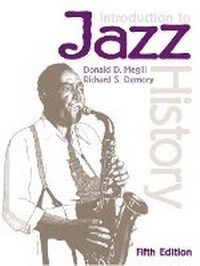
Introduction to Jazz History
5th Edition
Published on 28. August 2001
Book
Paperback/Softback
368 pages
978-0-13-019617-0 (ISBN)
Description
Unlike other musical genres, jazz history is firmly connected to its great performers. They are the ones who create the complexities and individual nuances that make jazz so difficult to categorize and chronicle. Including pertinent biographical information, Introduction to Jazz History continues to examine this interaction between musicians, their history, and the history of their music. The Fifth Edition updates current and ongoing stylistic trends in jazz, including the modern big bands and the new hybrids of jazz extending beyond fusion and crossover. The chronological presentation of the history is intuitive and logical. New biographical sketches for recent and historical musicians have been added to update the text. Interactive Listening Guides are now available using the CDs that accompany the text and the CDs for SCCJ (Smithsonian Collection of Classic Jazz). Together, these two sets comprise the most powerful collection of jazz recordings available in such a simple package and they are now fully interactive.
More details
Edition
5th edition
Language
English
Place of publication
United States
Publishing group
Pearson Education (US)
Target group
Professional and scholarly
Dimensions
Height: 235 mm
Width: 178 mm
Weight
1000 gr
ISBN-13
978-0-13-019617-0 (9780130196170)
Copyright in bibliographic data and cover images is held by Nielsen Book Services Limited or by the publishers or by their respective licensors: all rights reserved.
Schweitzer Classification
Other editions
New editions
Donald Megill | Richard Demory
Introduction to Jazz History
Book
07/2003
6th Edition
Pearson
€133.69
Shipment within 15-20 days
Previous edition

Donald D. Megill | Richard S. Demory
Introduction to Jazz History
Book
09/1995
4th Edition
Pearson Education (US)
€35.89
Article exhausted; check for reprint
Content
1. The Roots of Jazz.
2. Work Songs: Huddie Ledbetter-"Leadbelly."
I. THE BLUES-1900- .
3. Country Blues: Robert Johnson.
4. City Blues: Bessie Smith.
5. The Blues Continues: Muddy Waters, B. B. King, Eric Clapton, and Robert Cray.
II. PIANO STYLES-1890-1940.
6. Ragtime: Scott Joplin.
7. Stride: James P. Johnson and Fats Waller.
8. Boogie-Woogie: Jimmy Yancey and Meade "Lux" Lewis.
9. Piano Styles in Transition: "Fatha" Hines, Art Tatum, and Erroll Garner.
III. NEW ORLEANS JAZZ AND DIXIELAND-1910-1940.
10. New Orleans Dixieland: Joe "King" Oliver.
11. The Move to Chicago: Louis Armstrong and Bix Beiderbecke.
12. Jelly Roll Morton.
13. Leading Dixieland Soloists.
IV. SWING-1934-1945.
14. Swing: Benny Goodman and Fletcher Henderson.
15. Duke Ellington.
16. Count Basie, Billie Holiday, and Lester Young.
17. Swing in Transition, The New Swing.
V. BEBOP-1943-1960.
18. The Bebop Revolution: Charlie Parker and Dizzy Gillespie.
19. Bebop Piano: Thelonious Monk and Bud Powell.
20. Hard Bop (Straight Ahead and Funky).
21. Bebop: In the Mainstream Today.
VI. THIRD STREAM, COOL, AND BEYOND-1949- .
22. Third Stream and Avant-Garde: Miles Davis and Bill Evans.
23. Charles Mingus and the Modern Jazz Quartet.
24. Big Bands Continue.
VII. FREE JAZZ-1960- .
25. Free Jazz: Ornette Coleman.
26. John Coltrane and Eric Dolphy.
27. Anthony Braxton and Cecil Taylor.
VIII. JAZZ/ROCK FUSION-1968- .
28. Fusion: Chick Corea.
29. Fusion to Crossover.
Epilogue: Jazz in Action.
An Essay on Jazz and the Creative Spirit.
Appendix A: The Elements of Music for the Nonmusician.
Appendix B: The Elements of Jazz.
Appendix C: Rock to Fusion: An Overview.
Glossary.
Bibliography.
Index.
2. Work Songs: Huddie Ledbetter-"Leadbelly."
I. THE BLUES-1900- .
3. Country Blues: Robert Johnson.
4. City Blues: Bessie Smith.
5. The Blues Continues: Muddy Waters, B. B. King, Eric Clapton, and Robert Cray.
II. PIANO STYLES-1890-1940.
6. Ragtime: Scott Joplin.
7. Stride: James P. Johnson and Fats Waller.
8. Boogie-Woogie: Jimmy Yancey and Meade "Lux" Lewis.
9. Piano Styles in Transition: "Fatha" Hines, Art Tatum, and Erroll Garner.
III. NEW ORLEANS JAZZ AND DIXIELAND-1910-1940.
10. New Orleans Dixieland: Joe "King" Oliver.
11. The Move to Chicago: Louis Armstrong and Bix Beiderbecke.
12. Jelly Roll Morton.
13. Leading Dixieland Soloists.
IV. SWING-1934-1945.
14. Swing: Benny Goodman and Fletcher Henderson.
15. Duke Ellington.
16. Count Basie, Billie Holiday, and Lester Young.
17. Swing in Transition, The New Swing.
V. BEBOP-1943-1960.
18. The Bebop Revolution: Charlie Parker and Dizzy Gillespie.
19. Bebop Piano: Thelonious Monk and Bud Powell.
20. Hard Bop (Straight Ahead and Funky).
21. Bebop: In the Mainstream Today.
VI. THIRD STREAM, COOL, AND BEYOND-1949- .
22. Third Stream and Avant-Garde: Miles Davis and Bill Evans.
23. Charles Mingus and the Modern Jazz Quartet.
24. Big Bands Continue.
VII. FREE JAZZ-1960- .
25. Free Jazz: Ornette Coleman.
26. John Coltrane and Eric Dolphy.
27. Anthony Braxton and Cecil Taylor.
VIII. JAZZ/ROCK FUSION-1968- .
28. Fusion: Chick Corea.
29. Fusion to Crossover.
Epilogue: Jazz in Action.
An Essay on Jazz and the Creative Spirit.
Appendix A: The Elements of Music for the Nonmusician.
Appendix B: The Elements of Jazz.
Appendix C: Rock to Fusion: An Overview.
Glossary.
Bibliography.
Index.