

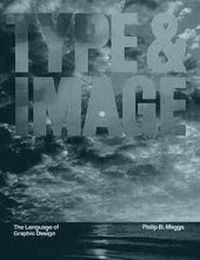
Type and Image
The Language of Graphic Design
Published on 15. March 1992
Book
Paperback/Softback
208 pages
978-0-471-28492-5 (ISBN)
Description
Type and Image The Language of Graphic Design Philip B. Meggs What is the essence of graphic design? How do graphic designers solve problems, organize space, and imbue their work with those visual and symbolic qualities that enable it to convey visual and verbal information with expression and clarity? The extraordinary flowering of graphic design in our time, as a potent means for communication and a major component of our visual culture, increases the need for designers, clients, and students to comprehend its nature. In this lively and lavishly illustrated book, the author reveals the very essence of graphic design. The elements that combine to form a design-- sings, symbols, words, pictures, and supporting forms--are analyzed and explained. Graphic design's ability to function as language, and the innovative ways that designers combine words and pictures, are discussed. While all visual arts share common spatial properties, the author demonstrates that graphic space has unique characteristics that are determined by its communicative function. Graphic designs can have visual and symbolic properties which empower them to communicate with deep expression and meaning.
The author defines this property as graphic resonance and explains how it occurs. After defining design as a problem-solving process, a model for this process is developed and illustrated by an in-depth analysis of actual case histories. This book will provide insight and inspiration for everyone who is interested or involved in graphic communications. While most materials about form and meaning in design have a European origin, this volume is based on the dynamic and expressive graphic design of America. The reader will find inspiration, hundreds of exciting examples by many of America's outstanding graphic designers, and keen insights in Type and Image.
The author defines this property as graphic resonance and explains how it occurs. After defining design as a problem-solving process, a model for this process is developed and illustrated by an in-depth analysis of actual case histories. This book will provide insight and inspiration for everyone who is interested or involved in graphic communications. While most materials about form and meaning in design have a European origin, this volume is based on the dynamic and expressive graphic design of America. The reader will find inspiration, hundreds of exciting examples by many of America's outstanding graphic designers, and keen insights in Type and Image.
More details
Language
English
Place of publication
New York
United States
Publishing group
John Wiley and Sons Ltd
Target group
College/higher education
Professional and scholarly
Illustrations
240 illustrations, (67 colour ) notes, bibliog , index
Dimensions
Height: 278 mm
Width: 220 mm
Thickness: 14 mm
Weight
786 gr
ISBN-13
978-0-471-28492-5 (9780471284925)
Copyright in bibliographic data and cover images is held by Nielsen Book Services Limited or by the publishers or by their respective licensors: all rights reserved.
Schweitzer Classification
Other editions
Previous edition

Philip B. Meggs
Type and Image
Book
04/1992
International Thomson Publishing Services
€66.00
Article exhausted; check for reprint
Person
About the author Philip B. Meggs is currently Professor of Communication Arts and Design at Virginia Commonwealth University in Richmond, Virginia, and contributing editor of Print magazine. He is the author of A History of Graphic Design (John Wiley & Sons, Inc.) which received an award for excellence from the Association of American Publishers, and co-author of Typographic Design: Form and Communication (John Wiley & Sons, Inc.) His graphic designs have been widely exhibited, including the Print Regional Design Annual, Communication Arts Design Annual, AIGA Communication Graphics, and The New York Art Directors Club annual exhibition.
Content
The Elements of Graphic Design. The Union of Word and Picture. Graphic Space. Graphic Resonance. The Design Process. Epilogue. Notes. Bibliography. Picture Credits. Index.