


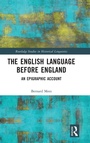
The English Language Before England
An Epigraphic Account
1st Edition
Published on 26. August 2024
Book
Paperback/Softback
264 pages
978-1-032-21418-4 (ISBN)
Description
This pioneering work explores epigraphic evidence for the development of English before the Anglo-Saxon period, bringing together linguistic, historical and archaeological perspectives on early inscriptions, making them more accessible to a wider audience.
The volume offers a new account of the Germanic development of Anglo-Saxon England, beginning with an examination of the earliest inscriptions from northern Europe and the oldest inscriptions preserving Germanic names, many of which have only been discovered since the 1980s. The book charts the origins of key terms such as Angle, Saxon and Jute and early writing systems used by Germanic peoples. Drawing on epigraphic evidence from northwestern Germany through to southwestern Denmark and sub-Roman Britain, Mees situates the analysis within historical and linguistic frameworks but also provides archaeological contextualisations, assessed chronologically, for the inscriptions. Taken together, the work re-examines existing models of the early development of English through the lens of contemporary approaches, opening paths for new directions in research on historical dialectology.
This book is key reading for students and scholars interested in the history of English and historical linguistics.
The volume offers a new account of the Germanic development of Anglo-Saxon England, beginning with an examination of the earliest inscriptions from northern Europe and the oldest inscriptions preserving Germanic names, many of which have only been discovered since the 1980s. The book charts the origins of key terms such as Angle, Saxon and Jute and early writing systems used by Germanic peoples. Drawing on epigraphic evidence from northwestern Germany through to southwestern Denmark and sub-Roman Britain, Mees situates the analysis within historical and linguistic frameworks but also provides archaeological contextualisations, assessed chronologically, for the inscriptions. Taken together, the work re-examines existing models of the early development of English through the lens of contemporary approaches, opening paths for new directions in research on historical dialectology.
This book is key reading for students and scholars interested in the history of English and historical linguistics.
More details
Series
Language
English
Place of publication
London
United Kingdom
Publishing group
Taylor & Francis Ltd
Target group
College/higher education
Professional and scholarly
Academic and Postgraduate
Illustrations
32 s/w Abbildungen, 32 s/w Photographien bzw. Rasterbilder, 5 s/w Tabellen
5 Tables, black and white; 32 Halftones, black and white; 32 Illustrations, black and white
Dimensions
Height: 229 mm
Width: 152 mm
Thickness: 15 mm
Weight
407 gr
ISBN-13
978-1-032-21418-4 (9781032214184)
Copyright in bibliographic data and cover images is held by Nielsen Book Services Limited or by the publishers or by their respective licensors: all rights reserved.
Schweitzer Classification
Other editions
Additional editions
Book
09/2022
1st Edition
Routledge
€186.40
Shipment within 10-20 days
E-Book
09/2022
1st Edition
Routledge
€55.49
Available for download
E-Book
09/2022
1st Edition
Routledge
€55.49
Available for download
Person
Bernard Mees taught history, linguistics and business at the University of Melbourne, RMIT University and the University of Tasmania. He received his PhD from the University of Melbourne and his previous publications include The Science of the Swastika (2008), Celtic Curses (2009) and The Rise of Business Ethics (2020).
Content
Table of contents
1. Introduction
2. The entry of the Germani
3. Runic and Roman
4. Northern bogs
5. Roman Britain
6. Saxons and Frisians
7. Angles and Jutes
8. Conclusion
Bibliography
1. Introduction
2. The entry of the Germani
3. Runic and Roman
4. Northern bogs
5. Roman Britain
6. Saxons and Frisians
7. Angles and Jutes
8. Conclusion
Bibliography