

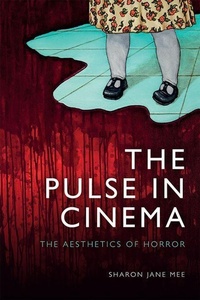
The Pulse in Cinema
The Aesthetics of Horror
Published on 15. December 2020
Book
Hardback
232 pages
978-1-4744-7584-6 (ISBN)
Description
When we think of the pulse in cinema, we may think of the heartbeat of the spectator as they respond to affective or moving scenes in the film, or how fast-paced and shocking images exacerbate this affective response. Conceptually extending cinema spectatorship, The Pulse in Cinema contends that cinema is an energetic arrangement of affective and intense forces, where the image and the spectator are specific components. Analysing body horror films such as The Tingler (1959), Dawn of the Dead (1978) and The Beyond (1981), this book builds on Lyotard's concept of the dispositif, Deleuze's work on sensation and Bataille's economic theory to conceptualise a pulse in cinema, arguing for its importance in cinema spectatorship theory.
Reviews / Votes
Mee's impressive analysis of film is matched by her ability to connect complex ideas to films that are recognized as canon and films that are often marginalized. [...] Highly recommended. -- S. B. Skelton, Kansas State University * CHOICE * In this book, Sharon Jane Mee gives a bold new account of the power of cinema. Movies both enthrall us and unsettle us. The Pulse in Cinema works through this double allure, and offers us a profound meditation on what aesthetic experience might mean in the twenty-first century. -- Steven Shaviro, DeRoy Professor of English, Wayne State UniversityMore details
Language
English
Place of publication
Edinburgh
United Kingdom
Target group
Professional and scholarly
Illustrations
26 black and white illustrations
Dimensions
Height: 163 mm
Width: 240 mm
Thickness: 22 mm
Weight
498 gr
ISBN-13
978-1-4744-7584-6 (9781474475846)
Copyright in bibliographic data and cover images is held by Nielsen Book Services Limited or by the publishers or by their respective licensors: all rights reserved.
Schweitzer Classification
Other editions
Additional editions
E-Book
11/2020
1st Edition
Edinburgh University Press
€0.00
Available for download
Person
Dr Sharon Jane Mee is Publications Officer at Australia's National Research Organisation for Women's Safety (ANROWS)
Content
Acknowledgements
List of Illustrations
Introduction
Rosalind E. Krauss's Theory of the Pulse
Rhythm and Pulse
The Pulse: A Philosophical Enquiry
Body Horror
1. The Rhythm of Life: The Pulse in the Image
Rhythm and Pulse
Rhythm in Experimental Cinema
American Avant-garde and the Structuralist/Materialists
The French Impressionists
Dada
Protocinema: Etienne-Jules Marey
The Pulse in Psychoanalysis: Sigmund Freud
2. The Rhythm of Life: The Pulse in the Spectator
Surfaces of Inscription and Passages of Intensity
Movement, and an Opening
The Logic of Sensation as a Diastolic-systolic Opening
The Aesthetics of the Open: Georges Franju's Le Sang des betes/Blood of the Beasts (1949)
A Libidinal Economy, and an Opening
Candour as the Body's Openness to an Outside
3. Aisthesis and Dispositif: The Pulse and its Analogues
Extracting the Fear that Tingles the Spine: The Hype, the Buzz of the Gimmick, and the Bottom Line
The Execution: The Tingler (1959)
Aisthesis and Prescribed Lines
Prescription and the Aesthetics of Blood Spilled
The Pulse 'Exposed'
Dispositif: Lines of Fright
Figural Analogues or 'a Metonymy Without End': The Heart that Throbs, the Spine that Tingles, the Mouth that Screams. Do you have the Guts?
4. Automutilation and Metonymy: The Economy of the Pulse
General Economy as Energetic Expenditure
Two General Economies of Communication and Communion
Automutilation: Effects on the Flesh
Metonymy and the 'Operation' to Undo Identity
Automutilation and George A. Romero's Dawn of the Dead (1978)
An Operation in the Morgue: Lucio Fulci's L'aldila/The Beyond (1981)
The Sovereign Operation as Affective Experience
The Pulse as a Sovereign Operation in Horror Cinema
5. Blood and Convulsive Affect: Vectors of the Pulse as Sovereign Operations
Andrzej Zulawski's Possession (1981)
Possession and Dispossession
Body Horror and Convulsive Affect
The Copula and the Copulation of Bodies: The Convulsions of Language and Self, Even (Fucking Language)
The Movement-Image and Vectors of Sensation
The Machinic and the Non-Machinic
The Vector and Communication
The Magnitude and Direction of Vectors that Result in Possession and Dispossession
Material Vectors and their (Non)sense
Bibliography
Filmography
Index.
List of Illustrations
Introduction
Rosalind E. Krauss's Theory of the Pulse
Rhythm and Pulse
The Pulse: A Philosophical Enquiry
Body Horror
1. The Rhythm of Life: The Pulse in the Image
Rhythm and Pulse
Rhythm in Experimental Cinema
American Avant-garde and the Structuralist/Materialists
The French Impressionists
Dada
Protocinema: Etienne-Jules Marey
The Pulse in Psychoanalysis: Sigmund Freud
2. The Rhythm of Life: The Pulse in the Spectator
Surfaces of Inscription and Passages of Intensity
Movement, and an Opening
The Logic of Sensation as a Diastolic-systolic Opening
The Aesthetics of the Open: Georges Franju's Le Sang des betes/Blood of the Beasts (1949)
A Libidinal Economy, and an Opening
Candour as the Body's Openness to an Outside
3. Aisthesis and Dispositif: The Pulse and its Analogues
Extracting the Fear that Tingles the Spine: The Hype, the Buzz of the Gimmick, and the Bottom Line
The Execution: The Tingler (1959)
Aisthesis and Prescribed Lines
Prescription and the Aesthetics of Blood Spilled
The Pulse 'Exposed'
Dispositif: Lines of Fright
Figural Analogues or 'a Metonymy Without End': The Heart that Throbs, the Spine that Tingles, the Mouth that Screams. Do you have the Guts?
4. Automutilation and Metonymy: The Economy of the Pulse
General Economy as Energetic Expenditure
Two General Economies of Communication and Communion
Automutilation: Effects on the Flesh
Metonymy and the 'Operation' to Undo Identity
Automutilation and George A. Romero's Dawn of the Dead (1978)
An Operation in the Morgue: Lucio Fulci's L'aldila/The Beyond (1981)
The Sovereign Operation as Affective Experience
The Pulse as a Sovereign Operation in Horror Cinema
5. Blood and Convulsive Affect: Vectors of the Pulse as Sovereign Operations
Andrzej Zulawski's Possession (1981)
Possession and Dispossession
Body Horror and Convulsive Affect
The Copula and the Copulation of Bodies: The Convulsions of Language and Self, Even (Fucking Language)
The Movement-Image and Vectors of Sensation
The Machinic and the Non-Machinic
The Vector and Communication
The Magnitude and Direction of Vectors that Result in Possession and Dispossession
Material Vectors and their (Non)sense
Bibliography
Filmography
Index.