

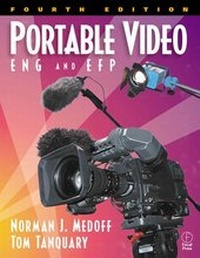
Portable Video
ENG & EFP
4th Edition
Published on 11. September 2001
Book
Paperback/Softback
344 pages
978-0-240-80438-5 (ISBN)
Description
Portable Video focuses on technique and technology for single camera electronic news gathering and electronic field production. Covering everything from basic creative and technical editing techniques to budgets and copyright issues, it is accessible to the home videomaker or amateur and to the professional seeking information on the newest advances in technique and equipment.
Portable Video: ENG and EFP, Fourth Edition has been revised and updated to cover all of the latest equipment and techniques. Additionally, it discusses the history of video production and electronic news gathering, and the importance of the verbal content in any production is explored in a chapter on scriptwriting.
Portable Video: ENG and EFP, Fourth Edition has been revised and updated to cover all of the latest equipment and techniques. Additionally, it discusses the history of video production and electronic news gathering, and the importance of the verbal content in any production is explored in a chapter on scriptwriting.
Reviews / Votes
"this book is the best i have of this type...the illustrations are very detailed and clear...the information includes techniques used by professionals, and goes beyond the superficial or introductory level..."More details
Edition
4th New edition
Language
English
Place of publication
Oxford
United Kingdom
Publishing group
Taylor & Francis Ltd
Target group
College/higher education
college students; professionals; home videomakers and amateurs
Edition type
New edition
Dimensions
Height: 279 mm
Width: 219 mm
ISBN-13
978-0-240-80438-5 (9780240804385)
Copyright in bibliographic data and cover images is held by Nielsen Book Services Limited or by the publishers or by their respective licensors: all rights reserved.
Schweitzer Classification
Other editions
New editions
Book
02/2007
5th Edition
Focal Press
€43.32
Article exhausted; check for reprint
Persons
Dr. Medoff is Director of the School of Communication at Northern Arizona University. He has taught and served as an administrator at three different universities, produced numerous television and corporate video projects, and has overseen the productions of many students. Dr. Medoff has authored articles in scholarly journals as well as trade and consumer magazines. He has also written textbooks on the Internet and mass media, television production, and electronic media. In addition, he has served as president of the Broadcast Education Association and has recently been the recipient of a Fulbright Specialist Grant.
Dr. Medoff is Director of the School of Communication at Northern Arizona University. He has taught and served as an administrator at three different universities, produced numerous television and corporate video projects, and has overseen the productions of many students. Dr. Medoff has authored articles in scholarly journals as well as trade and consumer magazines. He has also written textbooks on the Internet and mass media, television production, and electronic media. In addition, he has served as president of the Broadcast Education Association and has recently been the recipient of a Fulbright Specialist Grant.
Dr. Fink is Professor and Chair of the Department of Radio-TV-Film at California State University, Fullerton. He teaches courses in production, writing, media history, and children's TV. Dr. Fink has published papers on topics such as digital video in the classroom, the application of drama to video production, music in primetime drama, and comedy writing. He is also the co-author of textbooks on telecommunications and studio television production.
Dr. Medoff is Director of the School of Communication at Northern Arizona University. He has taught and served as an administrator at three different universities, produced numerous television and corporate video projects, and has overseen the productions of many students. Dr. Medoff has authored articles in scholarly journals as well as trade and consumer magazines. He has also written textbooks on the Internet and mass media, television production, and electronic media. In addition, he has served as president of the Broadcast Education Association and has recently been the recipient of a Fulbright Specialist Grant.
Dr. Fink is Professor and Chair of the Department of Radio-TV-Film at California State University, Fullerton. He teaches courses in production, writing, media history, and children's TV. Dr. Fink has published papers on topics such as digital video in the classroom, the application of drama to video production, music in primetime drama, and comedy writing. He is also the co-author of textbooks on telecommunications and studio television production.
Content
Introduction; ENG and EFP: The World of Professional Video; ENG: Capturing the Event; EFP: Studio Production on Location; Part One: The Tools; Chapter 2 Video: The Process of Image Acquisition; Lenses, Cameras, and Recorders; Principles of Lens Operation; Video Cameras; Camera Funtions; Videotape Recorders; Batteries; Tripods and Camera-Mounting Devices; Chapter 3 Microphone and Audio Recording Techniques; Microphone Structure; Sensitivity; Impedance and Other Factors; Style; Special Applications; Accessories; Audio Cables and Connectors; Selection and Placement; Monitoring, Mixing, and Stereo; Chapter 4 Light: Understanding and Controlling It; Part 1 The Physical Properties of Light; What is Light; The Color of Light; The Direction and Size of a Light Source; The Quantity of Light; Part 2 Creating Light; Light Emitters; Lighting Equipment; Part Three Basic Lighting Technique; The Starting Point: Exposure; The Art of Casting Shadows; Basic Theory; Formal Lighting; Natural Lighting; Light as an Editorial Tool; Conclusions;Chapter 5 Basic Shots: The Language of Video; Identifying the Story Line; The Range of Shots; Shots by Focal Length; Camera Action Shots; Special Use Shots; Composition; Summary; Part Two: The Process; Chapter 6 Scriptwriting; ENG; EFP; Chapter 7 Pre-production and Production; ENG; EFP; Graphics and Props preparation; Clearance on Copyright Materials; Travel Planning; Production: Shooting on Location; ENG versus EFP; Setting Up; Sound and Light; Location Integrity; Maintaining Control; Back-up Plans; Security; Dealing with the Public; Checklists; Rolling Tape; Rehearsing; Shooting (and Re-Shooting); Wrapping Up; Chapter 8 Post-Production: Editing It All Together Part One: Technical Editing Basics; Types of Edits; Technical Concepts; Editing Machines; Video Input Switch; Understanding the Editing System; Part Two: Creative Editing Basics; Sequencing the Shots; Maintaining Continuity; Establishing a Story Line; Pacing; Adding-Post Production Value; Editing Sound; Summary; Part Three: Styles and Applications; Chapter 9 ENG Style Part One: Taped Coverage; Spot News; General News; Feature News; Sports News; Summary; Part Two: Live Coverage; Live TV; Getting the Picture Out; Communications; Interrupted Feedback; Form and Style; EFP; Chapter 10 EFP Styles; Corporate and Professional Videos; Commercials and Public Service Announcements; Performance Videos; Sports Video; Music Videos; Nature and Documentary Videos; Video Art; Multimedia; Internet; Chapter 11 Budgeting and Pricing; Eng vs EFP; In House versus Independent Production Units; Creating an Accurate Budget; Budget Tracking; EFP Pricing Formula; Entry into the Video Marketplace Chapter 12; Copyrights and Legal Issues; News Productions; Non-News Productions; Copyrights; Protecting Your Work; Insurance; Chapter 13 New Trends and Technologies; Buying Equipment; Digital Technology in Portable Video; Cameras; Videotape; Editors; Exhibition Monitors; Digital TV; High Definition TV; Streaming Video; A Cautionary Note; A Final Note