

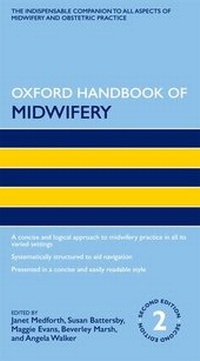
Oxford Handbook of Midwifery
2nd Edition
Published on 9. August 2011
Book
Paperback/Softback
784 pages
978-0-19-958467-3 (ISBN)
Description
Fully revised and updated to include the most up-to-date guidelines, references and resources, this new edition of the bestselling Oxford Handbook of Midwifery provides a concise and logical approach to midwifery practice in all its varied care settings. Giving a complete picture of the role of the midwife, the handbook reflects the mother's journey through conception, pregnancy and birth to the final postnatal examination of mother and baby. This new edition includes recent advances in midwifery practice including developments in antenatal care, labour, postnatal care and infant feeding. The content is systematically structured to enable quick navigation and ensure the relevant information is at your fingertips whenever you need it. The handbook covers the vast majority of situations encountered in the many broad and varied settings of midwifery practice, from the normal, low-risk care of the mother and neonate, through to the more complex areas of working alongside obstetric or paediatric colleagues in high-risk pregnancy and birth situations. It provides all the information you will need to assist you when participating in complex care with confidence.
With a wealth of references, recommendations, and guidance from the authors' many years of experience this handbook will help you achieve the best possible results for your patients. The fundamentals of midwifery are divided into seven main sections, covering antenatal care; normal labour and birth; complicated labour and birth; postnatal care; family planning; care of the newborn; and infant feeding. It also gives information rarely covered in standard midwifery texts, including sexual health, complementary therapies, common blood values, investigations, and midwifery emergencies. Key interventions are laid out as algorithms to aid quick assimilation of the crucial facts. Written by practising midwives, and checked by subject experts, you can trust this handbook to have the latest and best information you need. Presented in concise and easily readable style, the book is laid out with clear headings, and key facts listed in bullet points. Pocket-sized, with sturdy plastic covers, the Oxford Handbook of Midwifery is a unique and invaluable companion for students, practising midwives, educators, and anyone who needs to understand the challenging and rewarding work of midwifery.
With a wealth of references, recommendations, and guidance from the authors' many years of experience this handbook will help you achieve the best possible results for your patients. The fundamentals of midwifery are divided into seven main sections, covering antenatal care; normal labour and birth; complicated labour and birth; postnatal care; family planning; care of the newborn; and infant feeding. It also gives information rarely covered in standard midwifery texts, including sexual health, complementary therapies, common blood values, investigations, and midwifery emergencies. Key interventions are laid out as algorithms to aid quick assimilation of the crucial facts. Written by practising midwives, and checked by subject experts, you can trust this handbook to have the latest and best information you need. Presented in concise and easily readable style, the book is laid out with clear headings, and key facts listed in bullet points. Pocket-sized, with sturdy plastic covers, the Oxford Handbook of Midwifery is a unique and invaluable companion for students, practising midwives, educators, and anyone who needs to understand the challenging and rewarding work of midwifery.
Reviews / Votes
This is the first pocket-sized bible for midwives that encompasses everything required in caring for a mother and baby from pre conceptual to the final examination. It is just as important as the CTG machine or other obstetric tools. Although this is a must-have book for the midwifery student, it will be of benefit to all levels of midwives and clinicians. Nursing TimesMore details
Series
Edition
2nd edition
Language
English
Place of publication
Oxford
United Kingdom
Target group
Professional and scholarly
Illustrations
28 black and white line drawings
Dimensions
Height: 181 mm
Width: 114 mm
Thickness: 28 mm
Weight
390 gr
ISBN-13
978-0-19-958467-3 (9780199584673)
Copyright in bibliographic data and cover images is held by Nielsen Book Services Limited or by the publishers or by their respective licensors: all rights reserved.
Schweitzer Classification
Other editions
Previous edition
Janet Medforth | Sue Battersby | Maggie Evans
Oxford Handbook of Midwifery
Book
10/2006
Oxford University Press
€24.74
Article exhausted; check for reprint
Persons
Edited by Janet Medforth, Senior Midwifery Lecturer and Course Leader, Faculty of Health and Well Being, Sheffield Hallam University, UK, Sue Battersby, Independent Researcher, Lecturer in Midwifery and Infant Feeding, UK, Maggie Evans, Freelance Lecturer and Consultant in Midwifery and Complementary Therapies, UK, Beverley Marsh, Senior Midwifery Lecturer, Faculty of Health and Well Being, Sheffield Hallam University, UK, and Angela Walker, Senior Midwifery Lecturer, School of Nursing and Midwifery, University of Sheffield, UK
Contributors:
Mrs Angela Thurlby, Nursing Lecturer, School of Nursing and Midwifery, University of Sheffield, UK
Contributors:
Mrs Angela Thurlby, Nursing Lecturer, School of Nursing and Midwifery, University of Sheffield, UK
Content
1. Introduction ; 2. Preconception care ; 3. Sexual health ; 4. Antenatal care ; 5. Health advice for pregnancy ; 6. Minor disorders of pregnancy ; 7. Helping women cope with pregnancy: complementary therapies ; 8. The need for social support ; 9. Recognizing and managing pregnancy complications ; 10. Medical conditions during pregnancy ; 11. Normal labour: first stage ; 12. Pain relief: non-pharmacological ; 13. Pain relief: pharmacological ; 14. Normal labour: second stage ; 15. Normal labour: third stage ; 16. Immediate care of the newborn ; 17. Management of malpositions and malpresentations ; 18. High-risk labour ; 19. Emergencies during pregnancy, labour, and postnatally ; 20. Postnatal care ; 21. Disorders of the postnatal period ; 22. Contraception ; 23. Care of the newborn ; 24. Breastfeeding ; 25. Artificial feeding