


Team-Based Shared Formulation for Psychosis
The SAFE Approach
1st Edition
Published on 29. July 2022
Book
Hardback
224 pages
978-0-367-53668-8 (ISBN)
Description
Adding to the growing literature on shared formulation, the authors provide over two decades of practice-based evidence for the use of a Shared Assessment, Formulation and Education (SAFE) approach to working with those with complex mental health and behavioural needs.
The SAFE approach offers an evidence-informed framework for multidisciplinary teams to address the needs of those with complex and enduring psychosis for whom current evidence-based interventions are ineffective in promoting their recovery. Drawing from richly detailed case studies, the authors provide a range of useful tools and fomulation templates for use by clinicans and professionals alike. They put forward a shared language to promote a multidisciplinary understanding of service users' complex needs and a means of organising treatment into a focused, realistic and targeted approach aimed at reducing barriers to recovery and allowing individuals to lead personally meaningful lives. The book focuses predominantly on the treatment of those with psychosis who require bespoke, multi-theory informed care.
This work will be an invaluable resource to professionals working with this client group, including clinical and counselling psychologists, psychiatrists and other allied health professionals.
The SAFE approach offers an evidence-informed framework for multidisciplinary teams to address the needs of those with complex and enduring psychosis for whom current evidence-based interventions are ineffective in promoting their recovery. Drawing from richly detailed case studies, the authors provide a range of useful tools and fomulation templates for use by clinicans and professionals alike. They put forward a shared language to promote a multidisciplinary understanding of service users' complex needs and a means of organising treatment into a focused, realistic and targeted approach aimed at reducing barriers to recovery and allowing individuals to lead personally meaningful lives. The book focuses predominantly on the treatment of those with psychosis who require bespoke, multi-theory informed care.
This work will be an invaluable resource to professionals working with this client group, including clinical and counselling psychologists, psychiatrists and other allied health professionals.
Reviews / Votes
Improving the recovery and quality of life for people with psychosis is nearly always a team-based responsibility: whether in early intervention, assertive outreach, rehabilitation or generic mental health teams. I have always been struck by the differences between teams with the same function in their capacity to absorb and manage risk safely without jeopardising their fundamental mission to care, empower and promote recovery and well-being. I've never quite been able to put my finger on why teams differ in this way; perhaps leadership, structure, model fidelity, expectations etc., let alone how to work with a whole team to hit the sweet spot. Alan Meaden, Andrew Fox and Henna Hussain have dedicated over two decades' work to this task with spectacular results. In this book they demonstrate with clarity and accessible case material their approach built on a team-based shared formulation, and how it can provide a solid foundation for interventions delivered by the whole team, such as relapse prevention, easing distress from the troubled internal world, through to social recovery. This is the key to the successful translation of evidence-based interventions through a team platform and is essential reading for all psychosis teams. I cannot recommend it highly enough.Max Birchwood, Professor of Youth Mental Health at Warwick Medical School, University of Warwick
More details
Language
English
Place of publication
London
United Kingdom
Publishing group
Taylor & Francis Ltd
Target group
College/higher education
Professional and scholarly
Postgraduate, Professional, and Professional Practice & Development
Illustrations
8 s/w Abbildungen, 8 s/w Zeichnungen, 26 s/w Tabellen
26 Tables, black and white; 8 Line drawings, black and white; 8 Illustrations, black and white
Dimensions
Height: 240 mm
Width: 161 mm
Thickness: 17 mm
Weight
526 gr
ISBN-13
978-0-367-53668-8 (9780367536688)
Copyright in bibliographic data and cover images is held by Nielsen Book Services Limited or by the publishers or by their respective licensors: all rights reserved.
Schweitzer Classification
Other editions
Additional editions
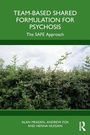
Alan Meaden | Andrew Fox | Henna Hussain
Team-Based Shared Formulation for Psychosis
The SAFE Approach
Book
07/2022
1st Edition
Routledge
€53.10
Shipment within 15-20 days
Alan Meaden | Andrew Fox | Henna Hussain
Team-Based Shared Formulation for Psychosis
The SAFE Approach
E-Book
07/2022
1st Edition
Routledge
€45.99
Available for download
Alan Meaden | Andrew Fox | Henna Hussain
Team-Based Shared Formulation for Psychosis
The SAFE Approach
E-Book
07/2022
1st Edition
Routledge
€45.99
Available for download
Persons
Alan Meaden is a consultant clinical psychologist with over 25 years of experience working in designing and researching rehabilitation services.
Andrew Fox is a clinical psychologist working across inpatient recovery and rehabilitation services. He is also a lecturer in the Centre for Applied Psychology at the University of Birmingham.
Henna Hussain is a clinical psychologist currently working for Birmingham and Solihull Mental Health NHS Foundation Trust. Henna works in both a Community Mental Health Team and in Recovery and Rehabilitation inpatient services.
Andrew Fox is a clinical psychologist working across inpatient recovery and rehabilitation services. He is also a lecturer in the Centre for Applied Psychology at the University of Birmingham.
Henna Hussain is a clinical psychologist currently working for Birmingham and Solihull Mental Health NHS Foundation Trust. Henna works in both a Community Mental Health Team and in Recovery and Rehabilitation inpatient services.
Content
1. Understanding Risk and Problematic Behaviour in Psychosis 2. Getting Started: Assessing and Formulating the Team and the Service 3. Shared Formulation: Principles and Practice in SAFE 4. Risk Assessment in SAFE 5. Using Early Warning Signs in SAFE 6. CARM Revisited 7. Planning and Delivering Behavioural Interventions in SAFE 8. Using TBCT to Modify the Person's Internal World 9. Intervening Across Internal and External Domains of the Person's World 10. Using Multiple Shared Formulations to Inform Care Planning and Intervention 11. Applying SAFE to Other Settings 12. Measuring Outcomes and Capturing Change