

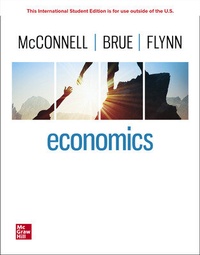
ISE Economics
22nd Edition
Published on 26. March 2020
Book
Paperback/Softback
960 pages
978-1-260-57061-8 (ISBN)
Description
Optimize your outcomes. With McConnell/Brue/Flynn, improving outcomes has never been simpler. If given the chance to work harder or smarter, which would you choose? This product's modern approach makes learning and applying economics easier for instructors and students alike. From real-life examples to cutting-edge learning resources, McConnell offers a student-centered learning environment that presents the subject matter in new and engaging ways. For instructors, a fully supportive teaching package does the heavy lifting so you can focus on what you love.
More details
Edition
22nd edition
Language
English
Place of publication
OH
United States
Target group
College/higher education
US School Grade: From College Freshman to College Graduate Student
Illustrations
369 Illustrations
Dimensions
Height: 274 mm
Width: 216 mm
Thickness: 38 mm
Weight
1669 gr
ISBN-13
978-1-260-57061-8 (9781260570618)
Copyright in bibliographic data and cover images is held by Nielsen Book Services Limited or by the publishers or by their respective licensors: all rights reserved.
Schweitzer Classification
Persons
Cambell R. McConnell earned his Ph.D. at the University of Iowa after receiving degrees from Cornell College and the University of Illinois. He taught at the University of Nebraska-Lincoln from 1953 until his retirement in 1990. He was also coauthor of Contemporary Labor Economics and Essentials of Economics. He was a recipient of both the University of Nebraska Distinguished Teaching Award and the James A. Lake Academic Freedom Award and served as president of the Midwest Economics Association. Professor McConnell was awarded an honorary Doctor of Laws degree from Cornell College in 1973 and received its Distinguished Achievement Award in 1994. He was also a jazz expert and aficionado until his passing in 2019.
Stanley L. Brue did his undergraduate work at Augustana College (South Dakota) and received its Distinguished Achievement Award in 1991. He received his Ph.D. from the University of Nebraska-Lincoln. He is retired from a long career at Pacific Lutheran University, where he was honored as a recipient of the Burlington Northern Faculty Achievement Award. Professor Brue has also received the national Leavey Award for excellence in economics education. He has served as national president and chair of the Board of Trustees of Omicron Delta Epsilon International Economics Honorary. He is coauthor of Economic Scenes, fifth edition (Prentice-Hall); Contemporary Labor Economics, twelfth edition; Essentials of Economics, fourth edition and The Evolution of Economic Thought, eighth edition (Cengage Learning). For relaxation, he enjoys international travel, attending sporting events, and going on fishing trips.
Sean M. Flynn did his undergraduate work at the University of Southern California before completing his Ph.D. at U.C. Berkeley, where he served as the Head Graduate Student Instructor for the Department of Economics after receiving the Outstanding Graduate Student Instructor Award. He teaches at Scripps College (of the Claremont Colleges) and is the author of Economics for Dummies, third edition (Wiley); Essentials of Economics, fourth edition; and The Cure That Works: How to Have the World's Best Healthcare-at a Quarter of the Price (Regnery). His research interests include behavioral finance, behavioral economics, and health care economics. An accomplished martial artist, Sean has coached five of his students to national championships and is the author of Understanding Shodokan Aikido. Other hobbies include running, traveling, and cooking.
Stanley L. Brue did his undergraduate work at Augustana College (South Dakota) and received its Distinguished Achievement Award in 1991. He received his Ph.D. from the University of Nebraska-Lincoln. He is retired from a long career at Pacific Lutheran University, where he was honored as a recipient of the Burlington Northern Faculty Achievement Award. Professor Brue has also received the national Leavey Award for excellence in economics education. He has served as national president and chair of the Board of Trustees of Omicron Delta Epsilon International Economics Honorary. He is coauthor of Economic Scenes, fifth edition (Prentice-Hall); Contemporary Labor Economics, twelfth edition; Essentials of Economics, fourth edition and The Evolution of Economic Thought, eighth edition (Cengage Learning). For relaxation, he enjoys international travel, attending sporting events, and going on fishing trips.
Sean M. Flynn did his undergraduate work at the University of Southern California before completing his Ph.D. at U.C. Berkeley, where he served as the Head Graduate Student Instructor for the Department of Economics after receiving the Outstanding Graduate Student Instructor Award. He teaches at Scripps College (of the Claremont Colleges) and is the author of Economics for Dummies, third edition (Wiley); Essentials of Economics, fourth edition; and The Cure That Works: How to Have the World's Best Healthcare-at a Quarter of the Price (Regnery). His research interests include behavioral finance, behavioral economics, and health care economics. An accomplished martial artist, Sean has coached five of his students to national championships and is the author of Understanding Shodokan Aikido. Other hobbies include running, traveling, and cooking.
Content
PART ONE
Introduction to Economics and the Economy
1. Limits, Alternatives, and Choices
2. The Market System and the Circular Flow
PART TWO
Price, Quantity, and Efficiency
3. Demand, Supply, and Market Equilibrium
4. Market Failures Caused by Externalities
5. Public Goods, Public Choice, and
Government Failure
PART THREE
Consumer Behavior
6. Elasticity
7. Utility Maximization
8. Behavioral Economics
PART FOUR
Microeconomics of Product Markets
9. Businesses and the Costs of Production
10. Pure Competition in the Short Run
11. Pure Competition in the Long Run
12. Pure Monopoly
13. Monopolistic Competition
14. Oligopoly and Strategic Behavior
15. Technology, R&D, and Efficiency
PART FIVE
Microeconomics of Resource Markets and Government
16. The Demand for Resources
17. Wage Determination
18. Rent, Interest, and Profit
19. Natural Resource and Energy Economics
20. Public Finance: Expenditures and Taxes
PART SIX
Microeconomic Issues and Policies
21. Antitrust Policy and Regulation
22. Agriculture: Economics and Policy
23. Income Inequality, Poverty, and Discrimination
24. Health Care
25. Immigration
PART SEVEN
GDP, Growth, and Instability
26. An Introduction to Macroeconomics
27. Measuring Domestic Output and National Income
28. Economic Growth
29. Business Cycles, Unemployment, and Inflation
PART EIGHT
30. Basic Macroeconomic Relationships
31. The Aggregate Expenditures Model
32. Aggregate Demand and Aggregate Supply
33. Fiscal Policy, Deficits, and Debt
PART NINE
Money, Banking, and Monetary Policy
34. Money, Banking, and Financial Institutions
35. Money Creation
36. Interest Rates and Monetary Policy
37. Financial Economics
PART TEN
Extensions and Issues
38. Extending the Analysis of Aggregate Supply
39. Current Issues in Macro Theory and Policy
PART ELEVEN
International Economics
40. International Trade
41. The Balance of Payments, Exchange Rates, and Trade Deficits
42. The Economics of Developing Countries
Introduction to Economics and the Economy
1. Limits, Alternatives, and Choices
2. The Market System and the Circular Flow
PART TWO
Price, Quantity, and Efficiency
3. Demand, Supply, and Market Equilibrium
4. Market Failures Caused by Externalities
5. Public Goods, Public Choice, and
Government Failure
PART THREE
Consumer Behavior
6. Elasticity
7. Utility Maximization
8. Behavioral Economics
PART FOUR
Microeconomics of Product Markets
9. Businesses and the Costs of Production
10. Pure Competition in the Short Run
11. Pure Competition in the Long Run
12. Pure Monopoly
13. Monopolistic Competition
14. Oligopoly and Strategic Behavior
15. Technology, R&D, and Efficiency
PART FIVE
Microeconomics of Resource Markets and Government
16. The Demand for Resources
17. Wage Determination
18. Rent, Interest, and Profit
19. Natural Resource and Energy Economics
20. Public Finance: Expenditures and Taxes
PART SIX
Microeconomic Issues and Policies
21. Antitrust Policy and Regulation
22. Agriculture: Economics and Policy
23. Income Inequality, Poverty, and Discrimination
24. Health Care
25. Immigration
PART SEVEN
GDP, Growth, and Instability
26. An Introduction to Macroeconomics
27. Measuring Domestic Output and National Income
28. Economic Growth
29. Business Cycles, Unemployment, and Inflation
PART EIGHT
30. Basic Macroeconomic Relationships
31. The Aggregate Expenditures Model
32. Aggregate Demand and Aggregate Supply
33. Fiscal Policy, Deficits, and Debt
PART NINE
Money, Banking, and Monetary Policy
34. Money, Banking, and Financial Institutions
35. Money Creation
36. Interest Rates and Monetary Policy
37. Financial Economics
PART TEN
Extensions and Issues
38. Extending the Analysis of Aggregate Supply
39. Current Issues in Macro Theory and Policy
PART ELEVEN
International Economics
40. International Trade
41. The Balance of Payments, Exchange Rates, and Trade Deficits
42. The Economics of Developing Countries