

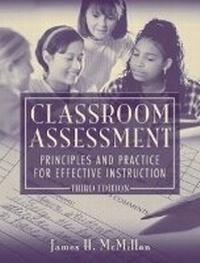
Classroom Assessment
Principles and Practice for Effective Instruction
3rd Edition
Published on 11. September 2003
Book
Paperback/Softback
432 pages
978-0-205-38090-9 (ISBN)
Description
This book provides prospective and current teachers with a concise, non-technical and practical guide to conducting a full range of high quality classroom assessments. The text emphasizes assessment in the context of the realities of teaching and teacher decision-making, as well as on how assessment is integrated with instruction. Assessment methods are integrated with instruction and presented according to when teachers evaluate students (before, during, and after an instructional unit) and the learning targets that are measured. There is considerable emphasis on the nature of learning targets and how different assessments are most appropriate for different targets. For each assessment technique suggestions for effective practice are presented with examples and case studies.
More details
Edition
3rd edition
Language
English
Place of publication
United States
Publishing group
Pearson Education (US)
Target group
Professional and scholarly
Dimensions
Width: 235 mm
Thickness: 19 mm
Weight
638 gr
ISBN-13
978-0-205-38090-9 (9780205380909)
Copyright in bibliographic data and cover images is held by Nielsen Book Services Limited or by the publishers or by their respective licensors: all rights reserved.
Schweitzer Classification
Other editions
New editions
James H. McMillan
Classroom Assessment
Principles and Practice for Effective Standards-Based Instruction
Book
09/2006
4th Edition
Pearson
€91.91
Article exhausted; check for reprint
Previous edition
Book
06/2000
2nd Edition
Pearson
€54.71
Article exhausted; check for reprint
Content
All chapters conclude with "Summary," "Self-Instructional Review Exercises," "Answers to Self-Instructional Review Exercises," and "Suggestions for Action Research."
1. The Role of Assessment in Teaching.
Integrating Instruction and Assessment.
What Is Classroom Assessment?
Research on Learning, Motivation, Instruction, and Curriculum: Implications for Assessment.
Recent Trends in Classroom Assessment.
Teachers' Classroom Assessment and Grading Practices Decision-Making.
Assessment Standards for Teachers.
What's Coming.
2. Establishing Learning Targets.
What Are Learning Targets?
Types of Learning Targets.
Sources of Learning Targets.
Criteria for Selecting Learning Targets.
3. Establishing High Quality Classroom Assessments.
What Is High Quality Classroom Assessment?
Clear and Appropriate Learning Targets.
Appropriateness of Assessment Methods.
Types of Assessment Methods. Matching Targets with Methods.
Validity.
Reliability.
Evidence.
Fairness.
Positive Consequences.
Practicality and Efficiency.
4. Assessment Prior to Instruction.
Before School Begins: Learning About Your Students.
School Records.
Standardized Test.
After the First Week: Now What Do You Know about Your Students?
Teacher Expectations.
High Quality Pre-Instructional Assessment.
5. Assessing Student Progress during Instruction.
Formative and Summative Assessment.
Informal Observation.
Using Questions to Assess Student Progress.
Providing Feedback and Praise.
Student Self-Assessment.
6. Completion, Short Answer, and Selected-Response Items: Assessing Knowledge and Simple Understanding.
Preparing for Summative Assessment.
Types of Knowledge and Simple Understanding Targets.
Assessing Knowledge.
Assessing Simple Understanding: Comprehension and Application.
Putting Objective Tests Together.
7. Assessing Deep Understanding Knowledge and Reasoning: Selected-Response, Short-Answer, and Essay Items.
What Are Reasoning Skills?
Short-Answer and Selected-Response Items.
Essay Items.
Assessing Deep Understanding and Reasoning.
8. Performance Assessment: Assessing Deep Understanding, Reasoning, and Skill.
What Is Performance-Based Assessment?
Learning Targets for Performance Assessments.
Constructing Performance Tasks.
Scoring Criteria, Rubrics, and Procedures.
Performance Criteria. Rating Scales. Developing Rubrics.
9. Portfolios: Assessing, Understanding, Reasoning, Skills, and Products.
What Are Portfolios?
Planning for Portfolio Assessment.
Implementing Portfolio Assessment.
10. Assessing Affective Traits and Dispositions.
Are Affective Targets Important?
What Are Affective Traits and Learning Targets?
Methods of Assessing Affective Targets.
11. Assessing Students with Special Needs in Inclusive Settings.
Legal Mandates.
Assessing Students for Identification.
Assessment Problems Encountered by Students with Special Needs.
Assessment Accommodations.
12. Grading and Reporting Student Performance.
Teachers' Judgments.
Functions of Marking, Grading, and Reporting.
Determining Report Card Grades.
Reporting Student Progress to Parents.
13. Administering and Interpreting Standardized Tests.
Fundamental Descriptive Statistics.
Types of Derived Standardized Test Scores.
Standard Scores. Grade Equivalent Scores.
Interpretating Standardized Tests.
Understanding Standardized Test Score Reports.
Interpreting Test Reports for Parents.
Preparing Students for Taking Standardized Tests.
Administering Standardized Tests.
References.
Appendix A: National Content Standards Projects.
Appendix B: The Scope of Teachers' Professional Role and Responsibilities for Student Assessment.
Appendix C: Software Packages for Grading and Item Banking.
Appendix D: Glossary.
Index.
1. The Role of Assessment in Teaching.
Integrating Instruction and Assessment.
What Is Classroom Assessment?
Research on Learning, Motivation, Instruction, and Curriculum: Implications for Assessment.
Recent Trends in Classroom Assessment.
Teachers' Classroom Assessment and Grading Practices Decision-Making.
Assessment Standards for Teachers.
What's Coming.
2. Establishing Learning Targets.
What Are Learning Targets?
Types of Learning Targets.
Sources of Learning Targets.
Criteria for Selecting Learning Targets.
3. Establishing High Quality Classroom Assessments.
What Is High Quality Classroom Assessment?
Clear and Appropriate Learning Targets.
Appropriateness of Assessment Methods.
Types of Assessment Methods. Matching Targets with Methods.
Validity.
Reliability.
Evidence.
Fairness.
Positive Consequences.
Practicality and Efficiency.
4. Assessment Prior to Instruction.
Before School Begins: Learning About Your Students.
School Records.
Standardized Test.
After the First Week: Now What Do You Know about Your Students?
Teacher Expectations.
High Quality Pre-Instructional Assessment.
5. Assessing Student Progress during Instruction.
Formative and Summative Assessment.
Informal Observation.
Using Questions to Assess Student Progress.
Providing Feedback and Praise.
Student Self-Assessment.
6. Completion, Short Answer, and Selected-Response Items: Assessing Knowledge and Simple Understanding.
Preparing for Summative Assessment.
Types of Knowledge and Simple Understanding Targets.
Assessing Knowledge.
Assessing Simple Understanding: Comprehension and Application.
Putting Objective Tests Together.
7. Assessing Deep Understanding Knowledge and Reasoning: Selected-Response, Short-Answer, and Essay Items.
What Are Reasoning Skills?
Short-Answer and Selected-Response Items.
Essay Items.
Assessing Deep Understanding and Reasoning.
8. Performance Assessment: Assessing Deep Understanding, Reasoning, and Skill.
What Is Performance-Based Assessment?
Learning Targets for Performance Assessments.
Constructing Performance Tasks.
Scoring Criteria, Rubrics, and Procedures.
Performance Criteria. Rating Scales. Developing Rubrics.
9. Portfolios: Assessing, Understanding, Reasoning, Skills, and Products.
What Are Portfolios?
Planning for Portfolio Assessment.
Implementing Portfolio Assessment.
10. Assessing Affective Traits and Dispositions.
Are Affective Targets Important?
What Are Affective Traits and Learning Targets?
Methods of Assessing Affective Targets.
11. Assessing Students with Special Needs in Inclusive Settings.
Legal Mandates.
Assessing Students for Identification.
Assessment Problems Encountered by Students with Special Needs.
Assessment Accommodations.
12. Grading and Reporting Student Performance.
Teachers' Judgments.
Functions of Marking, Grading, and Reporting.
Determining Report Card Grades.
Reporting Student Progress to Parents.
13. Administering and Interpreting Standardized Tests.
Fundamental Descriptive Statistics.
Types of Derived Standardized Test Scores.
Standard Scores. Grade Equivalent Scores.
Interpretating Standardized Tests.
Understanding Standardized Test Score Reports.
Interpreting Test Reports for Parents.
Preparing Students for Taking Standardized Tests.
Administering Standardized Tests.
References.
Appendix A: National Content Standards Projects.
Appendix B: The Scope of Teachers' Professional Role and Responsibilities for Student Assessment.
Appendix C: Software Packages for Grading and Item Banking.
Appendix D: Glossary.
Index.