


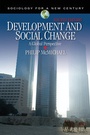
Development and Social Change
A Global Perspective
3rd Edition
Published on 19. February 2004
Book
Paperback/Softback
400 pages
978-0-7619-8810-6 (ISBN)
Description
This new Edition in the Sociology for a New Century Series is intended to be used in any course in the undergraduate or beginning graduate curriculum that focuses on globalization. It is the first book published for undergraduates which presents a coherent explanation for how `globalization' took root in the public discourse and how `globalization' represents a shift away from `development' as a way to think about non-western societies.
The Third Edition is full of case studies that help to make the intricacies of globalization concrete, meaningful, and clear to students. It also includes new treatments of fundamentalism, terrorism, the AIDS crisis and the commercialization of services via the World Trade Organization.
The Third Edition is full of case studies that help to make the intricacies of globalization concrete, meaningful, and clear to students. It also includes new treatments of fundamentalism, terrorism, the AIDS crisis and the commercialization of services via the World Trade Organization.
More details
Series
Edition
3rd Revised edition
Language
English
Place of publication
Thousand Oaks
United States
Target group
College/higher education
Edition type
Revised edition
Dimensions
Height: 229 mm
Width: 152 mm
Weight
535 gr
ISBN-13
978-0-7619-8810-6 (9780761988106)
Copyright in bibliographic data and cover images is held by Nielsen Book Services Limited or by the publishers or by their respective licensors: all rights reserved.
Schweitzer Classification
Other editions
New editions
Book
02/2008
4th Edition
Pine Forge
€83.14
Article is exhausted; no reprint
Previous edition

Book
03/2000
2nd Edition
SAGE Publications Inc
€52.19
Article exhausted; check for reprint
Person
Philip McMichael grew up in Adelaide, South Australia, completing undergraduate degrees in economics and in political science at the University of Adelaide. After traveling in India, Pakistan, and Afghanistan and doing community work in Papua New Guinea, he pursued his doctorate in sociology at the State University of New York at Binghamton. He has taught at the University of New England (New South Wales), Swarthmore College, and the University of Georgia, and he is presently Emeritus Professor of Global Development at Cornell University, in Ithaca, NY. Other appointments include Visiting Senior Research Scholar in International Development at the University of Oxford (Wolfson College) and Visiting Scholar, School of Political Science and International Relations at the University of Queensland.
His book Settlers and the Agrarian Question: Foundations of Capitalism in Colonial Australia (1984) won the Social Science History Association's Allan Sharlin Memorial Award in 1985. In addition to authoring Food Regimes and Agrarian Questions (2013), McMichael edited The Global Restructuring of Agro-Food Systems (1994), Food and Agrarian Orders in the World Economy (1995), New Directions in the Sociology of Global Development (2005) with Frederick H. Buttel, Contesting Development: Critical Struggles for Social Change (2010), The Politics of Biofuels, Land and Agrarian Change (2011) with Jun Borras and Ian Scoones, and Finance or Food? The Role of Cultures, Values and Ethics in Land Use Negotiations, with Hilde Bjorkhaug and Bruce Muirhead (2020).
He has served twice as chair of his department, as director of Cornell University's International Political Economy Program, as chair of the American Sociological Association's Political Economy of the World-System Section, as president of the Research Committee on Agriculture and Food for the International Sociological Association. He is also an active member of the International Studies Association. He has also worked with the Food and Agriculture Organization of the United Nations (FAO) and the Civil Society Mechanism of the FAO's Committee on World Food Security (CFS), the UN Research Institute for Social Development (UNRISD), the international peasant coalition Via Campesina, and the International Planning Committee for Food Sovereignty.
His book Settlers and the Agrarian Question: Foundations of Capitalism in Colonial Australia (1984) won the Social Science History Association's Allan Sharlin Memorial Award in 1985. In addition to authoring Food Regimes and Agrarian Questions (2013), McMichael edited The Global Restructuring of Agro-Food Systems (1994), Food and Agrarian Orders in the World Economy (1995), New Directions in the Sociology of Global Development (2005) with Frederick H. Buttel, Contesting Development: Critical Struggles for Social Change (2010), The Politics of Biofuels, Land and Agrarian Change (2011) with Jun Borras and Ian Scoones, and Finance or Food? The Role of Cultures, Values and Ethics in Land Use Negotiations, with Hilde Bjorkhaug and Bruce Muirhead (2020).
He has served twice as chair of his department, as director of Cornell University's International Political Economy Program, as chair of the American Sociological Association's Political Economy of the World-System Section, as president of the Research Committee on Agriculture and Food for the International Sociological Association. He is also an active member of the International Studies Association. He has also worked with the Food and Agriculture Organization of the United Nations (FAO) and the Civil Society Mechanism of the FAO's Committee on World Food Security (CFS), the UN Research Institute for Social Development (UNRISD), the international peasant coalition Via Campesina, and the International Planning Committee for Food Sovereignty.
Content
Foreword
Acknowledgments
A Timeline of Developmentalism and Globalism
PREFACE: Development and the Global Marketplace
What is the World Coming To?
The Global Marketplace
The Social Web of the Global Market
Case Study: The Hamburger Connection
Dimensions of Social Change in the Global Marketplace
Development, Globalization and Imperial Projects
The Social Web of the Global Market
Case Study: The Hamburger Connection
Dimensions of Social Change in the Global Marketplace
Development, Globalization and Imperial Projects
PART I. THE DEVELOPMENT PROJECT (LATE 1940s TO EARLY 1970s)
CHAPTER 1: Instituting the Development Project
Introduction
Colonialism
Decolonization
Colonial Liberation
Case Study: The Tensions and Lessons of Indian Nationalist Revolt
Decolonization and Development
Postwar Decolonization and the Rise of the Third World
Ingredients of the Development Project
Case Study: Blaming the Victim? Colonial Legacies and State Deformation in Africa
Case Study: Development as Internal Colonialism, in Ladakh
The Development Project Framed
Case Study: National Development and the Building Blocs of the Global Economy
Economic Nationalism
Summary
CHAPTER 2: The Development Project: International Dimensions
The International Framework
The International Framework
Remaking the International Division of Labor
Case Study: South Korea in the Changing International Division of Labor
The Postwar Food Order
Remaking Third World Agricultures
Case Study: Food and Class Relations
Case Study: What Produces a Development Mentality?
Summary
PART II. FROM NATIONAL DEVELOPMENT TO GLOBALIZATION
CHAPTER 3: The Global Economy Reborn
Divergent Developments
Case Study: The NICs: An Exception that Disproved the Rules?
Third World Industrialization in Context
Case Study: The World Factory in China
Case Study: The World Car: From Ford and Mitsubishi
Case Study: Gendering the Global Labor Force
Case Study: Global Subcontracting in Saipan
Case Study: High Heels and High Tech in Global Barbados
Case Study: The Corporatization of World Markets
Global Agribusiness
Case Study: Agribusiness Brings You the World Steer
Case Study: The Global Labor Force and the Link Between Food Security/Food Insecurity
Global Sourcing and Regionalism
Case Study: Regional Strategy of a Southern Transnational Corporation
Summary
CHAPTER 4: Demise of the Third World
The Empire of Containment and the Political Decline of the Third World
Financial Globalization
Case Study: Containment and Corruption
The Debt Regime
Case Study: Debt Regime Politics: Debt Collection as Development?
Case Study: The IMF Food Riots: Citizens vs. Structural Adjustment
Global Governance
Case Study: Turning the Dominican Republic Inside Out?
Case Study: Tanzanian Civil Society Absorbs Structural Adjustment
Summary
PART III. THE GLOBALIZATION PROJECT (1980s - )
CHAPTER 5: Implementing Globalization as a Project
The Globalization Project
Case Study: Incorporating the Second World into the Globalization Project
Case Study: Chile-The Original Model of Economic Liberalization
Case Study: Mini-Dragon Singapore Constructs Comparative Advantage
Global Governance
Case Study: Mexican Sovereignty Exposed: From Above and Below
Case Study: Global Comparative Disadvantage: The End of Farming as we Know it?
Case Study: Corporate Property Rights in India
Case Study: Unequal Construction of Knowledge's and the Question of Biodiversity Protection
Case Study: Leasing the Rain: Privatizing the Social Contract in Bolivia
Case Study: NAFTA: Regional Economic Success, Social Failure?
The Globalization Project as a Utopia
Summary
CHAPTER 6: The Globalization Project: Disharmonies
Displacement
Case Study: Neoliberalism and Food Insecurity
Case Study: Trafficking in Women: the Global Sex Industry vs. Human Rights
Case Study: Multiculturalism and its Contradictions
Informal Activity
Case Study: Informalization vs. the African State: the Other Side of "Globalization"
Case Study: The Global AIDS Crisis
Legitimacy Crisis and Neo-Liberalism
Case Study: Identity Politics and the Fracturing and Underdevelopment of Nigeria
Financial Crisis
Case Study: Financial Crisis Released Indonesian Democratic Forces
Case Study: South Korea in Crisis: Running Down the Showcase
Summary
PART IV. RETHINKING DEVELOPMENT
CHAPTER 7: Global Development and its Counter-movements
Fundamentalism
Case Study: Modernity's Fundamentalisms
Environmentalism
Case Study: Deforestation Under the Globalization Project, Post-Earth Summit
Case Study: Managing the Global Commons: the GEF and Nicaraguan Biosphere Reserves
Case Study: Chico Mendes, Brazilian Environmentalist by Default
Case Study: Local Environmental Managers in Ghana
Feminism
Case Study: Human Rights Versus Cultural Rights: the Ritual of Female Genital Mutilation
Cosmopolitan Activism
Case Study: Andean Counter-Development, or "Cultural Affirmation"
Case Study: The New Labor Cosmopolitanism: Social Movement Unionism
Food Sovereignty Movements
Case Study: The Case for Fair Trade
Summary
CHAPTER 8: Whither Development?
Legacies of the Development Project
Case Study: Water, Water, Everywhere - Unless it Becomes a Commodity
Rethinking Development
Case Study: Global Meets Local: the Micro-Credit Business
Case Study: Argentina's Turn to Cry
Conclusion
Endnotes
References
Glossary/Index
Acknowledgments
A Timeline of Developmentalism and Globalism
PREFACE: Development and the Global Marketplace
What is the World Coming To?
The Global Marketplace
The Social Web of the Global Market
Case Study: The Hamburger Connection
Dimensions of Social Change in the Global Marketplace
Development, Globalization and Imperial Projects
The Social Web of the Global Market
Case Study: The Hamburger Connection
Dimensions of Social Change in the Global Marketplace
Development, Globalization and Imperial Projects
PART I. THE DEVELOPMENT PROJECT (LATE 1940s TO EARLY 1970s)
CHAPTER 1: Instituting the Development Project
Introduction
Colonialism
Decolonization
Colonial Liberation
Case Study: The Tensions and Lessons of Indian Nationalist Revolt
Decolonization and Development
Postwar Decolonization and the Rise of the Third World
Ingredients of the Development Project
Case Study: Blaming the Victim? Colonial Legacies and State Deformation in Africa
Case Study: Development as Internal Colonialism, in Ladakh
The Development Project Framed
Case Study: National Development and the Building Blocs of the Global Economy
Economic Nationalism
Summary
CHAPTER 2: The Development Project: International Dimensions
The International Framework
The International Framework
Remaking the International Division of Labor
Case Study: South Korea in the Changing International Division of Labor
The Postwar Food Order
Remaking Third World Agricultures
Case Study: Food and Class Relations
Case Study: What Produces a Development Mentality?
Summary
PART II. FROM NATIONAL DEVELOPMENT TO GLOBALIZATION
CHAPTER 3: The Global Economy Reborn
Divergent Developments
Case Study: The NICs: An Exception that Disproved the Rules?
Third World Industrialization in Context
Case Study: The World Factory in China
Case Study: The World Car: From Ford and Mitsubishi
Case Study: Gendering the Global Labor Force
Case Study: Global Subcontracting in Saipan
Case Study: High Heels and High Tech in Global Barbados
Case Study: The Corporatization of World Markets
Global Agribusiness
Case Study: Agribusiness Brings You the World Steer
Case Study: The Global Labor Force and the Link Between Food Security/Food Insecurity
Global Sourcing and Regionalism
Case Study: Regional Strategy of a Southern Transnational Corporation
Summary
CHAPTER 4: Demise of the Third World
The Empire of Containment and the Political Decline of the Third World
Financial Globalization
Case Study: Containment and Corruption
The Debt Regime
Case Study: Debt Regime Politics: Debt Collection as Development?
Case Study: The IMF Food Riots: Citizens vs. Structural Adjustment
Global Governance
Case Study: Turning the Dominican Republic Inside Out?
Case Study: Tanzanian Civil Society Absorbs Structural Adjustment
Summary
PART III. THE GLOBALIZATION PROJECT (1980s - )
CHAPTER 5: Implementing Globalization as a Project
The Globalization Project
Case Study: Incorporating the Second World into the Globalization Project
Case Study: Chile-The Original Model of Economic Liberalization
Case Study: Mini-Dragon Singapore Constructs Comparative Advantage
Global Governance
Case Study: Mexican Sovereignty Exposed: From Above and Below
Case Study: Global Comparative Disadvantage: The End of Farming as we Know it?
Case Study: Corporate Property Rights in India
Case Study: Unequal Construction of Knowledge's and the Question of Biodiversity Protection
Case Study: Leasing the Rain: Privatizing the Social Contract in Bolivia
Case Study: NAFTA: Regional Economic Success, Social Failure?
The Globalization Project as a Utopia
Summary
CHAPTER 6: The Globalization Project: Disharmonies
Displacement
Case Study: Neoliberalism and Food Insecurity
Case Study: Trafficking in Women: the Global Sex Industry vs. Human Rights
Case Study: Multiculturalism and its Contradictions
Informal Activity
Case Study: Informalization vs. the African State: the Other Side of "Globalization"
Case Study: The Global AIDS Crisis
Legitimacy Crisis and Neo-Liberalism
Case Study: Identity Politics and the Fracturing and Underdevelopment of Nigeria
Financial Crisis
Case Study: Financial Crisis Released Indonesian Democratic Forces
Case Study: South Korea in Crisis: Running Down the Showcase
Summary
PART IV. RETHINKING DEVELOPMENT
CHAPTER 7: Global Development and its Counter-movements
Fundamentalism
Case Study: Modernity's Fundamentalisms
Environmentalism
Case Study: Deforestation Under the Globalization Project, Post-Earth Summit
Case Study: Managing the Global Commons: the GEF and Nicaraguan Biosphere Reserves
Case Study: Chico Mendes, Brazilian Environmentalist by Default
Case Study: Local Environmental Managers in Ghana
Feminism
Case Study: Human Rights Versus Cultural Rights: the Ritual of Female Genital Mutilation
Cosmopolitan Activism
Case Study: Andean Counter-Development, or "Cultural Affirmation"
Case Study: The New Labor Cosmopolitanism: Social Movement Unionism
Food Sovereignty Movements
Case Study: The Case for Fair Trade
Summary
CHAPTER 8: Whither Development?
Legacies of the Development Project
Case Study: Water, Water, Everywhere - Unless it Becomes a Commodity
Rethinking Development
Case Study: Global Meets Local: the Micro-Credit Business
Case Study: Argentina's Turn to Cry
Conclusion
Endnotes
References
Glossary/Index