

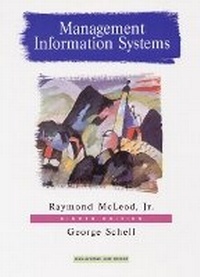
Management Information Systems
8th Edition
Published on 26. July 2000
Book
Hardback
478 pages
978-0-13-019237-0 (ISBN)
Description
For upper-level undergraduate and graduate courses in Management Information Systems.
Management Information Systems is recognized for logical organization and clear descriptions. Focusing on the role of managers within an organization, the text emphasizes the development of computer-based Information Systems to support an organization's objectives and strategic plans. Focusing on the Systems Concepts, introduced in Ch. 6, the Systems Approach is implemented throughout the rest of the text.
Management Information Systems is recognized for logical organization and clear descriptions. Focusing on the role of managers within an organization, the text emphasizes the development of computer-based Information Systems to support an organization's objectives and strategic plans. Focusing on the Systems Concepts, introduced in Ch. 6, the Systems Approach is implemented throughout the rest of the text.
More details
Edition
8th edition
Language
English
Place of publication
United States
Publishing group
Pearson Education (US)
Target group
Professional and scholarly
Dimensions
Width: 285 mm
Thickness: 24 mm
Weight
1293 gr
ISBN-13
978-0-13-019237-0 (9780130192370)
Copyright in bibliographic data and cover images is held by Nielsen Book Services Limited or by the publishers or by their respective licensors: all rights reserved.
Schweitzer Classification
Other editions
New editions
Book
09/2003
9th Edition
Pearson
€71.79
Article exhausted; check for reprint
Previous edition

Raymond Jr McLeod
Management Information Systems
Book
08/1997
7th Edition
Pearson
€40.84
Article exhausted; check for reprint
Content
I. THE COMPUTER AS AN ORGANIZATIONAL INFORMATION SYSTEM.
1. Introduction to Computer-Based Information Systems.
2. Using Information Technology for Competitive Advantage.
3. Using Information Technology to Engage in Electronic Commerce.
4. Computer Use in an International Marketplace.
5. Ethical Implications of Information Technology.
II. SYSTEMS METHODOLOGIES.
6. Systems Concepts.
7. System Life Cycle Methodologies.
III. THE COMPUTER AS A PROBLEM-SOLVING TOOL.
8. Fundamentals of Computer Processing.
9. The Database and Database Management System.
10. Data Communications.
IV. THE COMPUTER-BASED INFORMATION SYSTEM.
11. The Accounting Information System.
12. The Management Information System.
13. Decision Support Systems.
14. The Virtual Office.
V. ORGANIZATIONAL INFORMATION SYSTEMS.
15. Enterprise Information Systems.
16. Executive Information Systems.
17. Marketing Information Systems.
18. Information Resources Information Systems.
APPENDIXES
A: Data Modeling.
B: Process Modeling.
C: Manufacturing Information Systems.
D: Financial Information Systems.
E: Human Resources Information Systems.
References.
Index.
1. Introduction to Computer-Based Information Systems.
2. Using Information Technology for Competitive Advantage.
3. Using Information Technology to Engage in Electronic Commerce.
4. Computer Use in an International Marketplace.
5. Ethical Implications of Information Technology.
II. SYSTEMS METHODOLOGIES.
6. Systems Concepts.
7. System Life Cycle Methodologies.
III. THE COMPUTER AS A PROBLEM-SOLVING TOOL.
8. Fundamentals of Computer Processing.
9. The Database and Database Management System.
10. Data Communications.
IV. THE COMPUTER-BASED INFORMATION SYSTEM.
11. The Accounting Information System.
12. The Management Information System.
13. Decision Support Systems.
14. The Virtual Office.
V. ORGANIZATIONAL INFORMATION SYSTEMS.
15. Enterprise Information Systems.
16. Executive Information Systems.
17. Marketing Information Systems.
18. Information Resources Information Systems.
APPENDIXES
A: Data Modeling.
B: Process Modeling.
C: Manufacturing Information Systems.
D: Financial Information Systems.
E: Human Resources Information Systems.
References.
Index.