

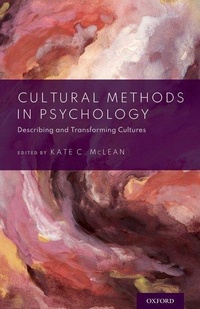
Cultural Methods in Psychology
Describing and Transforming Cultures
Published on 23. November 2021
Book
Hardback
488 pages
978-0-19-009594-9 (ISBN)
Description
This volume describes a broad array of culturally sensitive research methods in psychology, addressing diverse issues such as implicit bias, identity development, trauma, and racism. Each chapter provides instructive value for those who want to effectively employ these methods, as well as deep reflection on the meaning of various methods for understanding complex psychological phenomena. The methods discussed include various interview methodologies, digital tools, use of media representations, exposure to positive exemplars, survey and experience sampling, and participatory action research. These topics and methods are arranged across three sections: methods that are meant to describe culture and cultural phenomena, methodologies designed to facilitate awareness of structural bias and inequity, and a section on broad, overarching issues, such as the colonial harm inflicted by scientific research, diversity in open science, and intersectionality.
Reviews / Votes
The field of psychology has spent the past decade wrestling with two crises: a crisis of evidence about the robustness of our findings, and a crisis of relevance about the utility of our work for addressing issues in society. The chapters in this volume provide insights to address both sets of concerns. Authors discuss methodologies from cultural psychology that can be leveraged to improve to the rigor psychological research, and the practical relevance of that research for improving lives in our diverse society. * Neil A. Lewis, Jr., Ph.D, Cornell University and Weill Cornell Medicine, Department of Communication, Division of General Internal Medicine, USA * This is a definite must read for any budding or established researcher and practitioner of (cross)cultural psychology. This book provides a unique and much needed perspective into the complexities, challenges, and positive gains of doing socially just, ethical, experientially-relevant, and theoretically and methodologically sound cultural research. The overall framework of the book -that culture can be described but also transformed-- is one that most traditional and cross-cultural researchers have not thought about enough. This book can teach them why and how this perspective is critically important. It helps also that the editor has done a terrific job in collecting and integrating views from the relevant experts while covering a very impressive array of topics. * Veronica Benet-Martinez, Ph.D, Research Professor of Political and Social Sciences, Pompeu Fabra University, Spain * The ways in which we do science is changing. As the field of psychology strives to become more inclusive, equitable, and transparent, this book comes at the perfect time. The impressive collection of chapters from leading scholars will inspire researchers to think more critically and creatively about our approaches and methods. To do so this book describes a diversity of innovative methodologies to build a body of knowledge that is rigorous, relevant, and, importantly, not doing harm to the people and communities involved. Cultural Methods in Psychology will spark new ideas and is a joy to read. * Linda Juang, Ph.D, Professor of Inclusive Education, Diversity in Education and Development, Univrersity of Potsdam, Germany * This book is a timely and excellent resource for all scholars who are committed to supporting and conducting culturally responsible science. The nuanced discussions of equity and justice as they relate to our scientific practices are refreshing and absolutely needed to move the field of psychology forward. * Adriana J. Umana-Taylor, Ph.D, Sara Lawrence-Lightfoot Professor of Education, Harvard Graduate School of Education, USA *More details
Language
English
Place of publication
New York
United States
Target group
Professional and scholarly
Product notice
sewn/stitched
Cloth over boards
Dimensions
Height: 226 mm
Width: 155 mm
Thickness: 33 mm
Weight
816 gr
ISBN-13
978-0-19-009594-9 (9780190095949)
Copyright in bibliographic data and cover images is held by Nielsen Book Services Limited or by the publishers or by their respective licensors: all rights reserved.
Schweitzer Classification
Other editions
Additional editions
E-Book
08/2021
OUP eBook
€53.99
Available for download
E-Book
08/2021
OUP eBook
€53.99
Available for download
Person
Kate C. McLean is a Professor of Psychology at Western Washington University. Her research program centers on the development of identity in adolescence and adulthood, placing special emphasis on the cultural and relational processes of identity construction, as well as the correlates and consequences of individual differences in narrative identity construction. She is the co-editor of The Oxford Handbook of Identity Development, and the author of The Co-Authored Self.
Content
Introduction
Kate C. McLean
Part I. Describing
Chapter 1. Using Life Story Methods to Illuminate Cultural-Historical Dimensions of LGBTQ+ Identity Development Across the Generations
Nic M. Weststrate
Chapter 2. Listening for Culture: Using Interviews to Understand Identity in Context
Leoandra Onnie Rogers, Ursula Moffitt, Courtney Meiling Jones
Chapter 3. Strengths-based Approaches to Conducting Research with Low Income and Other Marginalized Populations
Sherry Hamby
Chapter 4. Cultural Snapshots: Identifying Cultural Patterns that Influence Implicit Racial Bias
Kristin Pauker, Sarah A. Lamer, Shahana Ansari and Max Weisbuch
Chapter 5. Social Media as Tools for Cultural Change in the Transition to Adulthood
Adriana M. Manago, Nicholas D. Santer, Logan L. Barsigian and Abigail S. Walsh
Chapter 6. Relational Methodology
James Allen, Inna D. Rivkin and Joseph E. Trimble
Chapter 7. Methodologies for Cross-Cultural Comparisons of Subjective Experiences: Addressing Response Biases
Zachary Willett, Kendall Lawley, Barbara Lehman, & Christie Scollon
Part II. Transforming
Chapter 8. "Justice for Native People, Justice for Native Me": Using Digital Storytelling Methodologies to Change the Master Narrative of Native American Peoples
Jillian Fish and Payton K. Counts
Chapter 9. Participatory Action Research with Immigrant-Origin Youth
Dalal Katsiaficas
Chapter 10. Positive Exemplar Exposure: A Method for Early Implicit Racial Bias Change
Antonya Marie Gonzalez
Chapter 11. Guidance for Applied Cross-National Research in Under-Resourced Countries: Lessons from a Gender-Based Violence Intervention in the Democratic Republic of Congo
Karen J. Torjesen, Meg A. Warren and Grace Wamue-Ngare
Chapter 12. Interpersonal Violence in Context: A Call to Consider Cultural Stigma in Theory and Research on the Psychology of Trauma
Brianna C. Delker
Part III. Broader Issues
Chapter 13. Intersectionality as an analytic sensibility in cultural research
Kevin Delucio, Ph.D. and Adrian J. Villicana, Ph.D.
Chapter 14. Mining for Culture or Researching for Justice? Unsettling Psychology through Indigenist Conversation
Shawn Wilson, Andrea V. Breen and Lindsay DuPre
Chapter 15. Cultural Psychology, Diversity, and Representation in Open Science
Moin Syed and Ummul-Kiram Kathawalla
Kate C. McLean
Part I. Describing
Chapter 1. Using Life Story Methods to Illuminate Cultural-Historical Dimensions of LGBTQ+ Identity Development Across the Generations
Nic M. Weststrate
Chapter 2. Listening for Culture: Using Interviews to Understand Identity in Context
Leoandra Onnie Rogers, Ursula Moffitt, Courtney Meiling Jones
Chapter 3. Strengths-based Approaches to Conducting Research with Low Income and Other Marginalized Populations
Sherry Hamby
Chapter 4. Cultural Snapshots: Identifying Cultural Patterns that Influence Implicit Racial Bias
Kristin Pauker, Sarah A. Lamer, Shahana Ansari and Max Weisbuch
Chapter 5. Social Media as Tools for Cultural Change in the Transition to Adulthood
Adriana M. Manago, Nicholas D. Santer, Logan L. Barsigian and Abigail S. Walsh
Chapter 6. Relational Methodology
James Allen, Inna D. Rivkin and Joseph E. Trimble
Chapter 7. Methodologies for Cross-Cultural Comparisons of Subjective Experiences: Addressing Response Biases
Zachary Willett, Kendall Lawley, Barbara Lehman, & Christie Scollon
Part II. Transforming
Chapter 8. "Justice for Native People, Justice for Native Me": Using Digital Storytelling Methodologies to Change the Master Narrative of Native American Peoples
Jillian Fish and Payton K. Counts
Chapter 9. Participatory Action Research with Immigrant-Origin Youth
Dalal Katsiaficas
Chapter 10. Positive Exemplar Exposure: A Method for Early Implicit Racial Bias Change
Antonya Marie Gonzalez
Chapter 11. Guidance for Applied Cross-National Research in Under-Resourced Countries: Lessons from a Gender-Based Violence Intervention in the Democratic Republic of Congo
Karen J. Torjesen, Meg A. Warren and Grace Wamue-Ngare
Chapter 12. Interpersonal Violence in Context: A Call to Consider Cultural Stigma in Theory and Research on the Psychology of Trauma
Brianna C. Delker
Part III. Broader Issues
Chapter 13. Intersectionality as an analytic sensibility in cultural research
Kevin Delucio, Ph.D. and Adrian J. Villicana, Ph.D.
Chapter 14. Mining for Culture or Researching for Justice? Unsettling Psychology through Indigenist Conversation
Shawn Wilson, Andrea V. Breen and Lindsay DuPre
Chapter 15. Cultural Psychology, Diversity, and Representation in Open Science
Moin Syed and Ummul-Kiram Kathawalla