


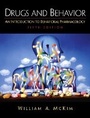
Drugs and Behavior
An Introduction to Behavioral Pharmacology
4th Edition
Published on 13. March 2000
Book
Paperback/Softback
400 pages
978-0-13-083146-0 (ISBN)
Description
For an undergraduate psychology course in Drugs and Behavior Psychopharmacology; also ideal for a graduate-level Health and Social Science introductory course in Behavioral Pharmacology.
This student-friendly, accessible text provides students with a thorough introduction to the field of behavioral pharmacology and prepares them to analyze drug information from a variety of sources. The text describes-impartially and scientifically-the effects of drugs on behavior, and the various ways that behavior principles facilitate an understanding of both the actions of drugs and the way people use them.
This student-friendly, accessible text provides students with a thorough introduction to the field of behavioral pharmacology and prepares them to analyze drug information from a variety of sources. The text describes-impartially and scientifically-the effects of drugs on behavior, and the various ways that behavior principles facilitate an understanding of both the actions of drugs and the way people use them.
More details
Edition
4th edition
Language
English
Place of publication
United States
Publishing group
Pearson Education (US)
Target group
Professional and scholarly
Dimensions
Height: 235 mm
Width: 177 mm
Thickness: 18 mm
Weight
617 gr
ISBN-13
978-0-13-083146-0 (9780130831460)
Copyright in bibliographic data is held by Nielsen Book Services Limited or its licensors: all rights reserved.
Schweitzer Classification
Other editions
New editions
Book
08/2002
5th Edition
Pearson
€65.60
Article exhausted; check for reprint
Previous edition
Book
01/1997
3rd Edition
Pearson Education (US)
€40.84
Article exhausted; check different version
Content
1. Drugs: Some Basic Pharmacology.
2. Research Design and the Behavioral Analysis of Drug Effects.
3. Drug State Conditioning, Behavioral Tolerance, and Dissociation.
4. Neurophysiology, Neurotransmitters, and the Nervous System.
5. Dependence, Addition, and Self-Administration.
6. Alcohol.
7. The Barbiturates and Benzodiazepines.
8. Tobacco.
9. Caffeine and the Methylxanthines.
10. Psychomotor Stimulants.
11. The Opiates.
12. Antipsychotic Drugs.
13. Antidepressants and Mood Stabilizers.
14. Cannabis.
15. Hallucinogens.
Glossary.
References.
Index.
2. Research Design and the Behavioral Analysis of Drug Effects.
3. Drug State Conditioning, Behavioral Tolerance, and Dissociation.
4. Neurophysiology, Neurotransmitters, and the Nervous System.
5. Dependence, Addition, and Self-Administration.
6. Alcohol.
7. The Barbiturates and Benzodiazepines.
8. Tobacco.
9. Caffeine and the Methylxanthines.
10. Psychomotor Stimulants.
11. The Opiates.
12. Antipsychotic Drugs.
13. Antidepressants and Mood Stabilizers.
14. Cannabis.
15. Hallucinogens.
Glossary.
References.
Index.