

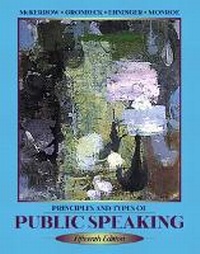
Principles and Types of Public Speaking
15th Edition
Published on 20. August 2002
Book
Hardback
438 pages
978-0-205-34402-4 (ISBN)
Description
With a commitment to cultural sensitivity and scholarship in the discipline, Principles and Types of Public Speaking combines a focus on contemporary research with practical skills and advice on how to communicate in public settings.
The text focuses on culture and community building, with a goal of helping students to understand how they can adapt to cultural differences and what role communication plays in creating social cohesion, whether speaking in informational, persuasive, ceremonial or business-oriented settings. By focusing on both speechmaking in society and student presentations in the classroom, this text helps students see the relationship between what they are learning and how they can use this knowledge outside of the classroom.
The text focuses on culture and community building, with a goal of helping students to understand how they can adapt to cultural differences and what role communication plays in creating social cohesion, whether speaking in informational, persuasive, ceremonial or business-oriented settings. By focusing on both speechmaking in society and student presentations in the classroom, this text helps students see the relationship between what they are learning and how they can use this knowledge outside of the classroom.
More details
Edition
15th edition
Language
English
Place of publication
New York
United States
Publishing group
Taylor & Francis Inc
Target group
Professional and scholarly
Dimensions
Height: 195 mm
Width: 239 mm
Thickness: 21 mm
Weight
887 gr
ISBN-13
978-0-205-34402-4 (9780205344024)
Copyright in bibliographic data and cover images is held by Nielsen Book Services Limited or by the publishers or by their respective licensors: all rights reserved.
Schweitzer Classification
Other editions
New editions
Raymie E. McKerrow | Bruce E. Gronbeck | Douglas Ehninger
Principles and Types of Public Speaking
Book
11/2006
16th Edition
Routledge
€120.86
No shipping information available
Previous edition
Raymie E. McKerrow | Bruce E. Gronbeck | Douglas Ehninger
Principles and Types of Speech Communication
Book
02/2000
14th Edition
Routledge
Unfortunately, price unknown
No shipping information available
Content
Most chapters end with "Assessing a Sample Speech," "Chapter Summary," "Key Terms," "Assessment Activities," "References," and "Boxed Items."
A Note to Students and Teachers.
Acknowledgments.
I. Public Speaking and the Liberal Arts.
1. The Academic Study of Public Speaking.
Studying Public Speaking in Higher Education.
The Functions of Public Speaking in Society.
The Centrality of Ethics in Public Communication.
Skills and Competencies Needed for Successful Speechmaking.
Public Speaking as a Liberal Art.
2. Getting Started: Basic Tips for Speech Preparation and Delivery.
Selecting the Subject.
Narrowing the Subject.
Determining the Purposes.
Analyzing the Audience and Occasion.
Gathering the Speech Materials.
Outlining the Speech.
Practicing Aloud.
Delivering Your Speech Confidently.
Learning to Evaluate Speeches.
3. Setting the Scene for Community in a Diverse Culture: Public Speaking and Critical Listening.
Basic Elements of the Speechmaking Process: A Model Overview.
Critical Listening: Theory and Practice.
The Ethical Listener.
Taking Good Notes.
Special Needs for Critical Listening in the Classroom.
4. Public Speaking and Cultural Life.
Understanding Cultural Processes.
Strategies for Unifying Multicultural Audiences.
II. PREPARATION.
5. Analyzing the Audience and Occasion.
Analyzing Audiences Demographically.
Analyzing Audiences Psychologically.
Analyzing the Speech Occasion.
Using Audience Analysis in Speech Preparation.
Sample Audience Analysis.
6. Developing Ideas: Finding and Using Supporting Materials.
What to Look For: Forms of Supporting Materials.
Where to Look: Sources of Supporting Materials.
Using Source Materials Ethically.
7. Structuring the Speech: Language Devices, Internal Organizational Patterns, and the Motivated Sequence.
Micro-Structures: Using Language to Organize Ideas.
Meso-Structures: Patterns of Internal Organization.
Macro-Structure: The Five Basic Steps of the Motivated Sequence.
Using the Motivated Sequence to Frame a Speech.
Integrating Meso-Structures into the Motivated Sequence.
8. Maintaining Audience Attention and Involvement.
Capturing and Holding Attention in American Culture.
Framing the Speech: Rhetorical Orientation.
Types of Speech Introductions.
Types of Speech Conclusions.
Selecting Introductions and Conclusions.
9. Developing the Speech Outline.
Requirements of Good Outline Form.
Developing the Speech: Stages in the Outlining Process.
III. CHANNELS.
10. Using Language to Communicate.
Using Language Ethically.
Selecting an Appropriate Style.
Selecting Language That Communicates Civility.
11. Using Visual Aids in Speeches.
The Functions of Visual Aids.
Types of Visual Aids.
Acquiring Visual Aids.
Strategies for Selecting and Using Visual Aids.
12. Using Your Voice and Body to Communicate.
Orality and Human Communication.
Public Speaking as a Social Performance.
Using Your Voice to Communicate.
Using Your Body to Communicate.
IV. TYPES.
13. Speeches to Inform.
Facts, Knowledge, and the Information Age.
Motivational Appeals: Engaging Listeners Where They Are.
Essential Features of Informative Speeches.
Types of Informative Speeches.
14. Speeches to Persuade and Actuate.
Contemporary Approaches to Changing Minds and Behaviors.
Basic Types of Persuasive and Actuative Speeches.
Structuring Persuasive and Actuative Speeches.
15. Argument and Critical Thinking.
Argument and Cultural Commitments.
Argument as Justifying Belief and Action.
A Model for Organizing and Evaluating Arguments.
16. Building Social Cohesion in a Diverse World: Speeches on Ceremonial and Corporate Occasions.
Ceremony and Ritual in a Diverse Culture.
Speeches of Tribute.
Speeches to Create Goodwill.
After Dinner Talks: Entertaining with a Purpose.
Keynote Speeches.
Panel Discussions at Meetings.
Index.
A Note to Students and Teachers.
Acknowledgments.
I. Public Speaking and the Liberal Arts.
1. The Academic Study of Public Speaking.
Studying Public Speaking in Higher Education.
The Functions of Public Speaking in Society.
The Centrality of Ethics in Public Communication.
Skills and Competencies Needed for Successful Speechmaking.
Public Speaking as a Liberal Art.
2. Getting Started: Basic Tips for Speech Preparation and Delivery.
Selecting the Subject.
Narrowing the Subject.
Determining the Purposes.
Analyzing the Audience and Occasion.
Gathering the Speech Materials.
Outlining the Speech.
Practicing Aloud.
Delivering Your Speech Confidently.
Learning to Evaluate Speeches.
3. Setting the Scene for Community in a Diverse Culture: Public Speaking and Critical Listening.
Basic Elements of the Speechmaking Process: A Model Overview.
Critical Listening: Theory and Practice.
The Ethical Listener.
Taking Good Notes.
Special Needs for Critical Listening in the Classroom.
4. Public Speaking and Cultural Life.
Understanding Cultural Processes.
Strategies for Unifying Multicultural Audiences.
II. PREPARATION.
5. Analyzing the Audience and Occasion.
Analyzing Audiences Demographically.
Analyzing Audiences Psychologically.
Analyzing the Speech Occasion.
Using Audience Analysis in Speech Preparation.
Sample Audience Analysis.
6. Developing Ideas: Finding and Using Supporting Materials.
What to Look For: Forms of Supporting Materials.
Where to Look: Sources of Supporting Materials.
Using Source Materials Ethically.
7. Structuring the Speech: Language Devices, Internal Organizational Patterns, and the Motivated Sequence.
Micro-Structures: Using Language to Organize Ideas.
Meso-Structures: Patterns of Internal Organization.
Macro-Structure: The Five Basic Steps of the Motivated Sequence.
Using the Motivated Sequence to Frame a Speech.
Integrating Meso-Structures into the Motivated Sequence.
8. Maintaining Audience Attention and Involvement.
Capturing and Holding Attention in American Culture.
Framing the Speech: Rhetorical Orientation.
Types of Speech Introductions.
Types of Speech Conclusions.
Selecting Introductions and Conclusions.
9. Developing the Speech Outline.
Requirements of Good Outline Form.
Developing the Speech: Stages in the Outlining Process.
III. CHANNELS.
10. Using Language to Communicate.
Using Language Ethically.
Selecting an Appropriate Style.
Selecting Language That Communicates Civility.
11. Using Visual Aids in Speeches.
The Functions of Visual Aids.
Types of Visual Aids.
Acquiring Visual Aids.
Strategies for Selecting and Using Visual Aids.
12. Using Your Voice and Body to Communicate.
Orality and Human Communication.
Public Speaking as a Social Performance.
Using Your Voice to Communicate.
Using Your Body to Communicate.
IV. TYPES.
13. Speeches to Inform.
Facts, Knowledge, and the Information Age.
Motivational Appeals: Engaging Listeners Where They Are.
Essential Features of Informative Speeches.
Types of Informative Speeches.
14. Speeches to Persuade and Actuate.
Contemporary Approaches to Changing Minds and Behaviors.
Basic Types of Persuasive and Actuative Speeches.
Structuring Persuasive and Actuative Speeches.
15. Argument and Critical Thinking.
Argument and Cultural Commitments.
Argument as Justifying Belief and Action.
A Model for Organizing and Evaluating Arguments.
16. Building Social Cohesion in a Diverse World: Speeches on Ceremonial and Corporate Occasions.
Ceremony and Ritual in a Diverse Culture.
Speeches of Tribute.
Speeches to Create Goodwill.
After Dinner Talks: Entertaining with a Purpose.
Keynote Speeches.
Panel Discussions at Meetings.
Index.