


Learning to Program with Visual Basic
Published on 3. September 1998
Book
Hardback
XIV, 494 pages
978-0-471-19814-7 (ISBN)
Description
Visual Basic has begun to replace COBOL as an introductory programming language for CIS and MIS students. This book teaches programming logic without exposing the student to an excessive amount of VB controls. It achieves a balance between demonstrating the power and excitement of Visual Basic and the need to teach traditional programming logic. It also allows students to transfer what they've learned to other computer languages. Throughout the text a case is followed which helps students to apply what they are learning so that they understand how an actual information system is created for a situation with which they are familiar. It contains "It's Your Turn" (IYT) exercises to help students complete the same example as is discussed in the text. IYT's are linked to the code tables (which show all of the code for every program), and to the screen capture figures to help the student do the work. All code is shown in code tables so students can create the same examples as discussed in the text by reproducing the code shown in code tables.
More details
Language
English
Place of publication
New York
United States
Publishing group
John Wiley and Sons Ltd
Target group
College/higher education
Professional and scholarly
Illustrations
illustrations
Dimensions
Height: 27.8 cm
Width: 21 cm
Weight
1021 gr
ISBN-13
978-0-471-19814-7 (9780471198147)
Schweitzer Classification
Other editions
New editions
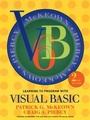
Patrick G. McKeown | Craig A. Piercy
Learning to Program with Visual Basic
Book
09/2001
2nd Edition
Wiley
€165.00
Article exhausted; check for reprint
Content
An Introduction to Programming and Visual Basic; Using Visual Basic to Create a First Project; Variables, Assignment Statements, and Arithmetic; The Selection Process in Visual Basic; The Repetition Process in Visual Basic; Working with Arrays in Visual Basic; Using Functions, Subs, and Modules; Security, Menus, and Files; Using Visual Basic to Work with Databases; Using Visual Basic to Create Graphics; Programmer-Defined Types, Direct Access Files, and Object Classes; Appendices; Index.