

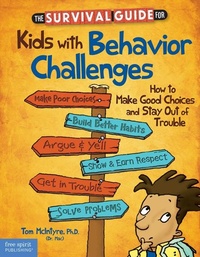
The Survival Guide for Kids with Behavior Challenges
How to Make Good Choices and Stay Out of Trouble
2nd Edition
Published on 8. August 2013
Book
Paperback/Softback
192 pages
978-1-57542-449-1 (ISBN)
Description
Many kids and teens have challenges when it comes to behavior. In this revised edition of his time-tested book, Thomas McIntyre provides up-to-date information, practical strategies, and sound advice to help kids learn to make smarter choices, make and keep friends, get along with teachers, take responsibility for their actions, work toward positive change, and enjoy the results of their better behavior. New to this edition are an "Are you ready to change?" quiz, updated glossary and resources, and a fresh organization and design. This is a book for any young person who needs help with behavior. A special section at the back addresses diagnosed behavior disorders.
Survival Guides for Kids
Helping Kids Help Themselves (R)
Straightforward, friendly, and loaded with practical advice, the Free Spirit Survival Guides for Kids give kids the tools they need to not only survive, but thrive. With plenty of realistic examples and bright illustrations, they are accessible, encouraging, kid-friendly, and even life-changing.
Survival Guides for Kids
Helping Kids Help Themselves (R)
Straightforward, friendly, and loaded with practical advice, the Free Spirit Survival Guides for Kids give kids the tools they need to not only survive, but thrive. With plenty of realistic examples and bright illustrations, they are accessible, encouraging, kid-friendly, and even life-changing.
More details
Series
Edition
Second Edition
Language
English
Place of publication
United States
Publishing group
Teacher Created Materials, Inc
Target group
Children/juvenile
US School Grade: From Fourth Grade to Ninth Grade, Interest Age: From 9 to 14 years
Product notice
Paperback (trade)
Illustrations
Two-color
Dimensions
Height: 228 mm
Width: 177 mm
Thickness: 15 mm
Weight
359 gr
ISBN-13
978-1-57542-449-1 (9781575424491)
Copyright in bibliographic data and cover images is held by Nielsen Book Services Limited or by the publishers or by their respective licensors: all rights reserved.
Schweitzer Classification
Person
Thomas McIntyre, Ph.D., is a professor of special education at Hunter College of the City University of New York.
A popular workshop presenter and keynote speaker, he hosts the award-winning website www.BehaviorAdvisor.com.
A popular workshop presenter and keynote speaker, he hosts the award-winning website www.BehaviorAdvisor.com.
Content
Meet Dr. Mac
Introduction: How This Book Can Help You
Taking on Your Behavior Challenge
How to Use This Book
Write to Dr. Mac
The Six Great Gripes of Kids with Behavior Challenges
Chapter 1: Are You Ready
What's Your Starting Point?
Chapter 2: Four Smart Choices for Dealing with Feelings
How Can I Tell the Difference Between a Bad Choice and a Smart One
Smart Choice #1: Build Your Self-Esteem
Smart Choice #2: Talk with Someone You Trust
Smart Choice #3: Write or Draw
Smart Choice #4: Chill Out or Get Moving!
Chapter 3: Another Smart Choice for Dealing with Feelings
Smart Choice #5: Stop, Think, Choose, and Think Again
Chapter 4: Three Survival Skills for Dealing with Difficult People
1. Ignore Mean Words and Actions
2. Be Assertive
3. Say "I" Instead of "You"
Chapter 5: Ways to Help Yourself Make Good Choices in School
Be Prepared
Ask for Help from Others
Five "Tricks" to Help You Track Your Progress
Chapter 6: Ways to Get Along Better with Teachers
Say Nice Things to Teachers
Let Teachers Teach
Make Suggestions with Questions
Make a "Sandwich"
Use "Behavior Mod"
Use Your Skills Together
Chapter 7: Ways to Make and Keep Friends
Say Nice Things to Others
Ask People About Themselves
Give a Helping Hand
Take Part in Activities
Choose Friends Carefully
Chapter 8: Ways to Help the Adults at Home Help YOU
Use Talking and Listening Skills
Ask for Help with Your Goal
Take a Time-Out
Set Up a Point Sheet Together
Chapter 9: More Ideas for Feeling Good at Home
Tell Family Adults About Your Good Choices
Be Sure Your Teachers Share Good News
Make a Plan to Solve Problems
Do Kind Things for No Reason
Say "Thanks"
Take Care of Yourself
Chapter 10: Six Winning Ways to Work Toward
Positive Change
1. Remember the Golden Rule
2. Take Responsibility for Your Actions3. Be Patient and Persistent
4. Learn from Experience5. Think About Your Future
6. Know That You CAN Meet and Beat Your Challenge
What's Next?
Special Section: What If You Have Been Given a BD Label?
Chapter 11: What Is BD?
What Does BD Mean?
What BD Does NOT Mean
It's Tough to Be a Kid with BD
Don't Use BD as an Excuse
Chapter 12: Different Kids, Different Causes for BD
1. Kids Who Need to Learn How to Make Good Choices
2. Kids Whose Brain Chemicals Are Mixed Up
3. Kids Who Learn in a Different Way
4. Kids Who Want Attention
5. Kids Who Feel Angry and Want to Get Back at Someone
6. Kids Who Feel Bad About ThemselvesChapter 13: Why Am I in a Program for Kids with BD?
How Did the School Decide That I Have BD?
What Is in My IEP?
Why Aren't I in the Regular Education Class?
What If I Don't Want to Go Back to Regular Classes?
And Now . . .
Glossary
Solutions to Some of the Challenges and Questions
Resources for You
What About Resources for Grown-Ups?
Index
Introduction: How This Book Can Help You
Taking on Your Behavior Challenge
How to Use This Book
Write to Dr. Mac
The Six Great Gripes of Kids with Behavior Challenges
Chapter 1: Are You Ready
What's Your Starting Point?
Chapter 2: Four Smart Choices for Dealing with Feelings
How Can I Tell the Difference Between a Bad Choice and a Smart One
Smart Choice #1: Build Your Self-Esteem
Smart Choice #2: Talk with Someone You Trust
Smart Choice #3: Write or Draw
Smart Choice #4: Chill Out or Get Moving!
Chapter 3: Another Smart Choice for Dealing with Feelings
Smart Choice #5: Stop, Think, Choose, and Think Again
Chapter 4: Three Survival Skills for Dealing with Difficult People
1. Ignore Mean Words and Actions
2. Be Assertive
3. Say "I" Instead of "You"
Chapter 5: Ways to Help Yourself Make Good Choices in School
Be Prepared
Ask for Help from Others
Five "Tricks" to Help You Track Your Progress
Chapter 6: Ways to Get Along Better with Teachers
Say Nice Things to Teachers
Let Teachers Teach
Make Suggestions with Questions
Make a "Sandwich"
Use "Behavior Mod"
Use Your Skills Together
Chapter 7: Ways to Make and Keep Friends
Say Nice Things to Others
Ask People About Themselves
Give a Helping Hand
Take Part in Activities
Choose Friends Carefully
Chapter 8: Ways to Help the Adults at Home Help YOU
Use Talking and Listening Skills
Ask for Help with Your Goal
Take a Time-Out
Set Up a Point Sheet Together
Chapter 9: More Ideas for Feeling Good at Home
Tell Family Adults About Your Good Choices
Be Sure Your Teachers Share Good News
Make a Plan to Solve Problems
Do Kind Things for No Reason
Say "Thanks"
Take Care of Yourself
Chapter 10: Six Winning Ways to Work Toward
Positive Change
1. Remember the Golden Rule
2. Take Responsibility for Your Actions3. Be Patient and Persistent
4. Learn from Experience5. Think About Your Future
6. Know That You CAN Meet and Beat Your Challenge
What's Next?
Special Section: What If You Have Been Given a BD Label?
Chapter 11: What Is BD?
What Does BD Mean?
What BD Does NOT Mean
It's Tough to Be a Kid with BD
Don't Use BD as an Excuse
Chapter 12: Different Kids, Different Causes for BD
1. Kids Who Need to Learn How to Make Good Choices
2. Kids Whose Brain Chemicals Are Mixed Up
3. Kids Who Learn in a Different Way
4. Kids Who Want Attention
5. Kids Who Feel Angry and Want to Get Back at Someone
6. Kids Who Feel Bad About ThemselvesChapter 13: Why Am I in a Program for Kids with BD?
How Did the School Decide That I Have BD?
What Is in My IEP?
Why Aren't I in the Regular Education Class?
What If I Don't Want to Go Back to Regular Classes?
And Now . . .
Glossary
Solutions to Some of the Challenges and Questions
Resources for You
What About Resources for Grown-Ups?
Index