

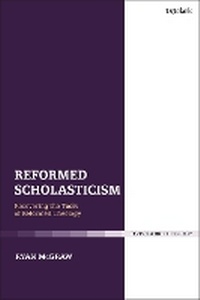
Reformed Scholasticism
Recovering the Tools of Reformed Theology
Published on 24. January 2019
Book
Hardback
256 pages
978-0-567-67972-7 (ISBN)
Description
Ryan McGraw presents an introduction of historic Reformed orthodoxy (1560-1790) and its research methodology. This book establishes the tools needed to study Reformed scholasticism and its potential benefits to the church today by describing the nature of Reformed scholasticism and outlining the research methodology, the nature and the character of this branch of theology, and providing a retrospective view on the contemporary appropriations.
McGraw discusses the proper use of primary and secondary sources and offers instructions on how to write historical theology. Each chapter draws extensive examples from primary source evidence, published books and articles in this field; as well as engaging with a wide range of ancient and medieval sources. This volume is an excellent guide for students as it teaches them how to identify primary and secondary sources, suggests good links and tips for learning Latin; and provides an overview of the most important figures in the period.
McGraw discusses the proper use of primary and secondary sources and offers instructions on how to write historical theology. Each chapter draws extensive examples from primary source evidence, published books and articles in this field; as well as engaging with a wide range of ancient and medieval sources. This volume is an excellent guide for students as it teaches them how to identify primary and secondary sources, suggests good links and tips for learning Latin; and provides an overview of the most important figures in the period.
Reviews / Votes
McGraw's Reformed Scholasticism is a welcome addition to the growing scholarly literature focusing on the often overlookedgenerations of Reformed theologians following the earliest figures such as Zwingli and Calvin. * The Journal of Reformed Theology * A professional, experienced and gifted teacher guides us in the basics of doing theology, alerts us to the many dangers in divinity, leads through the rich sources of historical theology, shows the cohesion of several theological streams in history, illuminates the importance of seemingly insignificant details, and clarifies how historical theology is relevant for today. * Willem van Vlastuin, Vrije Universiteit Amsterdam, Netherlands * Ryan McGraw provides a helpful guide for students of Reformed scholastic theology. There are practical tips on reading, researching, and writing about this interesting and instructive period in the Reformed tradition. And while one need not agree with every conclusion, readers can nevertheless benefit from his insights and profit from this book. * J. V. Fesko, Westminster Seminary California, USA * Ryan McGraw is an expert teacher who has led many a class through the theological battlefields of the early modern period, and in Reformed Scholasticism he graciously shares a guidebook that will aid eager students and experienced docents alike. * Chad van Dixhoorn, Westminster Theological Seminary, USA *
More details
Language
English
Place of publication
Edinburgh
United Kingdom
Publishing group
Bloomsbury Publishing PLC
Target group
College/higher education
Dimensions
Height: 234 mm
Width: 156 mm
Weight
535 gr
ISBN-13
978-0-567-67972-7 (9780567679727)
Copyright in bibliographic data and cover images is held by Nielsen Book Services Limited or by the publishers or by their respective licensors: all rights reserved.
Schweitzer Classification
Other editions
Additional editions
E-Book
01/2019
1st Edition
T.& T.Clark Ltd
€37.49
Available for download
Person
Ryan M. McGraw is Morton H. Smith Professor of Systematic Theology at Greenville Presbyterian Theological Seminary, Adjunct Professor of Doctoral Studies at Puritan Reformed Theological Seminary, and Research Fellow for the University of the Free State, South Africa.
Content
Acknowledgments
Introduction
1. Introduction: Why Reformed Scholasticism?
Research Methodology
2. Sources: Primary
3. Sources: Secondary
4. Research Methodology: Historiography and Writing Historical Theology
5. Writing Historical Theology
The Nature of Reformed Scholasticism: Method and Trajectories
6. General History and Terminology
7. A Theology of the Schools
8. A Theology in Conversation with the Entire Catholic Tradition
9. A Theology of Continuities and Discontinuities
The Character of Reformed Scholasticism: International Catholicity and Piety
10. International Catholicity
11. Piety
Contemporary Appropriations of Reformed Scholasticism
12. What Is Next?: Personal Growth, Theological Reflection, and Service to the Church
Works Cited
Index
Introduction
1. Introduction: Why Reformed Scholasticism?
Research Methodology
2. Sources: Primary
3. Sources: Secondary
4. Research Methodology: Historiography and Writing Historical Theology
5. Writing Historical Theology
The Nature of Reformed Scholasticism: Method and Trajectories
6. General History and Terminology
7. A Theology of the Schools
8. A Theology in Conversation with the Entire Catholic Tradition
9. A Theology of Continuities and Discontinuities
The Character of Reformed Scholasticism: International Catholicity and Piety
10. International Catholicity
11. Piety
Contemporary Appropriations of Reformed Scholasticism
12. What Is Next?: Personal Growth, Theological Reflection, and Service to the Church
Works Cited
Index