

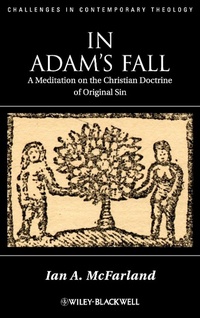
In Adam's Fall
A Meditation on the Christian Doctrine of Original Sin
1st Edition
Published on 1. October 2010
Book
Hardback
256 pages
978-1-4051-8365-9 (ISBN)
Description
IN ADAM'S FALL Few doctrines of Christian teaching are more controversial than original sin. For how is it possible to affirm the universality of sin without losing sight of the distinct ways in which individuals are both responsible for and suffer the consequences of sinful behavior?
In considering the Christian doctrine of original sin, McFarland challenges many prevailing views about it. He shows us that traditional Christian convictions regarding humanity's congenital sinfulness neither undermine the moral accountability of sin's perpetrators nor dampen concern for its victims. Responding to both historic and contemporary criticism of the doctrine, In Adam's Fall reveals how the concept of original sin is not only theologically defensible, but stimulating and productive for a life of faith.
Drawing on both the classical formulations of Augustine and the Christology of Maximus the Confessor, McFarland proposes a radical reconstruction of the doctrine of original sin - one that not only challenges contemporary Western visions of human autonomy but emphasizes the integrity of each individual called by God to a unique and irreplaceable destiny. Engagingly written and infused with scholarly sophistication, In Adam's Fall offers refreshingly original insights into the contemporary relevance of a doctrine of Christian teaching that has inspired fierce debate for over 1,500 years.
In considering the Christian doctrine of original sin, McFarland challenges many prevailing views about it. He shows us that traditional Christian convictions regarding humanity's congenital sinfulness neither undermine the moral accountability of sin's perpetrators nor dampen concern for its victims. Responding to both historic and contemporary criticism of the doctrine, In Adam's Fall reveals how the concept of original sin is not only theologically defensible, but stimulating and productive for a life of faith.
Drawing on both the classical formulations of Augustine and the Christology of Maximus the Confessor, McFarland proposes a radical reconstruction of the doctrine of original sin - one that not only challenges contemporary Western visions of human autonomy but emphasizes the integrity of each individual called by God to a unique and irreplaceable destiny. Engagingly written and infused with scholarly sophistication, In Adam's Fall offers refreshingly original insights into the contemporary relevance of a doctrine of Christian teaching that has inspired fierce debate for over 1,500 years.
Reviews / Votes
"Modest in length, but rich in substance ... even those who demur from McFarland's thesis will learn much from a work of competent theology which takes seriously and strives to protect key components in Augustine's understanding of original sin." (Evangelical Quarterly, 2 April 2012)"Written from an ecumenical Reformed perspective heavily indebted to Augustine and arguably Barth, the book's strength lies in its sophisticated argument in favor of Augustine's enduring relevance to ecclesial life generally and the doctrine of original sin specifically, especially the illuminating discourse on willing which paints a surprisingly complex view of the will in concrete acts of sin." (Religious Studies Review, 1 December 2011)
"Overall, In Adam's Fall is an engaging and historically-informed reflection on a difficult aspect of Christian teaching that stimulates constructive dialogue and further examination." (Studies in Religion, 2012)
"Libraries that support advanced classes in theology will find this a worthwhile addition. Recommended. Upper-level undergraduates and above." (Choice, 1 May 2011)
"Engagingly written and infused with scholarly sophistication. In Adam's Fall offers refreshingly original insghts into the contemporary relevance of a doctrine of Christian teaching that has inspired fierce debate for over 1,500 years." (Zentrum fuer Augustinus-Forschung, 2011)
"While unapologetically academic in style, I found this to be most engagingly written and there are few academic books over recent years that have brought me as much pleasure and provoked my thinking to such a degree." (Regent's Reviews, 1 April 2011)
More details
Series
Language
English
Place of publication
Hoboken
United Kingdom
Publishing group
John Wiley and Sons Ltd
Target group
Professional and scholarly
Product notice
sewn/stitched
Cloth over boards
With dust jacket
Dimensions
Height: 235 mm
Width: 157 mm
Thickness: 18 mm
Weight
528 gr
ISBN-13
978-1-4051-8365-9 (9781405183659)
Copyright in bibliographic data and cover images is held by Nielsen Book Services Limited or by the publishers or by their respective licensors: all rights reserved.
Schweitzer Classification
Other editions
Additional editions
E-Book
06/2011
Wiley-Blackwell
€98.99
Available for download
E-Book
08/2010
Wiley-Blackwell
€98.99
Available for download
Person
Ian A. McFarland is Associate Professor of Systematic Theology at Emory University's Candler School of Theology. McFarland studied theology at Union Theological Seminary in New York, the Lutheran School of Theology at Chicago, and Yale University. He is the author of Difference and Identity: A Theological Anthropology (2001) and The Divine Image: Envisioning the Invisible God (2005).
Content
Preface. Acknowledgments.
Part I: Setting the Stage: The Problem of Original Sin:.
1. Creation Gone Wrong: Thinking about Sin.
A Doctrine Grown Strange.
Biblical Configurations of Sin.
Contemporary Attempts to Reclaim Sin-Talk.
Original Sin and Actual Sin.
2. Original Sin as Christian Doctrine: Origins, Permutations, Problems.
The Emergence of the Doctrine.
The Augustinian Turn.
Augustinian Revisions.
Assessment.
Part II: Reconfiguring the Debate: Sin, Nature, and the Will:.
3. Augustine of Hippo: Willing and the Ambiguity of Desire.
Augustine's Views in Outline.
Concupiscence: Humanity Internally Divided.
The Fall: Humanity Temporally Divided.
Assessing Augustine's Doctrine of the Will ?.
4. Maximus the Confessor: Willing Is Not Choosing.
Maximus' Christology in Context.
Dyothelite Christology in Outline.
Maximus' Analysis of the Will.
Maximus' Interpretation of Christ's Willing.
Anthropological Implications.
Conclusion.
5. The Status of Christ's Will: Fallen or Unfallen?.
The Question in the Tradition.
Preliminary Assessment.
The Problem of Christ's Will.
Theological Implications.
Part III: Reconstructing the Doctrine: Original Sin in Christian Practice:.
6. Original Sin and Human Nature: Solidarity in Sin.
Original Sin and the Damaged Will.
The Problem of the Origin of Original Sin.
Reconceiving the Ontology of Original Sin.
7. Original Sin and the Individual: Being a Sinner.
The Scope of Sin.
Sin and Agency.
From Actual Sin to Original Sin.
8. Original Sin and the Christian Life: Confronting Sin.
From Original Sin to Actual Sin.
Original Sin as Unbelief.
Vocation and the Defeat of Sin.
Conclusion.
References.
Index.
Part I: Setting the Stage: The Problem of Original Sin:.
1. Creation Gone Wrong: Thinking about Sin.
A Doctrine Grown Strange.
Biblical Configurations of Sin.
Contemporary Attempts to Reclaim Sin-Talk.
Original Sin and Actual Sin.
2. Original Sin as Christian Doctrine: Origins, Permutations, Problems.
The Emergence of the Doctrine.
The Augustinian Turn.
Augustinian Revisions.
Assessment.
Part II: Reconfiguring the Debate: Sin, Nature, and the Will:.
3. Augustine of Hippo: Willing and the Ambiguity of Desire.
Augustine's Views in Outline.
Concupiscence: Humanity Internally Divided.
The Fall: Humanity Temporally Divided.
Assessing Augustine's Doctrine of the Will ?.
4. Maximus the Confessor: Willing Is Not Choosing.
Maximus' Christology in Context.
Dyothelite Christology in Outline.
Maximus' Analysis of the Will.
Maximus' Interpretation of Christ's Willing.
Anthropological Implications.
Conclusion.
5. The Status of Christ's Will: Fallen or Unfallen?.
The Question in the Tradition.
Preliminary Assessment.
The Problem of Christ's Will.
Theological Implications.
Part III: Reconstructing the Doctrine: Original Sin in Christian Practice:.
6. Original Sin and Human Nature: Solidarity in Sin.
Original Sin and the Damaged Will.
The Problem of the Origin of Original Sin.
Reconceiving the Ontology of Original Sin.
7. Original Sin and the Individual: Being a Sinner.
The Scope of Sin.
Sin and Agency.
From Actual Sin to Original Sin.
8. Original Sin and the Christian Life: Confronting Sin.
From Original Sin to Actual Sin.
Original Sin as Unbelief.
Vocation and the Defeat of Sin.
Conclusion.
References.
Index.