

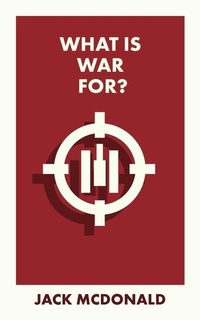
What Is War For?
1st Edition
Published on 28. March 2023
Book
Paperback/Softback
172 pages
978-1-5292-2838-0 (ISBN)
Description
How does armed conflict shape global politics? And, critically, can it ever be regulated, a necessary first step to achieving a more peaceful world?
This book examines the factors that define and shape war in the contemporary world, and how changes to technology and society are transforming warfare.
Focusing on efforts to regulate and eliminate war, it provides a guide to the complex problems it poses now - and threatens in the future.
This book examines the factors that define and shape war in the contemporary world, and how changes to technology and society are transforming warfare.
Focusing on efforts to regulate and eliminate war, it provides a guide to the complex problems it poses now - and threatens in the future.
More details
Series
Edition
First Edition
Language
English
Place of publication
United Kingdom
Target group
Professional and scholarly
Edition type
Abridged edition
Illustrations
Not illustrated
Dimensions
Height: 200 mm
Width: 126 mm
Thickness: 16 mm
Weight
180 gr
ISBN-13
978-1-5292-2838-0 (9781529228380)
Copyright in bibliographic data and cover images is held by Nielsen Book Services Limited or by the publishers or by their respective licensors: all rights reserved.
Schweitzer Classification
Other editions
Additional editions
Jack McDonald
What Is War For?
E-Book
03/2023
1st Edition
Bristol University Press
€15.49
Available for download
Person
Jack McDonald is Senior Lecturer in War Studies at the Department of War Studies, King's College London. He is the author of two books examining the relationship between the law and ethics of war, and emerging technology.
Content
1. War in the Contemporary World
2. War in Theory and Practice
3. The Changing Context and Character of War
4. The Problems of War
5. The Future of War
6. Conclusion
2. War in Theory and Practice
3. The Changing Context and Character of War
4. The Problems of War
5. The Future of War
6. Conclusion