

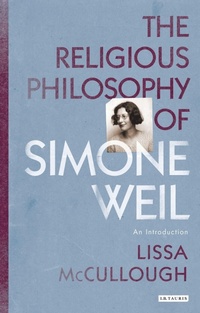
The Religious Philosophy of Simone Weil
An Introduction
Published on 23. July 2014
Book
Paperback/Softback
272 pages
978-1-78076-796-3 (ISBN)
Description
The French philosopher Simone Weil (1909-1943), a contemporary of Simone de Beauvoir and Jean-Paul Sartre, remains in every way a thinker for our times. She was an outsider, in multiple senses, defying the usual religious categories: at once atheistic and religious; mystic and realist; sceptic and believer. She speaks therefore to the complex sensibilities of a rationalist age. Yet despite her continuing relevance, and the attention she attracts from philosophy, cultural studies, feminist studies, spirituality and beyond, Weil's reflections can still be difficult to grasp, since they were expressed in often inscrutable and fragmentary form. Lissa McCullough here offers a reliable guide to the key concepts of Weil's religious philosophy: good and evil, the void, gravity, grace, beauty, suffering and waiting for God. In addressing such distinctively contemporary concerns as depression, loneliness and isolation, and in writing hauntingly of God's voluntary 'nothingness', Weil's existential paradoxes continue to challenge and provoke. This is the first introductory book to show the essential coherence of her enigmatic but remarkable ideas about religion.
Reviews / Votes
'This is an extraordinary work that accomplishes what numerous other works on Weil did not: provide a clear and coherent account of the entirety of Weil's religious reflections. It is an exceptional accomplishment that should be marketed and advertised as a landmark work. I cannot overstate its importance for contemporary discussions of theology and religious studies, nor its value to the current dialogue concerning the future of Christianity.' Patrick Horn, Azusa Pacific University 'This book is a page-turner. It is totally compelling in the service of making available a religious thinking that is liminal in form and content: in form, largely fragmentary and elliptical; in content, on the border between Judaism and Christianity, and also on the border between Platonism and Christianity; a thinking of God that continually troubles Christian orthodoxy while embracing it passionately; a thinking of God beyond the idolatries of divine presence that consoles and legitimates our lust for power; a thinking that ask for insight with respect to our motivations and attention and compassion towards a world of embodied selves that are weak and vulnerable. This is an extraordinarily readable text. I have rarely seen a book that manages so successfully to render an author in his or her own voice.' Cyril O'Regan, Huisking Professor of Theology, University of Notre Dame 'Lissa McCullough convincingly shows that Simone Weil identifies God with the Good. Instead of concluding that God is "beyond" being, Weil characterizes God's manner of being as antithetical to that of the created world. Her dialectical theology affirms both God's abdication from creation and his minimal abiding wherever there is evil in the world. God's saving grace manifests itself whenever we cultivate a "pure love of the world." If redemption is possible, it is only on the cross, not from the cross - and true Christianity must take the form of what McCullough eloquently calls "love for the anonymous neighbor". This is a thoughtful and challenging book.' Andrew Cutrofello, Professor of Philosophy, Loyola University ChicagoMore details
Language
English
Place of publication
United Kingdom
Publishing group
Bloomsbury Publishing PLC
Target group
College/higher education
Dimensions
Height: 216 mm
Width: 140 mm
Thickness: 15 mm
Weight
349 gr
ISBN-13
978-1-78076-796-3 (9781780767963)
Copyright in bibliographic data and cover images is held by Nielsen Book Services Limited or by the publishers or by their respective licensors: all rights reserved.
Schweitzer Classification
Other editions
Additional editions
E-Book
07/2014
1st Edition
I.B. Tauris
€26.49
Available for download
Person
Lissa McCullough is an independent scholar and writer who has taught religious studies at Muhlenberg College, Hanover College and New York University. Her previous books are Thinking Through the Death of God: A Critical Companion to Thomas J J Altizer (edited with Brian Schroeder), The Call to Radical Theology and Conversations with Paolo Soleri.
Content
Abbreviations and Textual Notes
Introduction
Biographical Groundings
Reading Simone Weil
1 / Reality and Contradiction
Reality: The Irreducible
Truth and Affliction
The Role of Attention
The Negative Role of Will
The Value of Contradiction
Right Use of Dogma
2 / The Paradox of Desire
We Desire the Good
The Good Is Absent
The Good Is a Nothingness
Detachment of Desire
Waiting for God
The Earthly Criterion
(Not) To Speak of Holy Things
3 / God and the World
Creation as Withdrawal
The Absent God
"Original Sin"
The Self-Emptying God
Crucifixion as Redemption
Supernatural Harmony
4 / Necessity and Obedience
Abdication to Necessity
Providence
Beauty
Suffering
Necessity: Root of Beauty and Suffering
Obedience of Matter: Gravity
Obedience of Spirit: Grace
Amor Fati
5 / Grace and Decreation
Sin Says "I"
Grace Decreates the "I"
Nothingness: The Humility of God
Heaven and Hell
Transparence
Compassion
Action as Incarnation
6 / Conclusion: Weil's Theological Coherence
Background Theological Influences
Dialectic of Nature and Grace
God Beyond Good and Evil
Weil's Anonymous Christianity
Endnotes
Selected Bibliography
Index
Introduction
Biographical Groundings
Reading Simone Weil
1 / Reality and Contradiction
Reality: The Irreducible
Truth and Affliction
The Role of Attention
The Negative Role of Will
The Value of Contradiction
Right Use of Dogma
2 / The Paradox of Desire
We Desire the Good
The Good Is Absent
The Good Is a Nothingness
Detachment of Desire
Waiting for God
The Earthly Criterion
(Not) To Speak of Holy Things
3 / God and the World
Creation as Withdrawal
The Absent God
"Original Sin"
The Self-Emptying God
Crucifixion as Redemption
Supernatural Harmony
4 / Necessity and Obedience
Abdication to Necessity
Providence
Beauty
Suffering
Necessity: Root of Beauty and Suffering
Obedience of Matter: Gravity
Obedience of Spirit: Grace
Amor Fati
5 / Grace and Decreation
Sin Says "I"
Grace Decreates the "I"
Nothingness: The Humility of God
Heaven and Hell
Transparence
Compassion
Action as Incarnation
6 / Conclusion: Weil's Theological Coherence
Background Theological Influences
Dialectic of Nature and Grace
God Beyond Good and Evil
Weil's Anonymous Christianity
Endnotes
Selected Bibliography
Index