

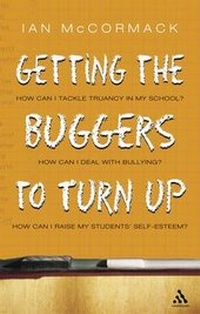
Getting the Buggers to Turn up
Published on 14. March 2005
Book
Paperback/Softback
168 pages
978-0-8264-7332-5 (ISBN)
Description
An accessible and practical guide for teachers outlining why pupils play truant from school and providing strategies to overcome this much talked-about problem. This invaluable guide for headteachers, heads of year and classroom teachers contains practical guidance on tackling truancy in schools. Brimming with advice on dealing with bullying, raising pupils' self-esteem as well as helping them cope with the trauma of transferring schools, Ian McCormack writes accessibly and entertainingly. His firm belief that disaffected pupils will only respond if they feel they have a voice underpins his writing. This book will prove invaluable to frustrated teachers everywhere.
More details
Edition
New edition
Language
English
Place of publication
London
United Kingdom
Publishing group
Bloomsbury Publishing PLC
Target group
Professional and scholarly
Edition type
New edition
Product notice
Paperback (trade)
Illustrations
1, black & white illustrations
Dimensions
Height: 216 mm
Width: 138 mm
Thickness: 9 mm
Weight
203 gr
ISBN-13
978-0-8264-7332-5 (9780826473325)
Copyright in bibliographic data and cover images is held by Nielsen Book Services Limited or by the publishers or by their respective licensors: all rights reserved.
Schweitzer Classification
Other editions
Additional editions
Ian McCormack
Getting the Buggers to Turn Up
E-Book
03/2005
1st Edition
Continuum Publishing Corporation
€19.49
Available for download
Person
Ian McCormack is a teacher and writer of 25 years experience who now works as a writer and educational consultant. He runs a variety of courses for both adults and pupils, using Drama and role-play to enhance the learning process.
Content
1. Truancy: The Phenomenon. The official Government definition The legal position for schools The legal position for parents How is truancy recorded? What are the statistics? What are the sanctions? 2. Types of truancy. Including types of pupil and their motivation Condoned Truancy (by parents) Condoned Truancy Culturally Motivated Truancy Economic Truancy The school phobic Fear of failure Rejection of values Insecurity/personal safety Disruptive behaviour Avoidance tactics "Mental" absence 3. Where does Truancy start? Early socialisation Early school experiences Learned behaviours Lack of intervention and support Physical/psychological conditions Loss of self-esteem 4. What Happens to Truants? Criminality Substance abuse Employment prospects Social costs 5. What can we do? Government advice Current research evidence Case studies of successful programmes (Number to be decided) 6. School based factors Stating & guaranteeing our school's values ðos. Behaviour Rewards and Sanctions Supporting pupils (Counselling for pupils, advice systems) Creating & ensuring a safe environment. (Bullying, the toilets, zoning the playground) Creating an environment conducive to learning What relationships must we seek to create? The parents The teachers The management 7. Alternative Courses Structure Content Desirable outcomes Finance Staffing Relationships 8. What they had to say The pupils The parents The teachers