

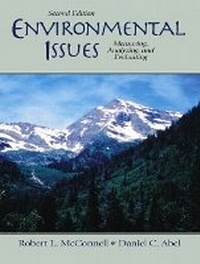
Environmental Issues
Measuring, Analyzing, Evaluating
2nd Edition
Published on 15. August 2001
Book
Paperback/Softback
320 pages
978-0-13-092041-6 (ISBN)
Description
For courses in Environmental Studies and Environmental Science as well as Education courses focusing on Math and Science.
This book takes an interdisciplinary approach combining simple math, the metric system, and critical thinking to gain insight into relevant local, regional, and global environmental issues. It presents real-world issues and examples as a means of fostering the development of the math and analytical skills necessary to truly think critically and to understand these complex issues.
This book takes an interdisciplinary approach combining simple math, the metric system, and critical thinking to gain insight into relevant local, regional, and global environmental issues. It presents real-world issues and examples as a means of fostering the development of the math and analytical skills necessary to truly think critically and to understand these complex issues.
More details
Edition
2nd edition
Language
English
Place of publication
United States
Publishing group
Pearson Education (US)
Target group
Professional and scholarly
ISBN-13
978-0-13-092041-6 (9780130920416)
Copyright in bibliographic data and cover images is held by Nielsen Book Services Limited or by the publishers or by their respective licensors: all rights reserved.
Schweitzer Classification
Other editions
New editions
Book
04/2007
3rd Edition
Pearson
€69.32
Article not available
Content
Preface.
Basic Concepts and Tools: Using Math and Critical Thinking.
POPULATION AND MIGRATION.
1. Human Population Growth: How Long Will It Take to Fill Up the Earth?
2. Coastal Growth Case Study: Bangladesh.
3. Population Growth, Carrying Capacity, and Ecological Footprints.
4. Population Growth, Migration, and Fertility.
5. Local Population Growth I: "Sprawl" or "Smart Growth"?
6. Local Population Growth II: Case Studies, Maryland and Colorado.
CONSUMPTION AND QUALITY OF LIFE.
7. Global Grain Production: Can We Beef It Up?
8. Soil Degradation and Erosion.
9. Automobiles and the Environment.
10. Automobiles and the Environment II: Global Trends.
11. Waste Packaging, and Subsidies: The All-Aluminum Can.
12. Whacker Madness? The Proliferation of Turfgrass.
13. The Impact of Interjurisdictional Waste Disposal: Truckin' Trash.
ENERGY USE AND CONSERVATION.
14. Oil Resources and Reserves.
15. Bringing the World to the U.S. Standard of Living.
16. Renewable Energy: Is the Answer Blowing in the Wind?
POLLUTION AND CLIMATE CHANGE.
17. Energy Waste and Avoidable Air Pollution: Getting the Picture About VCRs, TVs, and Iced Drinks.
18. Greenhouse Gases, Global CO2 Emissions, and Global Warming.
THE HYDROSPHERE.
19. Estuarine Pollution: Chesapeake Bay.
20. Illegal Immigration: Ballast Water and Exotic Species.
21. Catch of the Day: The State of Global Fisheries.
22. Aquaculture.
23. Dolphin-Safe Tuna.
24. Coral Rocks! The Value of the World's Coral Reefs.
ENVIRONMENTAL HEALTH.
25. Lead.
26. "Mad as a Hatter": Mercury in the Environment.
27. Organochlorines.
Index.
Basic Concepts and Tools: Using Math and Critical Thinking.
POPULATION AND MIGRATION.
1. Human Population Growth: How Long Will It Take to Fill Up the Earth?
2. Coastal Growth Case Study: Bangladesh.
3. Population Growth, Carrying Capacity, and Ecological Footprints.
4. Population Growth, Migration, and Fertility.
5. Local Population Growth I: "Sprawl" or "Smart Growth"?
6. Local Population Growth II: Case Studies, Maryland and Colorado.
CONSUMPTION AND QUALITY OF LIFE.
7. Global Grain Production: Can We Beef It Up?
8. Soil Degradation and Erosion.
9. Automobiles and the Environment.
10. Automobiles and the Environment II: Global Trends.
11. Waste Packaging, and Subsidies: The All-Aluminum Can.
12. Whacker Madness? The Proliferation of Turfgrass.
13. The Impact of Interjurisdictional Waste Disposal: Truckin' Trash.
ENERGY USE AND CONSERVATION.
14. Oil Resources and Reserves.
15. Bringing the World to the U.S. Standard of Living.
16. Renewable Energy: Is the Answer Blowing in the Wind?
POLLUTION AND CLIMATE CHANGE.
17. Energy Waste and Avoidable Air Pollution: Getting the Picture About VCRs, TVs, and Iced Drinks.
18. Greenhouse Gases, Global CO2 Emissions, and Global Warming.
THE HYDROSPHERE.
19. Estuarine Pollution: Chesapeake Bay.
20. Illegal Immigration: Ballast Water and Exotic Species.
21. Catch of the Day: The State of Global Fisheries.
22. Aquaculture.
23. Dolphin-Safe Tuna.
24. Coral Rocks! The Value of the World's Coral Reefs.
ENVIRONMENTAL HEALTH.
25. Lead.
26. "Mad as a Hatter": Mercury in the Environment.
27. Organochlorines.
Index.