

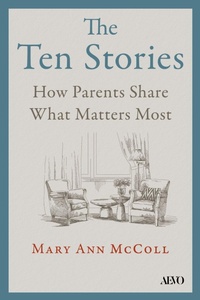
The Ten Stories
What Aging Parents Want Us to Hear
Will be published approx. on 16. June 2026
Book
Hardback
252 pages
978-1-4875-6153-6 (ISBN)
Description
Out of the countless experiences in a lifetime, why are certain narratives chosen, repeated, and preserved by aging individuals?
The Ten Stories suggests that most elderly people return to a core set of approximately ten stories as they reflect on their lives. The significance of those narratives lies not in their factual details, but in the values and meanings they convey. Most stories told are set during late adolescence and early adulthood - often eight or nine out of ten originate during this period. The stories are also audience-specific, as they are shaped by the relationship between teller and listener. The book explores how stories told by mothers are different than those told by fathers; how stories told to sons differ from those told to daughters; and how the stories of immigrant parents differ from non-immigrants.
Social scientist and health policy researcher Mary Ann McColl provides insight into what older adults may be expressing through repeated stories. She shares twenty recurring themes emerging from the stories - such as overcoming obstacles, showing kindness, regrets and resentments, and standing up for what's right - that represent an opportunity for connection and understanding, rather than a source of frustration. This book offers practical strategies for listening more effectively and appreciating those narratives as intentional, meaningful acts of communication.
The Ten Stories suggests that most elderly people return to a core set of approximately ten stories as they reflect on their lives. The significance of those narratives lies not in their factual details, but in the values and meanings they convey. Most stories told are set during late adolescence and early adulthood - often eight or nine out of ten originate during this period. The stories are also audience-specific, as they are shaped by the relationship between teller and listener. The book explores how stories told by mothers are different than those told by fathers; how stories told to sons differ from those told to daughters; and how the stories of immigrant parents differ from non-immigrants.
Social scientist and health policy researcher Mary Ann McColl provides insight into what older adults may be expressing through repeated stories. She shares twenty recurring themes emerging from the stories - such as overcoming obstacles, showing kindness, regrets and resentments, and standing up for what's right - that represent an opportunity for connection and understanding, rather than a source of frustration. This book offers practical strategies for listening more effectively and appreciating those narratives as intentional, meaningful acts of communication.
More details
Language
English
Place of publication
Canada
Publishing group
University of Toronto Press
Target group
Professional and scholarly
Product notice
Paperback (trade)
Illustrations
6 b&w figures, 6 b&w tables
Dimensions
Height: 229 mm
Width: 152 mm
Thickness: 25 mm
Weight
1 gr
ISBN-13
978-1-4875-6153-6 (9781487561536)
Copyright in bibliographic data and cover images is held by Nielsen Book Services Limited or by the publishers or by their respective licensors: all rights reserved.
Schweitzer Classification
Person
Mary Ann McColl is a professor emerita of occupational therapy and senior scientist with the Health Services and Policy Research Institute at Queen's University. Based on a career of research in disability studies, spirituality, and occupational therapy, McColl is the author of many books including Theoretical Basis of Occupational Therapy (4th ed.), Appreciative Disability Studies, and Spirituality and Occupational Therapy (2nd ed.).
Content
List of Tables and Figures
Foreword
Dedication and Acknowledgments
Introduction
1. Introduction to the Ten Stories
2. Background
Part I: Themes in the Ten Stories
3. Reconciling Identity
4. Entertaining Others
5. Informing or Instructing
6. Reconciling Conflicts
7. Keeping Memories Alive
8. Patterns in the Ten Stories
Part II: Listening for the Ten Stories
9. What Can We Learn from the Ten Stories?
10. Listening for the Ten Stories
Recommended Reading
References
Appendix
Foreword
Dedication and Acknowledgments
Introduction
1. Introduction to the Ten Stories
2. Background
Part I: Themes in the Ten Stories
3. Reconciling Identity
4. Entertaining Others
5. Informing or Instructing
6. Reconciling Conflicts
7. Keeping Memories Alive
8. Patterns in the Ten Stories
Part II: Listening for the Ten Stories
9. What Can We Learn from the Ten Stories?
10. Listening for the Ten Stories
Recommended Reading
References
Appendix