

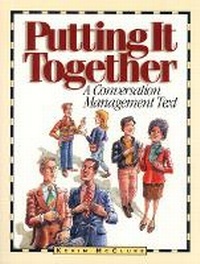
Putting It Together: A Conversation Management Text
Published on 1. January 1995
Book
Paperback/Softback
240 pages
978-0-13-128174-5 (ISBN)
Description
NEW FOR 1994! PUTTING IT TOGETHER: A CONVERSATION MANAGEMENT TEXT. This text is designed to develop a variety of specific speaking skills rather than to simply provide an opportunity to speak. Skills covered may be linguistic (e.g. opening a conversation) or cultural (some topics are impolite.) Each chapter consists of a listening passage, vocabulary, controlled practice and a very open conversation. >focuses on specific speaking skills needed in English >emphasizes conversations on real topics with real information >gradually builds each chapter from listening to controlled speech to free speech >prepares students for real, idiomatic speech heard outside the classroom >provides topics carefully chosen for high student interest >presents gradual skill buildups with a variety of follow-up practice >introduces vocabulary/idioms in specific domains >provides great opportunities for surveying fellow students and people outside the classroom >encourages real communication rather than fictional information gap/pair work situation
More details
Content
Chapter One: Asking for Clarification
Language/Skills
Asking for Clarification
Repeating Information as a Question
Correcting Mistakes
WH-Questions for Clarification
Confirming Numbers
Chapter Two: Getting Started
Language/Skills
Greetings
Introductions
Conversation Openers
Chapter Three: Keeping It Going
Language/Skills
Listener Expressions
Avoiding Silence
Giving Complete Answers
Open Questions (three types)
Suggestions
Chapter Four: Ending a Conversation
Language/Skills
Pre-closing Phrases
Closings
Review of Chapters 1-4
Conversation Maze One
Small Group Activity for Review of Conversational Strategies
Chapter Five: Weekends
Language/Skills
Key Phrases
Activities with go (go fishing)
Other Activities
Chapter Six: Weather
Language/Skills
Key Phrases
Weather Expressions/Idioms
Chapter Seven: Music
Language/Skills
Vocabulary
Asking for an Opinion
Giving an Opinion
Chapter Eight: Explanations
Language/Skills
Explaining by:
Classification
Purpose
Comparison and Contrast
Structure
Material
Exemplification
Origin
Chapter Nine: Food
Language/Skills
Key Phrases for Talking About Food
Vocabulary
Idioms
Chapter Ten: Reduced Forms
Language/Skills
Key Reduced Forms: wanna, gonna
Vocabulary
Review of Chapters 1-10
Review of Conversational Strategies
Vocabulary and idioms
Controlled and Communicative Exercises
Chapter Eleven: Schools
Language/Skills
Vocabulary
Idioms
Key Cultural Information About Schools
Chapter Twelve: Non-words
Language/Skills
Key Informal Conversational Expressions
in English: uh-huh, uh-uh, uh-oh, O.K.
Fillers
Chapter Thirteen: People
Language/Skills
Key Positive and Negative Words for People: sweetheart, slob, good conversationalist
Chapter Fourteen: Conversational Expressions
Language/Skills
Important Expressions which Cause Students
Great Difficulties: anyway, by the way, so what, that reminds me
Chapter Fifteen: Feelings
Language/Skills
Language for Explaining Emotions
Likes and Dislikes
Conversation Maze Two
Small Group Activity for Review of Conversational Strategies and Vocabulary
Chapter Sixteen: Storytelling
Language/Skills
Key Phrases for Telling a Story and
Reacting to a Story: "This is a story about my
grandfather." "And then what happened?"
Time Phrases: First, Then, Finally, After that
Chapter Seventeen: Life
Language/Skills
Words and Idioms for the Stages of Life:
was born, got married, got divorced, died
Chapter Eighteen: Work
Language/Skills
Key Vocabulary and idioms for Work
Situations: hire, fire, promote, transfer, benefits
Chapter Nineteen: Movies and TV
Language/Skills
Key Vocabulary and idioms for
Discussing Movies and TV: director,
scenery, documentary, horror
Review of Chapters 11-20
Controlled and Communicative Exercises for
Review of Final Ten Chapters
Summary of Main Ideas of Text
APPENDIX
Notes for Instructors & Answer Key
Helpful Hints for Instructor, Expansion
Activities, Answers for Dialogues and Controlled Exercises
Language/Skills
Asking for Clarification
Repeating Information as a Question
Correcting Mistakes
WH-Questions for Clarification
Confirming Numbers
Chapter Two: Getting Started
Language/Skills
Greetings
Introductions
Conversation Openers
Chapter Three: Keeping It Going
Language/Skills
Listener Expressions
Avoiding Silence
Giving Complete Answers
Open Questions (three types)
Suggestions
Chapter Four: Ending a Conversation
Language/Skills
Pre-closing Phrases
Closings
Review of Chapters 1-4
Conversation Maze One
Small Group Activity for Review of Conversational Strategies
Chapter Five: Weekends
Language/Skills
Key Phrases
Activities with go (go fishing)
Other Activities
Chapter Six: Weather
Language/Skills
Key Phrases
Weather Expressions/Idioms
Chapter Seven: Music
Language/Skills
Vocabulary
Asking for an Opinion
Giving an Opinion
Chapter Eight: Explanations
Language/Skills
Explaining by:
Classification
Purpose
Comparison and Contrast
Structure
Material
Exemplification
Origin
Chapter Nine: Food
Language/Skills
Key Phrases for Talking About Food
Vocabulary
Idioms
Chapter Ten: Reduced Forms
Language/Skills
Key Reduced Forms: wanna, gonna
Vocabulary
Review of Chapters 1-10
Review of Conversational Strategies
Vocabulary and idioms
Controlled and Communicative Exercises
Chapter Eleven: Schools
Language/Skills
Vocabulary
Idioms
Key Cultural Information About Schools
Chapter Twelve: Non-words
Language/Skills
Key Informal Conversational Expressions
in English: uh-huh, uh-uh, uh-oh, O.K.
Fillers
Chapter Thirteen: People
Language/Skills
Key Positive and Negative Words for People: sweetheart, slob, good conversationalist
Chapter Fourteen: Conversational Expressions
Language/Skills
Important Expressions which Cause Students
Great Difficulties: anyway, by the way, so what, that reminds me
Chapter Fifteen: Feelings
Language/Skills
Language for Explaining Emotions
Likes and Dislikes
Conversation Maze Two
Small Group Activity for Review of Conversational Strategies and Vocabulary
Chapter Sixteen: Storytelling
Language/Skills
Key Phrases for Telling a Story and
Reacting to a Story: "This is a story about my
grandfather." "And then what happened?"
Time Phrases: First, Then, Finally, After that
Chapter Seventeen: Life
Language/Skills
Words and Idioms for the Stages of Life:
was born, got married, got divorced, died
Chapter Eighteen: Work
Language/Skills
Key Vocabulary and idioms for Work
Situations: hire, fire, promote, transfer, benefits
Chapter Nineteen: Movies and TV
Language/Skills
Key Vocabulary and idioms for
Discussing Movies and TV: director,
scenery, documentary, horror
Review of Chapters 11-20
Controlled and Communicative Exercises for
Review of Final Ten Chapters
Summary of Main Ideas of Text
APPENDIX
Notes for Instructors & Answer Key
Helpful Hints for Instructor, Expansion
Activities, Answers for Dialogues and Controlled Exercises