


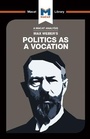
An Analysis of Max Weber's Politics as a Vocation
1st Edition
Published on 4. July 2017
Book
Paperback/Softback
114 pages
978-1-912127-67-2 (ISBN)
Description
German sociologist Max Weber's 1919 lecture Politics as a Vocation is widely regarded as a masterpiece of political theory and sociology. Its central strength lies in Weber's deployment of masterful interpretative skills to power his discussion of modern politics.
Interpretation involves understanding both the meaning of evidence and the meaning of terms - questioning definitions, clarifying terms and processes, and supplying good, clear definitions of the author's own. As a sociologist accustomed to working with historical evidence, Weber based his own work on precisely these skills, solidly backed up by analytical acuity.
Politics as a Vocation, written in a Germany shocked by its crippling defeat in World War I, saw Weber turn his eye to an examination of how the modern nation state emerged, and the different ways in which it can be run - interpreting and defining the different types of rule that are possible. It is testament to Weber's interpretative skills that Politics is famous above all in sociological circles for its clear definition of a state as an institution that claims "the monopoly of legitimate physical violence" in a given territory.
Interpretation involves understanding both the meaning of evidence and the meaning of terms - questioning definitions, clarifying terms and processes, and supplying good, clear definitions of the author's own. As a sociologist accustomed to working with historical evidence, Weber based his own work on precisely these skills, solidly backed up by analytical acuity.
Politics as a Vocation, written in a Germany shocked by its crippling defeat in World War I, saw Weber turn his eye to an examination of how the modern nation state emerged, and the different ways in which it can be run - interpreting and defining the different types of rule that are possible. It is testament to Weber's interpretative skills that Politics is famous above all in sociological circles for its clear definition of a state as an institution that claims "the monopoly of legitimate physical violence" in a given territory.
More details
Series
Language
English
Place of publication
London
United Kingdom
Dimensions
Height: 198 mm
Width: 129 mm
Thickness: 6 mm
Weight
119 gr
ISBN-13
978-1-912127-67-2 (9781912127672)
Copyright in bibliographic data and cover images is held by Nielsen Book Services Limited or by the publishers or by their respective licensors: all rights reserved.
Schweitzer Classification
Other editions
Additional editions
Book
07/2017
1st Edition
Macat International Limited
€44.79
Shipment within 3-4 weeks

Tom McClean | Jason Xidias | William Brett
An Analysis of Max Weber's Politics as a Vocation
E-Book
07/2017
Routledge
€8.99
Available for download

Tom McClean | Jason Xidias | William Brett
An Analysis of Max Weber's Politics as a Vocation
E-Book
07/2017
Routledge
€8.99
Available for download
Person
Dr Tom McClean received his PhD in politics from the London School of Economics, where he subsequently held a fellowship in Political Sociology. He currently works for the Uniting Centre for Research, Innovation and Advocacy in Sydney, Australia.
Dr Jason Xidias has held positions at King's College London and the University of California, Berkeley.
William Brett was a member of the Constitution Unit at University College London and is currently Head of Campaigns for the Electoral Reform Society.
Dr Jason Xidias has held positions at King's College London and the University of California, Berkeley.
William Brett was a member of the Constitution Unit at University College London and is currently Head of Campaigns for the Electoral Reform Society.
Content
Ways in to the Text Who was Max Weber? What does Politics as a Vocation Say? Why does Politics as a Vocation Matter? Section 1: Influences Module 1: The Author and the Historical Context Module 2: Academic Context Module 3: The Problem Module 4: The Author's Contribution Section 2: Ideas Module 5: Main Ideas Module 6: Secondary Ideas Module 7: Achievement Module 8: Place in the Author's Work Section 3: Impact Module 9: The First Responses Module 10: The Evolving Debate Module 11: Impact and Influence Today Module 12: Where Next? Glossary of Terms People Mentioned in the Text Works Cited