

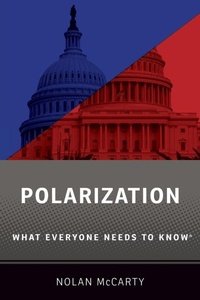
Polarization
What Everyone Needs to Know (R)
Published on 12. December 2019
Book
Paperback/Softback
280 pages
978-0-19-086777-5 (ISBN)
Description
The 2016 election of Donald J. Trump invoked a time for reflection about the state of American politics and its deep ideological, cultural, racial, regional, and economic divisions. But one aspect that the contemporary discussions often miss is that these fissures have been opening over several decades and are deeply rooted in the structure of American politics and society.
Nolan McCarty's Polarization: What Everyone Needs to Know (R) is an accessible introduction to polarization in America. McCarty takes readers through what scholars know and don't know about the origins, development, and implications of our rising political conflicts, delving into social, economic, and geographic determinants of polarization in the United States. While the current political climate makes it clear that extreme views are becoming more popular, McCarty also argues that, contrary to popular belief, the 2016 election was a natural outgrowth of 40 years of polarized politics, instead of a significant break with the past. He explains the factors that have created this state of affairs, including gerrymandered legislative districts, partisan primary nomination systems, and our private campaign finance system. He also considers the potential of major reforms such as instating proportional representation or single-transferable voting to remedy extreme polarization. A concise overview of a complex and crucial topic in US politics, this book is for anyone wanting to understand how to repair the cracks in our system.
Nolan McCarty's Polarization: What Everyone Needs to Know (R) is an accessible introduction to polarization in America. McCarty takes readers through what scholars know and don't know about the origins, development, and implications of our rising political conflicts, delving into social, economic, and geographic determinants of polarization in the United States. While the current political climate makes it clear that extreme views are becoming more popular, McCarty also argues that, contrary to popular belief, the 2016 election was a natural outgrowth of 40 years of polarized politics, instead of a significant break with the past. He explains the factors that have created this state of affairs, including gerrymandered legislative districts, partisan primary nomination systems, and our private campaign finance system. He also considers the potential of major reforms such as instating proportional representation or single-transferable voting to remedy extreme polarization. A concise overview of a complex and crucial topic in US politics, this book is for anyone wanting to understand how to repair the cracks in our system.
More details
Series
Language
English
Place of publication
New York
United States
Illustrations
25 illustrations
Dimensions
Height: 210 mm
Width: 140 mm
Thickness: 15 mm
Weight
342 gr
ISBN-13
978-0-19-086777-5 (9780190867775)
Copyright in bibliographic data and cover images is held by Nielsen Book Services Limited or by the publishers or by their respective licensors: all rights reserved.
Schweitzer Classification
Other editions
Additional editions
Book
12/2019
Oxford University Press Inc
€68.60
Shipment within 15-20 days
E-Book
06/2019
1st Edition
OUP eBook
€6.99
Available for download
E-Book
06/2019
1st Edition
OUP eBook
€6.99
Available for download
Person
Nolan McCarty is Susan Dod Brown Professor of Politics and Public Affairs at Princeton University. He is author and co-author of several previous books, including Polarized America (MIT Press, 2006) and Political Game Theory (Cambridge UP, 2007).
Content
Preface
1. Introduction
2. What is Political Polarization?
3. Are Partisan Elites Polarized?
4. Is the Public Polarized?
5. What Are The Causes of Polarization?
6. How Does Electoral Law Affect Legislative Polarization?
7. How Have Other Changes in American Society Affected?
8. What are the Consequences of Polarization for Public Policy and Governance?
9. Is the Trump Presidency a New Normal or More of the Same?
Bibliography
1. Introduction
2. What is Political Polarization?
3. Are Partisan Elites Polarized?
4. Is the Public Polarized?
5. What Are The Causes of Polarization?
6. How Does Electoral Law Affect Legislative Polarization?
7. How Have Other Changes in American Society Affected?
8. What are the Consequences of Polarization for Public Policy and Governance?
9. Is the Trump Presidency a New Normal or More of the Same?
Bibliography