

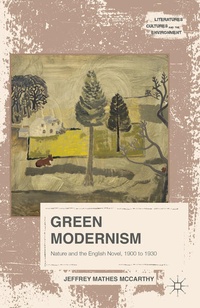
Green Modernism
Nature and the English Novel, 1900 to 1930
Published on 22. September 2015
Book
Hardback
X, 262 pages
978-1-137-54935-8 (ISBN)
Description
One of the first studies to explore the relationship between environmental criticism and British modernism, Green Modernism explores the cultural function of nature in the modernist novel between 1900 and 1930. This theoretically engaged, historically informed book brings new materialist insights to novels by Conrad, Ford, Lawrence, and Butts.
Reviews / Votes
"In Green Modernism, McCarthy offers various ethical models for the dialogic and equalizing relationship of humans and nature, from a fundamental recognition of nature's active and independent presence (object-oriented ontology), to a responsible and responsive working of the land, to the 'sustained intimacy' with the land he calls 'dwelling.' . The project of turning modernism's gaze from the psyche and the city to the land is a valuable expansion of traditional criticism." (Mara Scanlon, English Literature in Transition, Vol. 60 (2), 2017)
More details
Series
Edition
1st ed. 2015
Language
English
Place of publication
New York
United States
Target group
Professional and scholarly
Product notice
sewn/stitched
Cloth over boards
With dust jacket
Illustrations
X, 262 p.
Dimensions
Height: 216 mm
Width: 140 mm
Thickness: 18 mm
Weight
467 gr
ISBN-13
978-1-137-54935-8 (9781137549358)
DOI
10.1057/9781137526045
Schweitzer Classification
Other editions
Additional editions
E-Book
04/2016
Palgrave MacMillan
€58.84
Available for download
Book
01/2016
Palgrave MacMillan
€58.84
Shipment within 15-20 days
Person
Jeffrey Mathes McCarthy is the Director of the Environmental Humanities Graduate Program at the University of Utah, USA.
Content
1. "The Land's Way is Important in This Story": Environmental Criticism in Modernist Studies 2. "A Choice of Nightmares": Nature and the Modern Mind in Heart of Darkness 3. Conrad's Weather: The Politics of Ecology in Under Western Eyes 4. 1928 and Nature: Ruralism and Regeneration in Lady Chatterley's Lover and The Last Post 5. Mary Butts and England's Nature: Modernist Georgic, Authentic Englishness and the Consolations of Dwelling 6. "Pan in America," Modernism, and Material Nature