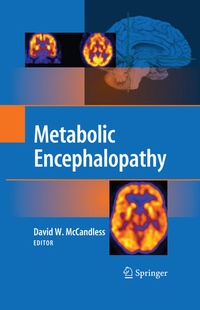
Metabolic Encephalopathy is meant to combine and correlate animal and human studies. It is hoped that increased awareness of the importance of early diagnosis and treatment of these disorders may result in a lowering of the incidence of structural changes and morbidity. These disorders hold a special fascination for both basic scientists and clinical investigators because they are accessible, treatable and there exists good animal models for study. Therefore, this book will pull together basic and clinical neuroscience issue in the treatment of specific metabolic encephalopathies.
Reviews / Votes
From the reviews:
"This book summarises a wealth of information on several neurological disorders from animal models to human conditions . . This approach provides the book with a useful role for continuous education of general neurologists and for introducing neurological diseases to trainees in a modern way. . this book helps to increase awareness of the importance of early diagnosis and treatment of these disorders, which can reduce the incidence of structural brain changes and morbidity." (Antonio Federico, The Lancet Neurology, Vol. 8, August, 2009)
Edition
Language
Place of publication
Target group
Professional and scholarly
Research
Illustrations
26 s/w Tabellen, 42 s/w Abbildungen, 15 farbige Abbildungen
XVI, 601 p.
Dimensions
Height: 235 mm
Width: 155 mm
Thickness: 34 mm
Weight
ISBN-13
978-1-4419-2712-5 (9781441927125)
DOI
10.1007/978-0-387-79112-8
Schweitzer Classification
Dr. David W. McCandless is the John J. Sheinin Professor of Anatomy in the Department of Cell Biology and Anatomy at The Chicago Medical School, Rosalind Franklin University, North Chicago, IL. He has over 35 years of laboratory research into basic mechanisms of various metabolic encephalopathies. He serves as Editor-in Chief of the journal Metabolic Brain Disease (Springer), now in its 23rd year. Dr. McCandless has been on the faculty or research staff at The University of Vermont College of Medicine, NIH-NINCDS, University of Texas Medical School at Houston, and The Chicago Medical School, and was a visiting professor at Washington University School of Medicine. Dr. McCandless has published in journals such as The J. Clinical Investigation, Nature, Proc. National Academy of Sciences, Amer. J. of Physiology, Brain Research, J. Neurochemistry, Teratology, Epilepsia, Stroke, and many others. This is his third edited boo
Functional Anatomy of the Brain.- Brain Metabolic Adaptations to Hypoxia.- Hypoglycemic Brain Damage.- Experimental Ischemia: Summary of Metabolic Encephalopathy.- Metabolic Encephalopathy Stroke - Clinical Features.- The Role of Animal Models in the Study of Epileptogenesis.- Seizure-Induced Neuronal Plasticity and Metabolic Effects.- Metabolic Encephalopathies in Children.- Pathophysiology of Hepatic Encephalopathy: Studies in Animal Models.- Hepatic Encephalopathy.- Uremic and Dialysis Encephalopathies.- Thiamine Deficiency: A Model of Metabolic Encephalopathy and of Selective Neuronal Vulnerability.- Alcohol, Neuron Apoptosis, and Oxidative Stress.- Wernicke's Encephalopathy.- The Genetics of Myelination in Metabolic Brain Disease: The Leukodystrophies.- Bilirubin Encephalopathy.- Infectious and Inflammatory Metabolic Encephalopathies.- Major Depression and Metabolic Encephalopathy: Syndromes More Alike Than Not?.- Attention-Deficit/Hyperactivity Disorder as a Metabolic Encephalopathy.- Retracted: Brain Damage in Phenylalanine, Homocysteine and Galactose Metabolic Disorders.- Wilson Disease.- Metabolic Abnormalities in Alzheimer Disease.- Prions and the Transmissible Spongiform Encephalopathies.- Lead Encephalopathy.- Retracted: Brain Damage in Phenylalanine, Homocysteine and Galactose Metabolic Disorders.