

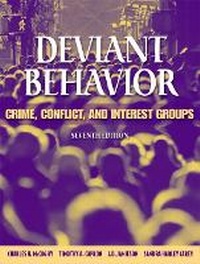
Deviant Behavior
Crime, Conflict, and Interest Groups
7th Edition
Published on 3. August 2005
Book
Paperback/Softback
448 pages
978-0-205-44728-2 (ISBN)
Description
Using the framework of interest group conflict, this text combines a balanced, comprehensive overview of the field of deviance with first-hand expertise in the workings of the criminal justice system.
Deviant Behavior, Seventh Edition, surveys a wide range of topics, from explanations regarding crime and criminal behavior, measurement of crime, violent crime and organizational deviance, to sexual behavior, mental health, and substance abuse.
Deviant Behavior, Seventh Edition, surveys a wide range of topics, from explanations regarding crime and criminal behavior, measurement of crime, violent crime and organizational deviance, to sexual behavior, mental health, and substance abuse.
More details
Edition
7th edition
Language
English
Place of publication
New York
United States
Publishing group
Taylor & Francis Inc
Target group
Professional and scholarly
Dimensions
Height: 177 mm
Width: 233 mm
Thickness: 21 mm
Weight
694 gr
ISBN-13
978-0-205-44728-2 (9780205447282)
Copyright in bibliographic data and cover images is held by Nielsen Book Services Limited or by the publishers or by their respective licensors: all rights reserved.
Schweitzer Classification
Other editions
New editions
Charles McCaghy | Timothy Capron | J.D. Jamieson
Deviant Behavior
Crime, Conflict, and Interest Groups
Book
11/2007
8th Edition
Routledge
€133.64
Article not available for order
Previous edition
Charles H. McCaghy | Timothy A. Capron | J. D. Jamieson
Deviant Behavior
Crime, Conflict, and Interest Groups
Book
06/2002
6th Edition
Routledge
Unfortunately, price unknown
No shipping information available
Content
I. THE CONCEPT OF DEVIANT BEHAVIOR.
1. Perspectives on Deviants:The Development of Criminal Deviance Theory.
Who is Deviant?
2. Theories of Criminal Deviance.
The Rational Deviant-The Classical School.
The Deviant as Determined-Positivist Criminology.
Physical Characteristics of Deviants-Early Approaches.
Heredity and Mental Deficiencies.
Physical Characteristics Revisited.
Personality Defects and Attributes.
Sociobiology-Trailblazing or Backtracking?
Economic Influences.
Anomie.
Subcultures of Deviance.
Control Theory.
3. Why Is Certain Behavior Deviant?
Labeling Perspective.
Conflict Perspectives.
Once Again: What Is Deviant?
Interest Group Conflict and Deviance.
II. CRIME AS DEVIANT BEHAVIOR.
4. Crime in the Streets-Against the Person.
Measuring Crime.
Murder and Aggravated Assault.
Forcible Rape.
Violent Sex and Conflict.
5. Crime in the Streets-Against Property.
Robbery.
Burglary.
Motor Vehicle Theft.
Larceny-Theft.
Arson.
Larceny in the American Heart.
6. Assaults Against Children and Spouses.
Physical Abuse of Children.
Spouse Abuse.
Sexual Abuse of Children.
7. Deviance and Organizations.
Employee Theft.
Police Corruption.
Corporate Deviance.
Organized Crime.
III. DEVIANT BEHAVIOR IN CONTEMPORARY SOCIETY.
8. Deviant Drug Use.
Drug Use as Deviance.
Alcohol.
Heroin.
Marijuana.
Cocaine.
Prescription Drug Abuse.
Performance Enhancing Drugs.
9. Mental Disorders.
What Is Mental Disorder?
Correlates of Mental Disorder.
Disease or Label?
Conflict and the Therapeutic State.
Common Mental Disorders.
10. Suicide.
History of Suicide.
Current Attitudes Toward Suicide.
Sociological Theories of Suicide.
Incidence of Suicide.
Risk Factors and Correlates of Suicide.
Failure to Seek Help.
Warning Signs.
Precipitating Events.
Helping Someone Who is Suicidal.
Attempting Suicide.
Physician Assisted Suicide.
Prevention and Protection.
11. Cyberdeviance.
The Computer Underground.
Sexual Deviance and Cyberspace.
12. Sexual Deviance and Homosexuality.
Prostitution.
Homosexuality.
Sexual Harassment.
Name Index.
Subject Index.
1. Perspectives on Deviants:The Development of Criminal Deviance Theory.
Who is Deviant?
2. Theories of Criminal Deviance.
The Rational Deviant-The Classical School.
The Deviant as Determined-Positivist Criminology.
Physical Characteristics of Deviants-Early Approaches.
Heredity and Mental Deficiencies.
Physical Characteristics Revisited.
Personality Defects and Attributes.
Sociobiology-Trailblazing or Backtracking?
Economic Influences.
Anomie.
Subcultures of Deviance.
Control Theory.
3. Why Is Certain Behavior Deviant?
Labeling Perspective.
Conflict Perspectives.
Once Again: What Is Deviant?
Interest Group Conflict and Deviance.
II. CRIME AS DEVIANT BEHAVIOR.
4. Crime in the Streets-Against the Person.
Measuring Crime.
Murder and Aggravated Assault.
Forcible Rape.
Violent Sex and Conflict.
5. Crime in the Streets-Against Property.
Robbery.
Burglary.
Motor Vehicle Theft.
Larceny-Theft.
Arson.
Larceny in the American Heart.
6. Assaults Against Children and Spouses.
Physical Abuse of Children.
Spouse Abuse.
Sexual Abuse of Children.
7. Deviance and Organizations.
Employee Theft.
Police Corruption.
Corporate Deviance.
Organized Crime.
III. DEVIANT BEHAVIOR IN CONTEMPORARY SOCIETY.
8. Deviant Drug Use.
Drug Use as Deviance.
Alcohol.
Heroin.
Marijuana.
Cocaine.
Prescription Drug Abuse.
Performance Enhancing Drugs.
9. Mental Disorders.
What Is Mental Disorder?
Correlates of Mental Disorder.
Disease or Label?
Conflict and the Therapeutic State.
Common Mental Disorders.
10. Suicide.
History of Suicide.
Current Attitudes Toward Suicide.
Sociological Theories of Suicide.
Incidence of Suicide.
Risk Factors and Correlates of Suicide.
Failure to Seek Help.
Warning Signs.
Precipitating Events.
Helping Someone Who is Suicidal.
Attempting Suicide.
Physician Assisted Suicide.
Prevention and Protection.
11. Cyberdeviance.
The Computer Underground.
Sexual Deviance and Cyberspace.
12. Sexual Deviance and Homosexuality.
Prostitution.
Homosexuality.
Sexual Harassment.
Name Index.
Subject Index.