

Worlds of Reference
Published on 27. February 1986
Book
Hardback
224 pages
978-0-521-30637-9 (ISBN)
Description
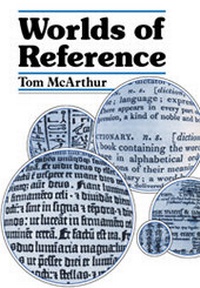
Worlds of Reference is a history of dictionaries, encyclopedias and reference materials, but it is also far more than that, because it is concerned with the growth of civilisation, education and culture - and particularly how the human race learned to store information beyond the brain. It looks at how our species moved from being able to communicate only orally and to store information only in the head (rote memorisation) to the evolution of technologies for external reference: clay- and cunieform, reed-and-hieroglyph, bamboo-and-ideogram, parchment-and-alphabet, codices, books, pages, columns and so forth through the print revolution to the current electronic revolution. Along the way it looks at how this has affected languages like Latin, french, and English and people's attitudes to those languages - and to words and the listing of information about words. This intensely human subject is as compelling and important today as any account of kings, queens, wars and social upheaval.
More details
Language
English
Place of publication
Cambridge
United Kingdom
Target group
College/higher education
Illustrations
Worked examples or Exercises
Dimensions
Height: 247 mm
Width: 174 mm
Thickness: 10 mm
Weight
750 gr
ISBN-13
978-0-521-30637-9 (9780521306379)
Copyright in bibliographic data and cover images is held by Nielsen Book Services Limited or by the publishers or by their respective licensors: all rights reserved.
Schweitzer Classification
Other editions
New editions
Tom McArthur
Worlds of Reference
Book
04/1988
Cambridge University Press
€61.00
Shipment within 15-20 days
Additional editions
Tom McArthur
Worlds of Reference
Book
04/1988
Cambridge University Press
€61.00
Shipment within 15-20 days
Content
Part I. Mind, word and world: 1. Knowing, referring and recording: storing information beyond the brain; 2. Information and World 3: in the beginning was the Word; Part II. The Ancient World: 3. Containers of knowledge: the first reference technologies; 4. Systems for knowledge: school and letter, book and library; 5. The taxonomic urge: class, classic and classification; 6. Missionaries and monasteries: reference and reverence; Part III. The Medieval World: 7. Faith versus reason: summations of truth; 8. The elites of knowledge: universitas; Part IV. The Early Modern World: 9. All knowledge for all men: the omne scibile and the printing press; 10. Theme versus alphabet: the roots of lexicography; 11. A blurring of languages: Latin and the vernaculars; Part V. The Modern World: 12. The legislative urge: authoritative wordbooks; 13. Reference and revolution: the encyclopedia proper; 14. Thematic lexicography: word order and world order; 15. Alphabetic lexicography: the unendable dictionary; 16. Universal education: dictionaries for the people; 17. Semantic fields and conceptual universes: the unshapeable lexis; 18. Tensions and trends: overt alphabet, covert theme; Part VI. Tomorrows World: 19. Shaping things to come: the priests of High Technology; 20. Knowledge, knowledge everywhere: planetary network, global book.