


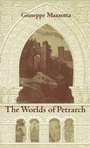
The Worlds of Petrarch
Published on 20. October 1993
Book
Hardback
277 pages
978-0-8223-1363-2 (ISBN)
Description
At the center of Petrarch's vision, announcing a new way of seeing the world, was the individual, a sense of the self that would one day become the center of modernity as well. This self, however, seemed to be fragmented in Petrarch's work, divided among the worlds of philosophy, faith, and love of the classics, politics, art, and religion, of Italy, France, Greece, and Rome. In recent decades scholars have explored each of these worlds in depth. In this work, Giuseppe Mazzotta shows for the first time how all these fragmentary explorations relate to each other, how these separate worlds are part of a common vision.
Written in a clear and passionate style, The Worlds of Petrarch takes us into the politics of culture, the poetic imagination, into history and ethics, art and music, rhetoric and theology. With this encyclopedic strategy, Mazzotta is able to demonstrate that the self for Petrarch is not a unified whole but a unity of parts, and, at the same time, that culture emerges not from a consensus but from a conflict of ideas produced by opposition and dark passion. These conflicts, intrinsic to Petrarch's style of thought, lead Mazzotta to a powerful rethinking of the concepts of "fragments" and "unity" and, finally, to a new understanding of the relationship between them.
Written in a clear and passionate style, The Worlds of Petrarch takes us into the politics of culture, the poetic imagination, into history and ethics, art and music, rhetoric and theology. With this encyclopedic strategy, Mazzotta is able to demonstrate that the self for Petrarch is not a unified whole but a unity of parts, and, at the same time, that culture emerges not from a consensus but from a conflict of ideas produced by opposition and dark passion. These conflicts, intrinsic to Petrarch's style of thought, lead Mazzotta to a powerful rethinking of the concepts of "fragments" and "unity" and, finally, to a new understanding of the relationship between them.
Reviews / Votes
"A very important study. Mazzotta not only gives us a dense and rich new portrait of a much-studied and absolutely major figure, but he also brings to the fore the abiding force and value of Petrarch's 'worlds' of discourse and thought to many of today's debates regarding, for example, the relation of aesthetics and rhetoric to the politico-historical realm, or the epistemological validity of poetry, or the constructedness of the self."-Rebecca West, University of Chicago "A richly textured, deeply learned, and broadly inclusive study of Petrarch's writing, his historical situation, and his contribution to our own cultural formation."-William Kennedy, Cornell UniversityMore details
Series
Language
English
Place of publication
North Carolina
United States
Target group
Professional and scholarly
Product notice
Cloth over boards
Dimensions
Height: 236 mm
Width: 144 mm
Thickness: 27 mm
Weight
519 gr
ISBN-13
978-0-8223-1363-2 (9780822313632)
Copyright in bibliographic data is held by Nielsen Book Services Limited or its licensors: all rights reserved.
Schweitzer Classification
Other editions
Additional editions
Mazzotta Giuseppe Mazzotta
Worlds of Petrarch
E-Book
10/1993
1st Edition
Duke University Press Books
€198.99
Available for download
Person
Giuseppe Mazzotta is Professor and Chair, Italian Language and Literature Department, Yale University. His is the author of Dante, Poet of the Desert, The World at Play, and Dante's Vision and the Circle of Knowledge.
Content
Acknowledgments ix
Note on Petrarch's Texts xiii
Introduction 1
I. Antiquity and the New Arts 14
II. The Thought of Love 33
III. The Canzoniere and the Language of the Self 58
IV. Ethics of Self 80
V. The World of History 102
VI. Orpheus: Rhetoric and Music 129
VII. Humanism and Monastic Spirituality 147
Appendix 1: Petrarch's Song 126 167
Appendix 2: Ambivalence of Power 181
Notes 193
Index 223
Note on Petrarch's Texts xiii
Introduction 1
I. Antiquity and the New Arts 14
II. The Thought of Love 33
III. The Canzoniere and the Language of the Self 58
IV. Ethics of Self 80
V. The World of History 102
VI. Orpheus: Rhetoric and Music 129
VII. Humanism and Monastic Spirituality 147
Appendix 1: Petrarch's Song 126 167
Appendix 2: Ambivalence of Power 181
Notes 193
Index 223