

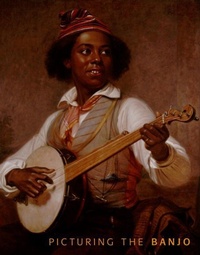
Picturing the Banjo
Published on 15. January 2006
Book
Paperback/Softback
200 pages
978-0-271-02710-4 (ISBN)
Description
The history of the banjo is as haunting as its music. Made popular in minstrel shows of the nineteenth century, the "banjar" derives from the stringed gourd instrument African slaves brought with them to plantations in the Caribbean and American South. From minstrelsy to the folk music revival of the twentieth century, the banjo has continued to attract audiences and acquire meaning. Picturing the Banjo gives this long history an entirely new dimension by tracing the instrument's representation in American visual culture from the eighteenth century to the present. Published in conjunction with an exhibition of the same name, Picturing the Banjo offers the first examination of the instrument's portrayal in images that range from anonymous photographs of performers to paintings by Thomas Eakins and prints by Dox Thrash. Leo G. Mazow, contributing editor of the volume, and his collaborators demonstrate that the banjo became an American icon that links popular music to fundamental issues of race, class, and gender. Simple and appealing as the instrument may seem in Henry Ossawa Tanner's The Banjo Lesson or Eastman Johnson's Old Kentucky Home, it carries powerful associations with social conflict and change. Through its many color and black-and-white illustrations, this book allows readers to experience the works of visual art and period instruments brought together in the pioneering exhibition organized by the Palmer Museum of Art of The Pennsylvania State University. Picturing the Banjo will be of interest to banjo lovers, scholars in American studies, and all those concerned with the musical and artistic heritage of slavery.
Reviews / Votes
"The instrument proper to them [slaves] is the banjar, which they brought hither from Africa." - Thomas Jefferson"More details
Language
English
Place of publication
University Park
United States
Target group
College/higher education
Professional and scholarly
Product notice
Paperback (trade)
Illustrations
120 Halftones, color
Dimensions
Height: 293 mm
Width: 228 mm
Thickness: 19 mm
Weight
1093 gr
ISBN-13
978-0-271-02710-4 (9780271027104)
Copyright in bibliographic data and cover images is held by Nielsen Book Services Limited or by the publishers or by their respective licensors: all rights reserved.
Schweitzer Classification
Person
Leo G. Mazow is Associate Professor of American Art History at the University of Arkansas, Fayetteville.
Content
Contents
Lenders to the Exhibition
List of Illustrations
Preface and Acknowledgments
1. Leo G. Mazow, Banjo Cultures
2. John Davis, A Change of Key: The Banjo During the Civil War and Reconstruction
3. Sarah Burns, Whiteface: Art, Women, and the Banjo in Late-Nineteenth-Century America
4. Leo G. Mazow, From Sonic to Social: Noise, Quiet, and Banjo Imagery
5. Joyce Henri Robinson, Harlem Renaissance, Plantation Formulas, and the Dialect(ic) of the Banjo
6. Michael D. Harris, From The Banjo Lesson to The Piano Lesson: Reclaiming the Song
7. Cecelia Tichi, Afterword: The State and Fate of an Icon
Selected Bibliography
Index
Lenders to the Exhibition
List of Illustrations
Preface and Acknowledgments
1. Leo G. Mazow, Banjo Cultures
2. John Davis, A Change of Key: The Banjo During the Civil War and Reconstruction
3. Sarah Burns, Whiteface: Art, Women, and the Banjo in Late-Nineteenth-Century America
4. Leo G. Mazow, From Sonic to Social: Noise, Quiet, and Banjo Imagery
5. Joyce Henri Robinson, Harlem Renaissance, Plantation Formulas, and the Dialect(ic) of the Banjo
6. Michael D. Harris, From The Banjo Lesson to The Piano Lesson: Reclaiming the Song
7. Cecelia Tichi, Afterword: The State and Fate of an Icon
Selected Bibliography
Index