

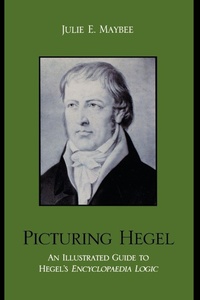
Picturing Hegel
An Illustrated Guide to Hegel's Encyclopaedia Logic
Published on 16. August 2009
Book
Paperback/Softback
668 pages
978-0-7391-1616-6 (ISBN)
Description
In her innovative take on G.W. F. Hegel's The Encyclopaedia Logic, Julie E. Maybee uses pictures and diagrams to cut through the philosopher's dense, difficult writing. Picturing Hegel: An Illustrated Guide to Hegel's Encyclopaedia Logic utilizes diagrams in order to rehabilitate Hegel's logic for serious consideration by showing how each stage develops step-by-step from earlier stages according to definite, logical patterns. This interpretation makes Hegel's work accessible and understandable for new and experienced readers alike. Because Hegel uses the same logic in all of his works, Maybee's analysis and defense of the logic will capture the attention of those readers interested in Hegel's ethics, politics, history, philosophy of religion, and phenomenology.
Through the included diagrams, Maybee is able to define central Hegelian concepts such as "being-in-itself," and "being-in-and-for-itself" with a new level of precision. Maybee argues that Hegel's logic does not include the one logistical pattern most often attributed to him; namely, the pattern "thesis-antithesis-synthesis." Rather, Hegel's model of logic was more scientific than formalistic in nature, as the philosopher himself pointed out. Hegel considered himself an encyclopedic culmination of Western philosophy in some ways, and indeed his work summarizes many of the presuppositions of Western philosophy. By picturing Hegel's logic, we can gain a greater understanding of ourselves.
Through the included diagrams, Maybee is able to define central Hegelian concepts such as "being-in-itself," and "being-in-and-for-itself" with a new level of precision. Maybee argues that Hegel's logic does not include the one logistical pattern most often attributed to him; namely, the pattern "thesis-antithesis-synthesis." Rather, Hegel's model of logic was more scientific than formalistic in nature, as the philosopher himself pointed out. Hegel considered himself an encyclopedic culmination of Western philosophy in some ways, and indeed his work summarizes many of the presuppositions of Western philosophy. By picturing Hegel's logic, we can gain a greater understanding of ourselves.
Reviews / Votes
To anyone who takes Hegel's own self-conception seriously, there is no way around studying his system of speculative logic, since this was, to him, the basis of his other philosophical accomplishments. Maybee's book is a remarkable achievement in making Hegel's logic accessible to students as well as specialists. -- Allen Wood, Indiana University and Stanford University One of the chief merits of her detailed account is its balanced approach....Maybee's account will provoke the reader to rethink what counts as logic. Even if we do not teach speculative logic in our introductory classes, Maybee's patient and persistent explanation of this difficult text is a rewarding read. * Journal of the History of Philosophy *More details
Language
English
Place of publication
United States
Publishing group
Bloomsbury Publishing Plc
Target group
Professional and scholarly
Dimensions
Height: 234 mm
Width: 156 mm
Thickness: 36 mm
Weight
998 gr
ISBN-13
978-0-7391-1616-6 (9780739116166)
Copyright in bibliographic data and cover images is held by Nielsen Book Services Limited or by the publishers or by their respective licensors: all rights reserved.
Schweitzer Classification
Other editions
Additional editions
E-Book
08/2009
1st Edition
Lexington Books
€82.49
Available for download
E-Book
08/2009
1st Edition
Bloomsbury eBooks US
€82.49
Available for download
Person
Julie E. Maybee is assistant professor of philosophy at Lehman College, City University of New York.
Content
Part 1 1. Entering the Gallery: Hegel's Overall Project and the Project of the Logic
Chapter 2 I. The Skepticism of Hume and Kant
Chapter 3 II. Reason Overgrasps Reality
Chapter 4 III. Essential, Necessary Universals
Chapter 5 IV. Reason Drives Itself: Semantics and Syntax
Chapter 6 V. Hegel's Argument
Chapter 7 VI. Hegel's Overall Project
Chapter 8 VII. The Conceptual and Semantic Project of the Logic
Chapter 9 VIII. The Syntactic Project of the Logic
Part 10 2. The Doctrine of Being
Chapter 11 I. Introduction
Chapter 12 II. The Doctrine of Quality
Chapter 13 III. The Doctrine of Quantity
Chapter 14 IV. The Doctrine of Measure
Chapter 15 V. Wrap Up Being: Comments on Syntax
Part 16 3. The Doctrine of Essence
Chapter 17 I. Introduction
Chapter 18 II. Essence as the Ground of Existence
Chapter 19 III. The Doctrine of Appearance
Chapter 20 IV. The Doctrine of Actuality
Chapter 21 V. Wrap Up Essence: Comments on Syntax
Part 22 4. The Doctrine of Concept
Chapter 23 I. Introduction
Chapter 24 II. The Doctrine of the Subjective or Formal Concept
Chapter 25 III. The Doctrine of the Object
Chapter 26 IV. The Doctrine of the Idea
Chapter 27 V. Wrap up Concept: Comments on Syntax
Chapter 28 VI. Epilogue: Hegel's Materialism, Optimism, and Faith
Chapter 2 I. The Skepticism of Hume and Kant
Chapter 3 II. Reason Overgrasps Reality
Chapter 4 III. Essential, Necessary Universals
Chapter 5 IV. Reason Drives Itself: Semantics and Syntax
Chapter 6 V. Hegel's Argument
Chapter 7 VI. Hegel's Overall Project
Chapter 8 VII. The Conceptual and Semantic Project of the Logic
Chapter 9 VIII. The Syntactic Project of the Logic
Part 10 2. The Doctrine of Being
Chapter 11 I. Introduction
Chapter 12 II. The Doctrine of Quality
Chapter 13 III. The Doctrine of Quantity
Chapter 14 IV. The Doctrine of Measure
Chapter 15 V. Wrap Up Being: Comments on Syntax
Part 16 3. The Doctrine of Essence
Chapter 17 I. Introduction
Chapter 18 II. Essence as the Ground of Existence
Chapter 19 III. The Doctrine of Appearance
Chapter 20 IV. The Doctrine of Actuality
Chapter 21 V. Wrap Up Essence: Comments on Syntax
Part 22 4. The Doctrine of Concept
Chapter 23 I. Introduction
Chapter 24 II. The Doctrine of the Subjective or Formal Concept
Chapter 25 III. The Doctrine of the Object
Chapter 26 IV. The Doctrine of the Idea
Chapter 27 V. Wrap up Concept: Comments on Syntax
Chapter 28 VI. Epilogue: Hegel's Materialism, Optimism, and Faith