

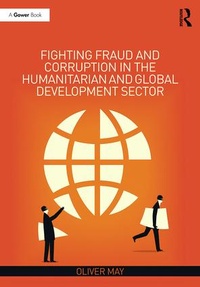
Fighting Fraud and Corruption in the Humanitarian and Global Development Sector
Fighting Fraud in the Humanitarian and International Development Sector
1st Edition
Published on 27. May 2016
Book
Hardback
184 pages
978-1-4724-5314-3 (ISBN)
Description
There are an estimated 40,000 international Non-Government Organisations (NGOs), working in an enormous global aid industry; official development assistance alone reached GBP90bn in 2014. This is supplemented by huge voluntary giving - the UK public, for example, give around GBP1bn a year to overseas causes.
These organisations face a unique challenge from fraud and corruption. Operating in the world's most under-developed and fragile environments, with minimal infrastructure and trust-based cultures, the risk is high. And, being wholly reliant on donors and supporters for income, so are the stakes.
Researchers make different estimates of the scale of the problem facing the sector. Some research implies that losses to the global aid budget caused by occupational fraud and abuse may be in the billions of pounds, while those to the British public's voluntary overseas donations could be in the tens of millions.
For many sector professionals working in the developing world, these estimates are readily believable. Fighting Fraud and Corruption in the Humanitarian and Global Development Sector by Oliver May is a timely, accessible and relevant how-to guide, which explores the scale and nature of the threat, debunks pervasive myths, and shows readers how to help their NGOs to better deter, prevent, detect and respond to fraud and corruption.
These organisations face a unique challenge from fraud and corruption. Operating in the world's most under-developed and fragile environments, with minimal infrastructure and trust-based cultures, the risk is high. And, being wholly reliant on donors and supporters for income, so are the stakes.
Researchers make different estimates of the scale of the problem facing the sector. Some research implies that losses to the global aid budget caused by occupational fraud and abuse may be in the billions of pounds, while those to the British public's voluntary overseas donations could be in the tens of millions.
For many sector professionals working in the developing world, these estimates are readily believable. Fighting Fraud and Corruption in the Humanitarian and Global Development Sector by Oliver May is a timely, accessible and relevant how-to guide, which explores the scale and nature of the threat, debunks pervasive myths, and shows readers how to help their NGOs to better deter, prevent, detect and respond to fraud and corruption.
More details
Language
English
Place of publication
London
United Kingdom
Publishing group
Taylor & Francis Ltd
Target group
Professional and scholarly
Professional Practice & Development
Dimensions
Height: 246 mm
Width: 174 mm
Weight
500 gr
ISBN-13
978-1-4724-5314-3 (9781472453143)
Copyright in bibliographic data and cover images is held by Nielsen Book Services Limited or by the publishers or by their respective licensors: all rights reserved.
Schweitzer Classification
Other editions
Additional editions
Book
11/2019
1st Edition
Routledge
€52.07
Shipment within 15-20 days
E-Book
05/2016
Routledge
€47.49
Available for download
E-Book
05/2016
Routledge
€47.49
Available for download
Person
Oliver May was the Head of Counter-Fraud for Oxfam GB, where he led the international aid organisation's efforts to tackle fraud and corruption across its 54 operating countries, 31,000 volunteers and staff, and GBP400m annual budget. An accredited criminal investigator and an accredited crime analyst, Oliver joined Oxfam from the UK's Serious Organised Crime Agency (SOCA, now the National Crime Agency) where he worked on a number of award-winning investigations and interventions. He has conducted counter-fraud and corruption work throughout the developing world, from Haiti to Afghanistan.
Content
Foreword
Introduction
1. The Challenge
2. Myths and Misconceptions
3. Core Principles and Concepts
4. A Holistic Framework
5. Deter
6. Prevent
7. Detect
8. Respond
9. Investigations
10. Culture
11. Local Partners
12. Capacity and Capability
References
Appendix. Thirty-Two Questions for an INGO about its Holistic
Counter-Fraud Resilience
Introduction
1. The Challenge
2. Myths and Misconceptions
3. Core Principles and Concepts
4. A Holistic Framework
5. Deter
6. Prevent
7. Detect
8. Respond
9. Investigations
10. Culture
11. Local Partners
12. Capacity and Capability
References
Appendix. Thirty-Two Questions for an INGO about its Holistic
Counter-Fraud Resilience