

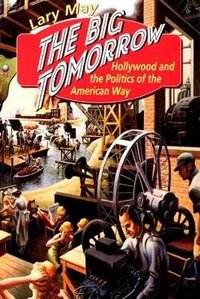
The Big Tomorrow
Hollywood and the Politics of the American Way
Published on 21. June 2000
Book
Hardback
364 pages
978-0-226-51162-7 (ISBN)
Description
In a revealing book showing the startling connections between national politics and Hollywood movies, Lary May offers a bold, fresh interpretation of American culture from the New Deal through the Cold War. Many still believe that Depression-era films served merely as a distraction from "real problems". However, May shows that many of these movies were part of a cultural dialogue that reinvigorated a democratic spirit, creating an alternative vision of the nation. Audiences desired to find a new life in a mass culture outside established institutions. As a result, upstart movie makers made large profits with productions such as those of the Cherokee humorist Will Rogers, the populist director Frank Capra, the urban comic dramas featuring "The Thin Man", and musicals like "42nd Street". That inclusive vision of America was not simply confined to the screen. It spurred shifts in design from the lavish exotic movie theatre to the more democratic, streamlined style associated with civic renewal. Inside Hollywood, personnel formed unions that supported New Deal reforms.
May also argues that during World War II and the Cold War, conservatives and liberals reshaped the vibrant utopian flavour of Hollywood. Drawing on industry documents and Central Intelligence Agency reports, he shows how genres such as the "road stories" of Bing Crosby and Bob Hope, and the war and western productions of stars like John Wayne and Ronald Reagan undermined the egalitarianism of the thirties. They validated a new corporate order and a homogenous consumer ethos. In the final chapter, May discusses how liberal artists such as Billy Wilder and stars like Marilyn Monroe and James Dean challenged the new consensus, setting the stage for the counterculture of the sixties and the conservative reaction that followed.
May also argues that during World War II and the Cold War, conservatives and liberals reshaped the vibrant utopian flavour of Hollywood. Drawing on industry documents and Central Intelligence Agency reports, he shows how genres such as the "road stories" of Bing Crosby and Bob Hope, and the war and western productions of stars like John Wayne and Ronald Reagan undermined the egalitarianism of the thirties. They validated a new corporate order and a homogenous consumer ethos. In the final chapter, May discusses how liberal artists such as Billy Wilder and stars like Marilyn Monroe and James Dean challenged the new consensus, setting the stage for the counterculture of the sixties and the conservative reaction that followed.
Reviews / Votes
"The most exhilarating work of revisionist film history since Pauline Kael's 'Citizen Kane'... It's been a long time since the world of film has received as invigoratingly coherent an overview as May's." - Jay Carr, Boston Globe "One of the best books ever written about the movies." - Tom Ryan, The Age "A startling, revisionist history of Hollywood's impact on politics and American culture.... A convincing and important addition to American cultural criticism." - Publishers WeeklyMore details
Language
English
Place of publication
Chicago
United States
Publishing group
The University of Chicago Press
Target group
College/higher education
Professional and scholarly
Dimensions
Height: 24 mm
Width: 16 mm
Thickness: 3 mm
Weight
709 gr
ISBN-13
978-0-226-51162-7 (9780226511627)
Copyright in bibliographic data and cover images is held by Nielsen Book Services Limited or by the publishers or by their respective licensors: all rights reserved.
Schweitzer Classification
Person
Lary May is professor of American studies at the University of Minnesota. He is the author of Screening Out the Past and editor of Recasting America.