

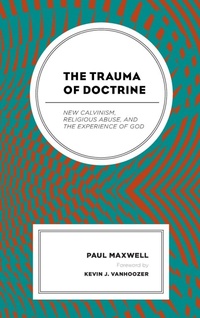
The Trauma of Doctrine
New Calvinism, Religious Abuse, and the Experience of God
Published on 12. January 2021
Book
Hardback
398 pages
978-1-9787-0423-7 (ISBN)
Description
The Trauma of Doctrine is a theological investigation into the effects of abuse trauma upon the experience of Christian faith, the psychological mechanics of these effects, their resonances with Christian Scripture, and neglected research-informed strategies for cultivating post-traumatic resilience. Paul Maxwell examines the effect that the Calvinist belief can have upon the traumatized Christian who negatively internalizes its superlative doctrines of divine control and human moral corruption, and charts a way toward meaningful spiritual recovery.
Reviews / Votes
Paul Maxwell has brought the topics of trauma and doctrine together in a masterful fashion. Here we encounter a deep understanding of the meaning and function of trauma along with an engagement with the ways Christian beliefs can either thwart or facilitate a path to wholeness. This book is truly unique, informative, and helpful. The insights and the constructive proposal for the church is not merely interesting but sorely needed. The deep dive is well worth it. -- Vincent Bacote, Wheaton College Paul Maxwell has contributed an interesting and weighty study to our growing literature on trauma and religion. His discussion concerns the wounding, debilitating damage that can be done by church doctrine that is syllogistically reductionist. His particular target is the 'New Calvinism,' a highly scholastic form of theology, and the toxic force of syllogistic doctrinal claims that are inherently abusive intellectually and emotionally. His study can as well apply, mutatis mutandis, to other forms of intellectual reductionism. (This book might have profited by a glance at healthier forms of contemporary Calvinism.) Maxwell offers a compelling riff on 'imagination' in religion and ends with a bid for restoration and reconciliation. This book reflects wide reading and sustained critical thought and is worth the effort. -- Walter Brueggemann, Columbia Theological Seminary Probing, unfeigned, and meticulously researched, Maxwell's book is a model of cross-disciplinary engagement. It ought to be studied and imbibed, not only as an exemplar of modern theology, but because of the profound benefit of its fruit. -- Constantine R. Campbell, Senior Vice President of Global Content at Our Daily Bread ministries Pastors and theologians need to read Paul Maxwell's book, for the ranks of the traumatized are growing, and all too often neither the church or our theology provide a hospitable place for understanding their experience. ... [H]e takes the road less traveled towards spiritual recovery, retrieving properly Reformed resources to deal with a problem generated by Reformed theology itself. As I say, Maxwell has written... a reflection like no other on the awful, sovereign grace of God. -- Kevin J. Vanhoozer, research professor of Systematic Theology, Trinity Evangelical Divinity School Paul Maxwell's work speaks powerfully to the fact that theology is always historically, culturally, and personally situated. Reformed theology is no different. Calvin's answers to the questions of his day, as compelling as they are to some, are not necessarily helpful to others, particularly the traumatized - at least when stated in maximalist abstract terms. But Maxwell offers more than a critique. He suggests theological pathways to resilient faith. Theologians, scholars, Christian therapists, and pastors will find his work penetrating and helpful, especially those who hope to minister to sufferers. -- Winston T. Smith, author of Untangling Emotions Paul Maxwell has written a theological masterpiece. This book represents the best of theology as a cross-disciplinary science. Contemporary American Reformed evangelicalism is more often than not a painfully traumatic experience, especially for minorities and women. This insightful book provides a pathway for healing, hope, and restoration for souls wounded by the culture of conservative Calvinism. The Trauma of Doctrine is a brilliant model for the intersection of theology and psychology and provides religious leaders a proper understanding, and methodological framework, to aid the church for decades to come. What a gift to the Christian tradition! -- Anthony B. Bradley, The King's College In The Trauma of Doctrine, Paul C. Maxwell has woven a rich tapestry using theology, philosophy, and trauma theory. Focusing on the intersection of faith and trauma, he interrogates some standard claims of Reformed theology, and finds them wanting. With a nose for creedal inconsistency, theological dissonance, and shallow anthropology, Maxwell addresses the traumatized and spiritually frightened who are, nonetheless, starved for the embrace of an affectable God willing to "help my unbelief." I found his exploration of the "wounded imagination" and the role of liturgy in healing to be rather refreshing. Serious students of these disciplines cannot afford to ignore this mature study. -- Andrew J. Schmutzer, Moody Bible Institute We might think challenging spiritual abuse is a recent phenomenon in the church were it not the practice of Christianity's founder before his death. So this underdeveloped topic warrants much more investigation. Maxwell's contribution to a theology of trauma in a religious context is disturbing and profound, demonstrating a radical fidelity to Christian orthodoxy and a ruthlessly honest engagement with the Bible, the Reformed tradition, and elements of contemporary neo-Calvinism. Its autobiographical pathos should enable readers to overlook those places where they disagree in order to receive its remarkable insights, sensing they were forged through immense suffering. And may this book help those of us in the Reformed tradition to better serve the traumatized by identifying and removing those elements that are among the stumbling blocks to faith of which Christ spoke (Mt 18:6-10). -- Eric L. Johnson, Houston Baptist UniversityMore details
Language
English
Place of publication
United States
Publishing group
Bloomsbury Publishing Plc
Target group
Professional and scholarly
Illustrations
27 b/w photos;
Dimensions
Height: 235 mm
Width: 157 mm
Thickness: 28 mm
Weight
795 gr
ISBN-13
978-1-9787-0423-7 (9781978704237)
Copyright in bibliographic data and cover images is held by Nielsen Book Services Limited or by the publishers or by their respective licensors: all rights reserved.
Schweitzer Classification
Other editions
Additional editions
E-Book
01/2021
1st Edition
Lexington Books/Fortress Academic
€38.49
Available for download
Persons
Paul Maxwell (Ph.D., Trinity Evangelical Divinity School) is an independent writer and researcher.
Content
Part 1: Reformed Theology
Chapter 1: Maximalist Conceptions of Divine Control and Human Corruption
Chapter 2: The Unique Obstacle of Reformed Theodicy
Part 2: Traumatized Faith
Chapter 3: The Imagination and Its Operations
Chapter 4: Faith and the Imagination
Chapter 5: How Trauma Works
Chapter 6: Trauma in The Religious Imagination
Part 3: Pistic Resilience
Chapter 7: Perseverence And Resilience: Introducing Pistic Resilience
Chapter 8: Passive Pistic Resilience: Divine Patience with Distrupted Faith
Chapter 9: Active Pistic Resilience: Spiritual Fortitude Within Disrupted Faith
Part 4: Pistic Recovery
Chapter 10: The Traumatized Christian and the Reformed Community
Chapter 11: Recovering a Sanctified Notion of Personal Autonomy
Chapter 12: Autonomy in Community
Chapter 1: Maximalist Conceptions of Divine Control and Human Corruption
Chapter 2: The Unique Obstacle of Reformed Theodicy
Part 2: Traumatized Faith
Chapter 3: The Imagination and Its Operations
Chapter 4: Faith and the Imagination
Chapter 5: How Trauma Works
Chapter 6: Trauma in The Religious Imagination
Part 3: Pistic Resilience
Chapter 7: Perseverence And Resilience: Introducing Pistic Resilience
Chapter 8: Passive Pistic Resilience: Divine Patience with Distrupted Faith
Chapter 9: Active Pistic Resilience: Spiritual Fortitude Within Disrupted Faith
Part 4: Pistic Recovery
Chapter 10: The Traumatized Christian and the Reformed Community
Chapter 11: Recovering a Sanctified Notion of Personal Autonomy
Chapter 12: Autonomy in Community