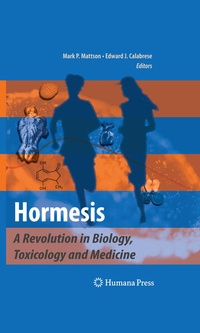
Mark P. Mattson, Ph.D. is Chief of the Laboratory of Neurosciences at the National Institute on Aging in Baltimore, where he leads a multi-faceted research team that applies cutting-edge technologies in research aimed at understanding molecular and cellular mechanisms of brain aging and the pathogenesis of neurodegenerative disorders. He is also a Professor in the Department of Neuroscience at Johns Hopkins University School of Medicine. He has published more than 450 original research articles and numerous review articles, and has edited 10 books in the areas of mechanisms of aging and neurodegenerative disorders. Dr. Mattson has trained more than 60 postdoctoral and predoctoral students who have contributed to his being the most highly cited neuroscientist in the world. Edward J. Calabrese, Ph.D. is a Professor and Program Director ofEnvironmental Health Science, at the University of Massachusetts in Amherst. His research focuses on environmental toxicology with an emphasis on biological factors including genetic and nutritional factors that enhance susceptibility to pollutant toxicity and the environmental implications of toxicological hormesis. Dr. Calabrese has researched extensively in the area of host factors affecting susceptibility to pollutants, and is the author of more than 300 papers in scholarly journals, as well as 24 books in the field of toxicology and environmental pollution. Dr. Calabrese has received numerous awards including, most recently, the prestigious Marie Curie Prize.
Reviews / Votes
From the reviews:
"'Hormesis: a revolution in biology, toxicology and medicine' is a very interesting and well- written book organized by two expressive authors in neuroscience and the health environment. . The book is divided into 10 chapters, each written by a group of authors, describing the concept of hormesis . . book concludes by proposing a fresh look at the modern pharmacy of natural products and man-made drugs. It is a pleasant read for anyone interested in toxicology, environmental health and pharmacology." (Tania Marcourakis, Brazilian Journal of Pharmaceutical Sciences, May, 2010)
"This book argues that hormesis (biphasic dose-response patterns) is an underlying process at all levels of biological organization. . The book appears to be written for risk assessors and researchers interested in dose-response relationships and cellular signaling pathways. . Physically, the book is nicely laid out with high-quality illustrations that enhance the text. The concept of the hormetic dose-response curve is worth further study, and may well lead to advances in pharmacology and other biomedical applications." (Jennifer Gervais, Doody's Review Service, February, 2011)
Edition
Language
Place of publication
Target group
Professional and scholarly
Research
Illustrations
Dimensions
Height: 241 mm
Width: 160 mm
Thickness: 19 mm
Weight
ISBN-13
978-1-60761-494-4 (9781607614944)
DOI
10.1007/978-1-60761-495-1
Schweitzer Classification
Mark P. Mattson, Ph.D. is Chief of the Laboratory of Neurosciences at the National Institute on Aging in Baltimore, where he leads a multi-faceted research team that applies cutting-edge technologies in research aimed at understanding molecular and cellular mechanisms of brain aging and the pathogenesis of neurodegenerative disorders. He is also a Professor in the Department of Neuroscience at Johns Hopkins University School of Medicine. He has published more than 450 original research articles and numerous review articles, and has edited 10 books in the areas of mechanisms of aging and neurodegenerative disorders. Dr. Mattson has trained more than 60 postdoctoral and predoctoral students who have contributed to his being the most highly cited neuroscientist in the world.
Edward J. Calabrese, Ph.D. is a Professor and Program Director of
Environmental Health Science, at the University of Massachusetts in Amherst.
His research focuses on environmental toxicology with an emphasis on biological factors including genetic and nutritional factors that enhance susceptibility to pollutant toxicity and the environmental implications of toxicological hormesis. Dr. Calabrese has researched extensively in the area of host factors affecting susceptibility to pollutants, and is the author of more than 300 papers in scholarly journals, as well as 24 books in the field of toxicology and environmental pollution. Dr. Calabrese has received numerous awards including, most recently, the prestigious Marie Curie Prize.
Hormesis: What it is and Why it Matters.- Hormesis: Once Marginalized, Evidence Now Supports Hormesis as the Most Fundamental Dose Response.- The Fundamental Role of Hormesis in Evolution.- Transcriptional Mediators of Cellular Hormesis.- The Devil is in the Dose: Complexity of Receptor Systems and Responses.- Exercise-Induced Hormesis.- Dietary Energy Intake, Hormesis, and Health.- Couch Potato: The Antithesis of Hormesis.- Hormesis and Aging.- The Hormetic Pharmacy: The Future of Natural Products and Man-Made Drugs in Disease Prevention and Treatment.