

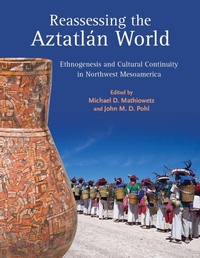
Reassessing the Aztatlan World
Ethnogenesis and Cultural Continuity in Northwest Mesoamerica
Published on 30. December 2024
Book
Hardback
258 pages
978-1-64769-149-3 (ISBN)
Description
The AztatlAn tradition of northwest Mesoamerica (AD 850/900-1350+) is one of the most understudied and enigmatic cultural developments in the Americas. This volume presents a spectrum of interdisciplinary research into AztatlAn societies, combining innovative archaeological methods with historical and ethnographic investigations. The results offer significant revelations about west Mexico's critical role in over a millennium of cultural interaction between Indigenous societies in northwest and northeast Mexico, the Greater U.S. Southwest, Mesoamerica, lower Central America, and beyond.
Volume contributors show how those responsible for the AztatlAn tradition were direct ancestors of diverse Indigenous peoples such as the NAayeri (Cora), WixArika (Huichol), O'dam (Tepehuan), Caz' Ahmo (Caxcan), Yoeme (Yaqui), Yoreme (Mayo), and others who continue to reside across the former AztatlAn region and its frontiers. The prosperity of the AztatlAn tradition was achieved through long-distance networks that fostered the development of new ritual economies and integrated peoples in Greater Mesoamerica with those in the U.S. Southwest/Mexican Northwest.
Volume contributors show how those responsible for the AztatlAn tradition were direct ancestors of diverse Indigenous peoples such as the NAayeri (Cora), WixArika (Huichol), O'dam (Tepehuan), Caz' Ahmo (Caxcan), Yoeme (Yaqui), Yoreme (Mayo), and others who continue to reside across the former AztatlAn region and its frontiers. The prosperity of the AztatlAn tradition was achieved through long-distance networks that fostered the development of new ritual economies and integrated peoples in Greater Mesoamerica with those in the U.S. Southwest/Mexican Northwest.
Reviews / Votes
"The editors do an excellent job of bringing together all the leading figures on the subject and producing a naturally coherent volume."-Matthew Pailes, The University of OklahomaMore details
Language
English
Place of publication
Salt Lake City
United States
Target group
College/higher education
Product notice
sewn/stitched
Cloth over boards
Illustrations
51 colour illustrations, 49 b&w illustrations
Dimensions
Height: 282 mm
Width: 218 mm
Thickness: 25 mm
Weight
1057 gr
ISBN-13
978-1-64769-149-3 (9781647691493)
Copyright in bibliographic data and cover images is held by Nielsen Book Services Limited or by the publishers or by their respective licensors: all rights reserved.
Schweitzer Classification
Persons
Michael D. Mathiowetz is a research specialist at the Getty Research Institute in Los Angeles. He has published widely in Kiva, Journal of the Southwest, Journal of Archaeological Research, British Archaeological Reports, Dumbarton Oaks, El Colegio de MichoacAn, and others.
John M. D. Pohl's background in archaeology, art history, and media have taken him from feature film and television production to serving as a curator, writer, and designer for major museum exhibitions including "Sorcerers of the Fifth Heaven: Art and Ritual in Ancient Southern Mexico" for Princeton University and "Children of the Plumed Serpent: The Legacy of Quetzalcoatl in Ancient Mexico" for the Los Angeles County Museum of Art and the Dallas Museum of Art.
John M. D. Pohl's background in archaeology, art history, and media have taken him from feature film and television production to serving as a curator, writer, and designer for major museum exhibitions including "Sorcerers of the Fifth Heaven: Art and Ritual in Ancient Southern Mexico" for Princeton University and "Children of the Plumed Serpent: The Legacy of Quetzalcoatl in Ancient Mexico" for the Los Angeles County Museum of Art and the Dallas Museum of Art.
Content
List of Figures
List of Tables
Preface
Introduction. Integrated Approaches to the AztatlAn Tradition: History, Scale, and New Directions by John M. D. Pohl and Michael D. Mathiowetz
Part I. What is AztatlAn?: A Historical Perspective
Chapter 1. The Current Status of the AztatlAn Phenomenon in Far Western Mexico: What? Where? and When?
Joseph B. Mountjoy
Part II. Local and Regional Viewpoints: AztatlAn Sociopolitical Organization and Complexity from Continental to Local Scales
Chapter 2. Coast-to-Coast: Evidence for AztatlAn Articulation in Supraregional Interaction Networks
Laura Solar Valverde
Chapter 3. Ritual Objects as Cultural Capital: A Comparison between the Mixtec-Zapotec, AztatlAn, and Casas Grandes Cultural Co-Traditions
John M. D. Pohl
Chapter 4. Social Organization in the AztatlAn Tradition (AD850 - 1350): The Sayula and Chapala Basins (Jalisco), a Case Study
Susana RamIrez Urrea
Chapter 5. San Felipe AztatAn: An AztatlAn Political and Ceremonial Center in the Lower Basin of the RIo Acaponeta, Nayarit
Mauricio GarduNo Ambriz
Chapter 6. Not All that Glitters is AztatlAn Ceramics: The Development of Complex Societies in Southern Sinaloa
Luis Alfonso Grave Tirado
Chapter 7. Was There a Coastal Colony in the Eastern Valleys of Durango?: Notes on AztatlAn-Chalchihuites Interaction
Cinthya Isabel Vidal Aldana
Chapter 8. Interaction and Integration on the Northern AztatlAn Frontier in Sinaloa
John P. Carpenter and Guadalupe SAnchez
Chapter 9. Selective Influence of West Mexico Cultural Traditions in the Onavas Valley, Sonora, Mexico
Cristina GarcIa Moreno, James T. Watson, and Danielle Phelps
Part III. Technologies, Economies, and Trade in the AztatlAn Region and Beyond
Chapter 10. Obsidian Usage and Trade in Postclassic West Mexico
Daniel E. Pierce
Chapter 11. A Spatial and Temporal Comparative Analysis of Metal Objects from MichoacAn to the Greater Southwest
JosE Luis Punzo DIaz and Lissandra GonzAlez
Part IV. AztatlAn Religion, Ritual Practice, and Worldview: The Archaeological Past and Continuities in the Ethnographic Present
Chapter 12. Funerary Practices during the Epiclassic and Postclassic: La Pitayera, Nayarit
JosE Carlos BeltrAn Medina, MarIa de Lourdes GonzAlez Barajas, Jorge Arturo Talavera GonzAlez, and Juan Jorge Morales Monroy
Chapter 13. A World Within the World: Portraiture Effigy Bowls and Cargo Systems in Mitote Cycles of the AztatlAn Culture
Michael D. Mathiowetz
Chapter 14. The Flowering World of the Gran Nayar: An Ethnographic Approach for Conceptualizing Political Legitimacy in the AztatlAn World
Philip E. Coyle
Part V. Concluding Thoughts and New Directions
Chapter 15. Discussion: The Three Transitions of AztatlAn
Christopher S. Beekman
References Cited
Contributors
Index
List of Tables
Preface
Introduction. Integrated Approaches to the AztatlAn Tradition: History, Scale, and New Directions by John M. D. Pohl and Michael D. Mathiowetz
Part I. What is AztatlAn?: A Historical Perspective
Chapter 1. The Current Status of the AztatlAn Phenomenon in Far Western Mexico: What? Where? and When?
Joseph B. Mountjoy
Part II. Local and Regional Viewpoints: AztatlAn Sociopolitical Organization and Complexity from Continental to Local Scales
Chapter 2. Coast-to-Coast: Evidence for AztatlAn Articulation in Supraregional Interaction Networks
Laura Solar Valverde
Chapter 3. Ritual Objects as Cultural Capital: A Comparison between the Mixtec-Zapotec, AztatlAn, and Casas Grandes Cultural Co-Traditions
John M. D. Pohl
Chapter 4. Social Organization in the AztatlAn Tradition (AD850 - 1350): The Sayula and Chapala Basins (Jalisco), a Case Study
Susana RamIrez Urrea
Chapter 5. San Felipe AztatAn: An AztatlAn Political and Ceremonial Center in the Lower Basin of the RIo Acaponeta, Nayarit
Mauricio GarduNo Ambriz
Chapter 6. Not All that Glitters is AztatlAn Ceramics: The Development of Complex Societies in Southern Sinaloa
Luis Alfonso Grave Tirado
Chapter 7. Was There a Coastal Colony in the Eastern Valleys of Durango?: Notes on AztatlAn-Chalchihuites Interaction
Cinthya Isabel Vidal Aldana
Chapter 8. Interaction and Integration on the Northern AztatlAn Frontier in Sinaloa
John P. Carpenter and Guadalupe SAnchez
Chapter 9. Selective Influence of West Mexico Cultural Traditions in the Onavas Valley, Sonora, Mexico
Cristina GarcIa Moreno, James T. Watson, and Danielle Phelps
Part III. Technologies, Economies, and Trade in the AztatlAn Region and Beyond
Chapter 10. Obsidian Usage and Trade in Postclassic West Mexico
Daniel E. Pierce
Chapter 11. A Spatial and Temporal Comparative Analysis of Metal Objects from MichoacAn to the Greater Southwest
JosE Luis Punzo DIaz and Lissandra GonzAlez
Part IV. AztatlAn Religion, Ritual Practice, and Worldview: The Archaeological Past and Continuities in the Ethnographic Present
Chapter 12. Funerary Practices during the Epiclassic and Postclassic: La Pitayera, Nayarit
JosE Carlos BeltrAn Medina, MarIa de Lourdes GonzAlez Barajas, Jorge Arturo Talavera GonzAlez, and Juan Jorge Morales Monroy
Chapter 13. A World Within the World: Portraiture Effigy Bowls and Cargo Systems in Mitote Cycles of the AztatlAn Culture
Michael D. Mathiowetz
Chapter 14. The Flowering World of the Gran Nayar: An Ethnographic Approach for Conceptualizing Political Legitimacy in the AztatlAn World
Philip E. Coyle
Part V. Concluding Thoughts and New Directions
Chapter 15. Discussion: The Three Transitions of AztatlAn
Christopher S. Beekman
References Cited
Contributors
Index