

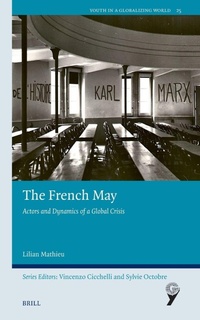
The French May
Actors and Dynamics of a Global Crisis
Published on 13. November 2025
Book
Hardback
400 pages
978-90-04-74825-5 (ISBN)
Description
It is now time to stop revering May 68 as a political myth, but to consider it as it was, meaning as a social movement that unexpectedly turned into a tremendous political crisis, bringing French institutions near to collapse. Relying on original data, such as unprecedented archives and personal interviews with former sixty-eighters, the book brings new light on how the revolt was unleashed not only among Paris students but the whole French population, challenged all established hierarchies, shook culture and mores, deeply affected its participants' life course, and contributed to a worldwide context of protest.
More details
Series
Language
English
Place of publication
Leiden
Netherlands
Target group
Professional and scholarly
Product notice
sewn/stitched
Cloth over boards
Dimensions
Height: 235 mm
Width: 155 mm
Thickness: 27 mm
Weight
739 gr
ISBN-13
978-90-04-74825-5 (9789004748255)
Copyright in bibliographic data and cover images is held by Nielsen Book Services Limited or by the publishers or by their respective licensors: all rights reserved.
Schweitzer Classification
Person
Lilian Mathieu is Senior Researcher in sociology at the French National Center for Scientific Research (Centre Max Weber-Ecole normale superieure in Lyon). He is a specialist in the study of past and contemporary social movements and of contentious politics.
Content
Contents
List of Acronyms
List of Archives
Introduction
1 Against the 68 Doxa
2 May (and June) 68 as Such
PART 1
The Dynamics of the Crisis
Introduction to Part 1
1 From Mobilization to (Nearly) Revolution
1 When Did It Start?
1.1 Indocile Students
1.2 The Essence of the Air Is Red
1.3 Radicalized Politics
2 Towards Desectorization
2.1 A Student Movement on Its Way
2.2 Trade Unions Solidarity
3 A Multisectoral Mobilization
3.1 The Central Place: The Sorbonne
3.2 An Uncontrolled Mobilization in Working Places
3.3 Pressurized Media
3.4 French Society Subjected to Fluidity
4 A Political and Social Crisis
4.1 Political Distress
4.2 Finding an Issue Despite Conflict and Competition
4.3 Violent Days
2 A Local May: The Lyon Case
1 Before the Crisis
1.1 University Explosion
1.2 Socio-economic Situation
1.3 Political Context
2 The 68 Events in Lyon
2.1 The Student Dynamics
2.2 Strikes and Occupations
3 The Slow Decline
4 A Difficult Return to Normal
4.1 Transformations and Tensions on the Left
4.2 Students' Identity Crisis
3 Contentious Encounters: Challengers and Police Interacting in the Street
1 The Organization of Policing
1.1 A Specialized Device
1.2 A Legacy of Practical Experiences
2 The Dynamics of Confrontation
2.1 A Readjustment of Police Anticipations (May 3-10)
2.2 A Temporary Desertion of the Street (13 May-22 May)
2.3 Radicalization (May 22-June 12)
3 Assessments and Redefinitions
3.1 Clearing Up the Violence
3.2 Redefining Policing
PART 2
Whatever Happened to the Sixty-Eighters?
Introduction to Part 2
4 The Genesis of a Rebellious Youth
1 The Embodiment of a Rebellious Mood
1.1 An Interest in Politics Shaped by Family
1.2 Confronting the Social World
2 Institutional Critique
2.1 A New Access to Education
2.2 Revolution Within the Catholic Church
3 University Newcomers
3.1 Anguished by Diploma?
3.2 Students and Their Studies
5 Converting Militancy into Education
1 An Uncertain Educational Career
2 Activist and/or Teacher
3 The Pedagogical Conversion of Activism
6 Five Portraits
1 Pradial Subirats: From University to Jail to University
2 Bernard Bolze: A Career against Authoritarian Institutions
3 Marie-Claude Forestier: Catholic Radicalization
4 Véronique Dutoit: From Politics to Culture
5 André Carvalho: Culture in the Margins
PART 3
The Diffusion of a Rebellious Mood
Introduction to Part 3
7 The Formation of a Space of Social Movements
1 The Rebellious Seventies
1.1 The Apogee of Workers' Combativeness
1.2 Migrants' Struggles
1.3 The Revolution of Privacy
1.4 Territories and Environments
1.5 Challenging Authority
2 Entangled Social Movements
2.1 Old and New Social Movements
2.2 Protest Shaped by Politics
2.3 When Capitalism Endorses Its Critique
2.4 An Evolutive Autonomy Towards Politics
8 Sixty-Eighters and (Counter) Culture
1 The Golden Age of Counterculture?
2 Stormed Art Worlds
3 The Countercultural Turn
3.1 Revolutionized Songs
3.2 The Diffusion of Critical Thinking
4 Changing One's World
9 The French Protest Within Its International Context
1 A Contrasted Transnationalization
1.1 Openness to the Outside
1.2 A Few Transnational Activists
1.2.1 Daniel Cohn-Bendit
1.2.2 Alain Krivine
1.2.3 Christine Delphy
1.2.4 Tariq Ali
2 Interdependent Revolts
2.1 Students of the World, Unite?
2.2 Brokerage
2.3 Repertoires
2.4 State Response
3 A Comparison between Three Different Cases
3.1 A Mobilization Faced with Lethal Violence: The Mexican Case
3.2 An Insurrection against Military Dictatorship: The Argentinian Cordobazo
3.3 Results
Conclusion
References
Index
List of Acronyms
List of Archives
Introduction
1 Against the 68 Doxa
2 May (and June) 68 as Such
PART 1
The Dynamics of the Crisis
Introduction to Part 1
1 From Mobilization to (Nearly) Revolution
1 When Did It Start?
1.1 Indocile Students
1.2 The Essence of the Air Is Red
1.3 Radicalized Politics
2 Towards Desectorization
2.1 A Student Movement on Its Way
2.2 Trade Unions Solidarity
3 A Multisectoral Mobilization
3.1 The Central Place: The Sorbonne
3.2 An Uncontrolled Mobilization in Working Places
3.3 Pressurized Media
3.4 French Society Subjected to Fluidity
4 A Political and Social Crisis
4.1 Political Distress
4.2 Finding an Issue Despite Conflict and Competition
4.3 Violent Days
2 A Local May: The Lyon Case
1 Before the Crisis
1.1 University Explosion
1.2 Socio-economic Situation
1.3 Political Context
2 The 68 Events in Lyon
2.1 The Student Dynamics
2.2 Strikes and Occupations
3 The Slow Decline
4 A Difficult Return to Normal
4.1 Transformations and Tensions on the Left
4.2 Students' Identity Crisis
3 Contentious Encounters: Challengers and Police Interacting in the Street
1 The Organization of Policing
1.1 A Specialized Device
1.2 A Legacy of Practical Experiences
2 The Dynamics of Confrontation
2.1 A Readjustment of Police Anticipations (May 3-10)
2.2 A Temporary Desertion of the Street (13 May-22 May)
2.3 Radicalization (May 22-June 12)
3 Assessments and Redefinitions
3.1 Clearing Up the Violence
3.2 Redefining Policing
PART 2
Whatever Happened to the Sixty-Eighters?
Introduction to Part 2
4 The Genesis of a Rebellious Youth
1 The Embodiment of a Rebellious Mood
1.1 An Interest in Politics Shaped by Family
1.2 Confronting the Social World
2 Institutional Critique
2.1 A New Access to Education
2.2 Revolution Within the Catholic Church
3 University Newcomers
3.1 Anguished by Diploma?
3.2 Students and Their Studies
5 Converting Militancy into Education
1 An Uncertain Educational Career
2 Activist and/or Teacher
3 The Pedagogical Conversion of Activism
6 Five Portraits
1 Pradial Subirats: From University to Jail to University
2 Bernard Bolze: A Career against Authoritarian Institutions
3 Marie-Claude Forestier: Catholic Radicalization
4 Véronique Dutoit: From Politics to Culture
5 André Carvalho: Culture in the Margins
PART 3
The Diffusion of a Rebellious Mood
Introduction to Part 3
7 The Formation of a Space of Social Movements
1 The Rebellious Seventies
1.1 The Apogee of Workers' Combativeness
1.2 Migrants' Struggles
1.3 The Revolution of Privacy
1.4 Territories and Environments
1.5 Challenging Authority
2 Entangled Social Movements
2.1 Old and New Social Movements
2.2 Protest Shaped by Politics
2.3 When Capitalism Endorses Its Critique
2.4 An Evolutive Autonomy Towards Politics
8 Sixty-Eighters and (Counter) Culture
1 The Golden Age of Counterculture?
2 Stormed Art Worlds
3 The Countercultural Turn
3.1 Revolutionized Songs
3.2 The Diffusion of Critical Thinking
4 Changing One's World
9 The French Protest Within Its International Context
1 A Contrasted Transnationalization
1.1 Openness to the Outside
1.2 A Few Transnational Activists
1.2.1 Daniel Cohn-Bendit
1.2.2 Alain Krivine
1.2.3 Christine Delphy
1.2.4 Tariq Ali
2 Interdependent Revolts
2.1 Students of the World, Unite?
2.2 Brokerage
2.3 Repertoires
2.4 State Response
3 A Comparison between Three Different Cases
3.1 A Mobilization Faced with Lethal Violence: The Mexican Case
3.2 An Insurrection against Military Dictatorship: The Argentinian Cordobazo
3.3 Results
Conclusion
References
Index