

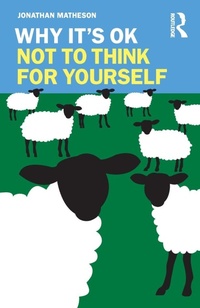
Why It's OK Not to Think for Yourself
1st Edition
Published on 29. September 2023
Book
Paperback/Softback
244 pages
978-1-032-43825-2 (ISBN)
Description
We tend to applaud those who think for themselves: the ever-curious student, for example, or the grownup who does their own research. Even as we're applauding, however, we ourselves often don't think for ourselves. This book argues that's completely OK.
In fact, it's often best just to take other folks' word for it, allowing them to do the hard work of gathering and evaluating the relevant evidence. In making this argument, philosopher Jonathan Matheson shows how 'expert testimony' and 'the wisdom of crowds' are tested and provides convincing ideas that make it rational to believe something simply because other people believe it. Matheson then takes on philosophy's best arguments against his thesis, including the idea that non-self-thinkers are free-riding on the work of others, Socrates' claim that 'the unexamined life isn't worth living,' and that outsourcing your intellectual labor makes you vulnerable to errors and manipulation. Matheson shows how these claims and others ultimately fail -- and that when it comes to thinking, we often need not be sheepish about being sheep.
Key Features
Discusses the idea of not thinking for yourself in the context of contemporary issues like climate change and vaccinations
Engages in numerous contemporary debates in social epistemology
Examines what can be valuable about thinking for yourself and argues that these are insufficient to require you to do so
Outlines the key, practical takeaways from the argument in an epilogue
In fact, it's often best just to take other folks' word for it, allowing them to do the hard work of gathering and evaluating the relevant evidence. In making this argument, philosopher Jonathan Matheson shows how 'expert testimony' and 'the wisdom of crowds' are tested and provides convincing ideas that make it rational to believe something simply because other people believe it. Matheson then takes on philosophy's best arguments against his thesis, including the idea that non-self-thinkers are free-riding on the work of others, Socrates' claim that 'the unexamined life isn't worth living,' and that outsourcing your intellectual labor makes you vulnerable to errors and manipulation. Matheson shows how these claims and others ultimately fail -- and that when it comes to thinking, we often need not be sheepish about being sheep.
Key Features
Discusses the idea of not thinking for yourself in the context of contemporary issues like climate change and vaccinations
Engages in numerous contemporary debates in social epistemology
Examines what can be valuable about thinking for yourself and argues that these are insufficient to require you to do so
Outlines the key, practical takeaways from the argument in an epilogue
More details
Series
Language
English
Place of publication
London
United Kingdom
Publishing group
Taylor & Francis Ltd
Target group
College/higher education
General, Undergraduate Advanced, and Undergraduate Core
Dimensions
Height: 198 mm
Width: 129 mm
Thickness: 14 mm
Weight
274 gr
ISBN-13
978-1-032-43825-2 (9781032438252)
Copyright in bibliographic data and cover images is held by Nielsen Book Services Limited or by the publishers or by their respective licensors: all rights reserved.
Schweitzer Classification
Other editions
Additional editions
Jonathan Matheson
Why It's OK Not to Think for Yourself
E-Book
09/2023
1st Edition
Routledge
€27.49
Available for download

Jonathan Matheson
Why It's OK Not to Think for Yourself
Book
09/2023
1st Edition
Routledge
€230.27
Shipment within 10-20 days
Jonathan Matheson
Why It's OK Not to Think for Yourself
E-Book
09/2023
1st Edition
Routledge
€27.49
Available for download
Person
Jonathan Matheson is Professor of Philosophy at the University of North Florida. His research interests are in epistemology, with a focus on issues concerning disagreement and epistemic autonomy. He has authored The Epistemic Significance of Disagreement (2015) and co-edited The Ethics of Belief: Individual and Social (2014) with Rico Vitz and Epistemic Autonomy (2021) with Kirk Lougheed.
Content
Chapter 1 Introduction
Keeping your House in Order
What is Thinking for Yourself?
Clarifying the Central Conclusion
Looking Ahead
Chapter 2 Believing (Just) Because Others Believe: Epistemic Surrogates
From Individual to Social Epistemology
Believing the Experts & Epistemic Surrogacy
The Wisdom of Crowds
The Upshot
Chapter 3 The Argument from Expertise
Motivating the Argument
Applying the Argument
An Initial Worry: Identifying the Experts
The Upshot
Chapter 4 The Argument from Evidential Swamping
Motivating the Argument
Applying the Argument
The Upshot
Chapter 5 The Autonomy Objection
Motivating the Objection
The Myth of Intellectual Individualism
Autonomy as Intellectual Freedom
Autonomy as Intellectual Virtue
Wrap-Up
Chapter 6 The Free-Rider Objection
Motivating the Objection
The Cognitive Division of Labor
Epistemic Trespassing
The Wisdom of Crowds Again
Wrap-Up
Chapter 7 The Socratic Objection
Motivating the Objection
Normative Questions
No Relevant Experts
The Importance of Getting it Right
Moral Virtue
In Favor of Socratic Deference
Wrap-Up
Chapter 8 The Vulnerability Objection
Motivating the Objection
The Inevitability of Vulnerability
Vulnerability and Checks & Balances
The Importance of Institutions
Wrap-Up
Chapter 9 The Understanding Objection
Motivating the Objection
Understanding Without Thinking for Yourself
Setting the Scope
Epistemic Satisficing
Wrap-Up
Chapter 10 The Intellectual Virtue Objection
Motivating the Objection
Cultivating Intellectual Character Through Deference
Cartesian Epistemology & Social Epistemology
Social Intellectual Virtues
Wrap-Up
Keeping your House in Order
What is Thinking for Yourself?
Clarifying the Central Conclusion
Looking Ahead
Chapter 2 Believing (Just) Because Others Believe: Epistemic Surrogates
From Individual to Social Epistemology
Believing the Experts & Epistemic Surrogacy
The Wisdom of Crowds
The Upshot
Chapter 3 The Argument from Expertise
Motivating the Argument
Applying the Argument
An Initial Worry: Identifying the Experts
The Upshot
Chapter 4 The Argument from Evidential Swamping
Motivating the Argument
Applying the Argument
The Upshot
Chapter 5 The Autonomy Objection
Motivating the Objection
The Myth of Intellectual Individualism
Autonomy as Intellectual Freedom
Autonomy as Intellectual Virtue
Wrap-Up
Chapter 6 The Free-Rider Objection
Motivating the Objection
The Cognitive Division of Labor
Epistemic Trespassing
The Wisdom of Crowds Again
Wrap-Up
Chapter 7 The Socratic Objection
Motivating the Objection
Normative Questions
No Relevant Experts
The Importance of Getting it Right
Moral Virtue
In Favor of Socratic Deference
Wrap-Up
Chapter 8 The Vulnerability Objection
Motivating the Objection
The Inevitability of Vulnerability
Vulnerability and Checks & Balances
The Importance of Institutions
Wrap-Up
Chapter 9 The Understanding Objection
Motivating the Objection
Understanding Without Thinking for Yourself
Setting the Scope
Epistemic Satisficing
Wrap-Up
Chapter 10 The Intellectual Virtue Objection
Motivating the Objection
Cultivating Intellectual Character Through Deference
Cartesian Epistemology & Social Epistemology
Social Intellectual Virtues
Wrap-Up