

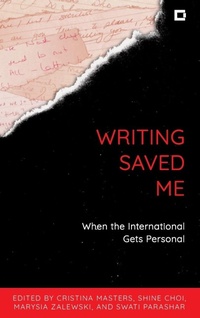
Writing Saved Me
When the International Gets Personal
Published on 4. December 2023
Book
Hardback
244 pages
978-1-5381-8517-9 (ISBN)
Description
Writing is a central part of the life of a scholar-academic. The writing that makes it into public spaces, however, is but a glimpse of the writing we do and might find meaningful. This edited volume is an attempt to collect writing that often remains hidden in academia - the email exchange with a student or colleagues, the writing that grapples with our loneliness, rage, and failures - and yet provide crucial insight into the ugly realities of global politics and the work that gets done on it (or not) in the neoliberal, extractive university.
Reviews / Votes
This is a rich and provocative account of the writing that underpins the work we put into the world. Visible here are the traces of the people we carry with us, the selves we hope we can be, the relationships for which we try to create and hold space in what are sometimes (often) deeply inhospitable environments. This collection chronicles what the authors have survived, and how, and what has been sacrificed along the way - and reckons with how writing can hold out a measure of joy and relief in the darkness. It deserves to be treasured. -- Laura J. Shepherd, The University of Sydney This book is a refuge. For the collective involved, writing and editing created a warm and welcoming home, and that in itself is a precious gift in and around academia today. But reading it is a long-sought shelter too. Brimming with beauty and generosity as much as rebellious honesty, Writing Saved Me will jolt you into a fresh awareness to all that it takes to make our disciplines and institutions more hospitable, but all along it will keep reassuring you: you are not alone. -- Anna Selmeczi, University of Cape Town For many students, their first experience of IR in the classroom is trying to fit ideas into grey-block paradigms that originate in old scholarly conversations from the 1980s. This is a monochrome world without people, populated instead by lists of abstract concepts. This collection brings the people back into IR, with all the wonderful mess and complexity that implies. Each contribution is a peak into one of the many personal worlds that underpin the public faces we see in peer-reviewed articles and monographs. -- Lucian M. Ashworth, Memorial University of Newfoundland Writing for survivance, writing to repair, these tales bear witness to academic warriors shaking their metaphorical dreadlocks loose in an attempt to both let their hair down AND signal their refusal to be converted to fodder in the neoliberal academy. -- Annie Paul, Editor-in-chief, PREE (preelit.com), the digital magazine of Caribbean writingMore details
Series
Language
English
Place of publication
United States
Publishing group
Bloomsbury Publishing Plc
Target group
Professional and scholarly
Illustrations
7 b/w photos
Dimensions
Height: 235 mm
Width: 157 mm
Thickness: 19 mm
Weight
555 gr
ISBN-13
978-1-5381-8517-9 (9781538185179)
Copyright in bibliographic data and cover images is held by Nielsen Book Services Limited or by the publishers or by their respective licensors: all rights reserved.
Schweitzer Classification
Other editions
Additional editions
Cristina Masters | Shine Choi | Marysia Zalewski
Writing Saved Me
When the International Gets Personal
E-Book
11/2023
1st Edition
Rowman & Littlefield Publishers
€38.49
Available for download
Cristina Masters | Shine Choi | Marysia Zalewski
Writing Saved Me
When the International Gets Personal
E-Book
11/2023
1st Edition
Rowman & Littlefield
€38.49
Available for download
Persons
Cristina Masters is senior lecturer in international politics at theUniversity of Manchester.
shine choi is senior lecturer at the school of people, environment and planning at Massey University.
Marysia Zalewski is professor of international relations atCardiff University. Her research has been supported by the British Academy, The Royal Society of Edinburgh, The Carnegie Trust for the Universities of Scotland and The British Council.
Swati Parashar is professor in Peace and Development at the University of Gothenburg.
shine choi is senior lecturer at the school of people, environment and planning at Massey University.
Marysia Zalewski is professor of international relations atCardiff University. Her research has been supported by the British Academy, The Royal Society of Edinburgh, The Carnegie Trust for the Universities of Scotland and The British Council.
Swati Parashar is professor in Peace and Development at the University of Gothenburg.
Content
Acknowledgements
Preface
in loveless politics...
Chapter 1.Warning Signs Your Colonizer is Gaslighting You, Meghana V. Nayak
Chapter 2. On the (In)Ability to Converse, Claudia A. Fernandez Calleros
Chapter 3.Complaint, shine choi
Chapter 4. It came to my attention..., Saara Saermae
and entrapments of non- (or language entrapments)
Chapter 5. I regrettably do not think I can contribute..., Katsuhiko Suganuma
Chapter 6. Babels Schuld, Catherine Goetze
Chapter 7. Wandering and Wondering in Search of the Unimaginable, Daniel Zengotita
Chapter 8. A (Voluntary) Prisoner of Research: Mystery, Destiny and Narrative, Sungju-Park-Kang
...just write (, think later)
Chapter 9. On the ugly intimacies of war, Cristina Maria Da Rosa Bagaco (Masters)
Chapter 10. (Ho)Me, or the Unbearable: Mapping the Personal International, Maria-Adriana Deiana
Chapter 11. epiVOGUE: How Writing a Novel about Transnational Loneliness Made Me Rethink My Strategy of Survival, Sergei Akopov
Chapter 12. Questions, answers and non-answers: Reflections on writing in the red notebook, Itziar Mujika Chao
... love, live!
Chapter 13. Survivance and Mothers, Kumari Abeydeera
Chapter 14. Mother-Scholar failures: ella habla por la entrepierna, Sara C. Motta
Chapter 15. The Morning After an Autistic Suicide Scare: On the Banality of Surviving (in/with/for) Writing, Julio Cesar Diaz Calderon
Afterwor(l)ds
Yakolev Rachel DesireSungju Martha Julio Sungju Swati MarysiaSergei
Preface
in loveless politics...
Chapter 1.Warning Signs Your Colonizer is Gaslighting You, Meghana V. Nayak
Chapter 2. On the (In)Ability to Converse, Claudia A. Fernandez Calleros
Chapter 3.Complaint, shine choi
Chapter 4. It came to my attention..., Saara Saermae
and entrapments of non- (or language entrapments)
Chapter 5. I regrettably do not think I can contribute..., Katsuhiko Suganuma
Chapter 6. Babels Schuld, Catherine Goetze
Chapter 7. Wandering and Wondering in Search of the Unimaginable, Daniel Zengotita
Chapter 8. A (Voluntary) Prisoner of Research: Mystery, Destiny and Narrative, Sungju-Park-Kang
...just write (, think later)
Chapter 9. On the ugly intimacies of war, Cristina Maria Da Rosa Bagaco (Masters)
Chapter 10. (Ho)Me, or the Unbearable: Mapping the Personal International, Maria-Adriana Deiana
Chapter 11. epiVOGUE: How Writing a Novel about Transnational Loneliness Made Me Rethink My Strategy of Survival, Sergei Akopov
Chapter 12. Questions, answers and non-answers: Reflections on writing in the red notebook, Itziar Mujika Chao
... love, live!
Chapter 13. Survivance and Mothers, Kumari Abeydeera
Chapter 14. Mother-Scholar failures: ella habla por la entrepierna, Sara C. Motta
Chapter 15. The Morning After an Autistic Suicide Scare: On the Banality of Surviving (in/with/for) Writing, Julio Cesar Diaz Calderon
Afterwor(l)ds
Yakolev Rachel DesireSungju Martha Julio Sungju Swati MarysiaSergei