

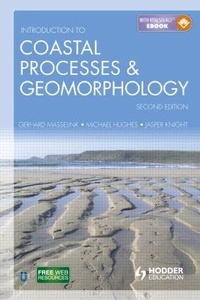
Introduction to Coastal Processes and Geomorphology
2nd Edition
Published on 30. September 2011
Book
Paperback/Softback
416 pages
978-1-4441-2240-4 (ISBN)
Description
The world's coastlines represent a myriad of dynamic and constantly changing environments. Heavily settled and intensely used areas, they are of enormous importance to humans and understanding how they are shaped and change is crucial to our future.
Introduction to Coastal Processes and Geomorphologybegins by discussing coastal systems and shows how these systems link to the processes examined in detail throughout the book. These include the morphodynamic paradigm, tides, waves and sediment transport. Later chapters explore fluvial deltas, estuaries, beaches and barriers, coastal sand dunes and geologically-influenced coasts such as cliffs, coral reefs and atolls.
A new chapter addresses the forward-facing aspect of coastal morphodynamics, including the ways in which coasts respond to rapid climate changes such as present day global warming. Also new to this second edition is a chapter on future coasts which considers the wider effects of coastal change on other important aspects of coastal systems, including ecology, management, socio-cultural activities, built and natural heritage, and archaeology.
Case studies using examples from around the world illustrate theory in practice and bring the subject to life. Each chapter starts by outlining the 'aims' and questions at the end allow you to track your progress.
Introduction to Coastal Processes and Geomorphologybegins by discussing coastal systems and shows how these systems link to the processes examined in detail throughout the book. These include the morphodynamic paradigm, tides, waves and sediment transport. Later chapters explore fluvial deltas, estuaries, beaches and barriers, coastal sand dunes and geologically-influenced coasts such as cliffs, coral reefs and atolls.
A new chapter addresses the forward-facing aspect of coastal morphodynamics, including the ways in which coasts respond to rapid climate changes such as present day global warming. Also new to this second edition is a chapter on future coasts which considers the wider effects of coastal change on other important aspects of coastal systems, including ecology, management, socio-cultural activities, built and natural heritage, and archaeology.
Case studies using examples from around the world illustrate theory in practice and bring the subject to life. Each chapter starts by outlining the 'aims' and questions at the end allow you to track your progress.
More details
Edition
2nd edition
Language
English
Place of publication
London
United Kingdom
Publishing group
Taylor & Francis Ltd
Target group
College/higher education
Professional and scholarly
Illustrations
250
Dimensions
Height: 231 mm
Width: 158 mm
Thickness: 22 mm
Weight
671 gr
ISBN-13
978-1-4441-2240-4 (9781444122404)
Copyright in bibliographic data and cover images is held by Nielsen Book Services Limited or by the publishers or by their respective licensors: all rights reserved.
Schweitzer Classification
Other editions
Additional editions
Gerd Masselink
Introduction to Coastal Processes and Geomorphology
Book
07/2017
2nd Edition
Routledge
€297.61
Shipment within 10-20 days
Gerd Masselink | Michael Hughes | Jasper Knight
Introduction to Coastal Processes and Geomorphology
E-Book
04/2014
2nd Edition
Routledge
€100.99
Available for download
Gerd Masselink
Introduction to Coastal Processes and Geomorphology
E-Book
04/2014
2nd Edition
Hodder Arnold
€100.99
Available for download
Person
Gerhard Masselink, Professor of Coastal Geomorphology, University of Plymouth, UK
Michael Hughes, Senior Lecturer in Geosciences, University of Sydney, Australia
Jasper Knight, Lecturer in Geography, Victoria University of Wellington, New Zealand
Michael Hughes, Senior Lecturer in Geosciences, University of Sydney, Australia
Jasper Knight, Lecturer in Geography, Victoria University of Wellington, New Zealand
Content
1. Coastal systems2. Sea level3. Tides4. Waves5. Sediments, boundary layers and transport6. Fluvial-dominated coastal environments - deltas7. Tide-dominated coastal environments - Estuaries8. Wave-dominated coastal environments - beaches and barriers9. Coastal sand dunes10. Geologically-controlled coastal environments - rocky shorelines and coral coasts11. Coasts and climate change12. Future coasts