

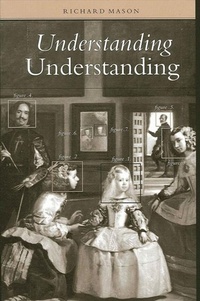
Understanding Understanding
Published on 25. September 2003
Book
Hardback
140 pages
978-0-7914-5871-6 (ISBN)
Description
A study of the scope and limits of understanding.
How is understanding to be understood? Are there limits to understanding? What of importance, if anything, could lie beyond understanding? And do we need to understand knowledge before we can know about understanding? Richard Mason's argument is that a critical theory of understanding, modeled on past theories of knowledge, cannot be workable.
Understanding may bring wisdom: an uncomfortable thought for many philosophers in the twentieth century. Yet philosophy aims at expanding understanding at least as much as knowledge. How we understand understanding affects how we understand philosophy. If we put aside a narrow view of understanding based upon a Cartesian model of knowledge, we may gain a more liberal, open understanding of philosophy.
Mason's treatment of these fascinating problems offers a clear and lucid dialogue with a number of contemporary philosophical schools and with philosophy's past. His discussions include the thought of Hume, Henry James, Heidegger, Frege, Charles Taylor, Michael Oakeshott, Wittgenstein, Gadamer, James Joyce, and the Guyaki Indians. This fascinating book contributes to the work of many of these traditions as well as to the nature of understanding in areas as diverse as physics, music, and linguistics.
How is understanding to be understood? Are there limits to understanding? What of importance, if anything, could lie beyond understanding? And do we need to understand knowledge before we can know about understanding? Richard Mason's argument is that a critical theory of understanding, modeled on past theories of knowledge, cannot be workable.
Understanding may bring wisdom: an uncomfortable thought for many philosophers in the twentieth century. Yet philosophy aims at expanding understanding at least as much as knowledge. How we understand understanding affects how we understand philosophy. If we put aside a narrow view of understanding based upon a Cartesian model of knowledge, we may gain a more liberal, open understanding of philosophy.
Mason's treatment of these fascinating problems offers a clear and lucid dialogue with a number of contemporary philosophical schools and with philosophy's past. His discussions include the thought of Hume, Henry James, Heidegger, Frege, Charles Taylor, Michael Oakeshott, Wittgenstein, Gadamer, James Joyce, and the Guyaki Indians. This fascinating book contributes to the work of many of these traditions as well as to the nature of understanding in areas as diverse as physics, music, and linguistics.
More details
Series
Language
English
Place of publication
Albany, NY
United States
Target group
Professional and scholarly
US School Grade: College Graduate Student and over
Product notice
sewn/stitched
Cloth over boards
Dimensions
Height: 235 mm
Width: 157 mm
Thickness: 14 mm
Weight
313 gr
ISBN-13
978-0-7914-5871-6 (9780791458716)
Copyright in bibliographic data and cover images is held by Nielsen Book Services Limited or by the publishers or by their respective licensors: all rights reserved.
Schweitzer Classification
Other editions
Additional editions
Richard Mason
Understanding Understanding
E-Book
02/2012
1st Edition
De Gruyter
€32.99
Available for download
Person
Richard Mason (1948-2006) was a Fellow of Wolfson College at Cambridge. He is the author of Before Logic and Oppenheimer's Choice: Reflections from Moral Philosophy, both also published by SUNY Press.
Content
Introduction
1. What We Understand
2. How We Understand
3. Understanding and Knowledge
4. Intelligibility
5. Failures of Understanding
6. Beyond Understanding
7. Wisdom
Notes
Bibliography
Index of Names
1. What We Understand
2. How We Understand
3. Understanding and Knowledge
4. Intelligibility
5. Failures of Understanding
6. Beyond Understanding
7. Wisdom
Notes
Bibliography
Index of Names